
Reviewed · CARTHAGE AND SIDI BOU SAID TOURS
From Hammamet or Tunis: Carthage, Bardo, Sidi Bou said and Medina
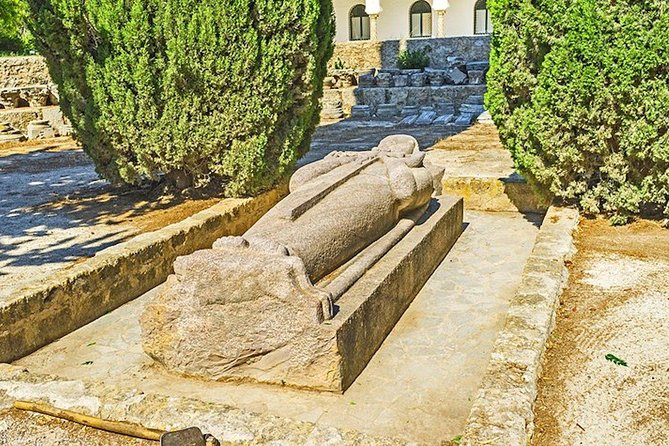
Carthage gives this day its strongest sense of place. You move from Punic ruins and Roman baths to blue-and-white Sidi Bou Said, then into the Bardo Museum and the narrow lanes of Tunis Medina. It is a lot of Tunisia in eight hours, with the coast, ancient cities, art, and daily life all on one route.
I like the private format, since your guide can adjust the pace for your group. I also like the range of stops: Carthage gives you open-air ruins, the Bardo supplies mosaics and museum context, and the Medina brings you into working markets rather than another quiet archaeological site.
The main drawback is the schedule. You cover several major places in one day, so time at each stop is limited. If you prefer a slow visit, you may wish for less museum time and more time at Carthage or Sidi Bou Said.
Key points to know before booking
- Carthage is the historical anchor: Expect the archaeological site, Antonine Baths, Tophet, and Carthage Aqueduct.
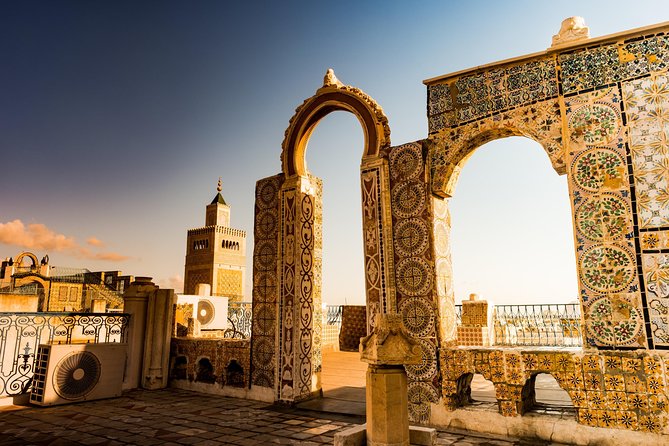
- Sidi Bou Said is the scenic pause: You get blue-and-white streets, Mediterranean views, and time to walk without an admission charge.
- The Bardo Museum is best for art lovers: Its Roman mosaics and broad collection add context that ruins alone cannot provide.
- Tunis Medina is a working old city: The route includes Bab Bhar, Zitouna Mosque, cap makers, perfume sellers, and narrow historic lanes.
- This is a private eight-hour outing: Pickup is offered, and only your group takes part.
- The guides are a major part of the experience: Named guides including Bouhdid, Boutheina, Haudi, Saïf, and Haythem have been praised for warmth, language skills, and flexibility.
Why this makes a useful first day in Tunis
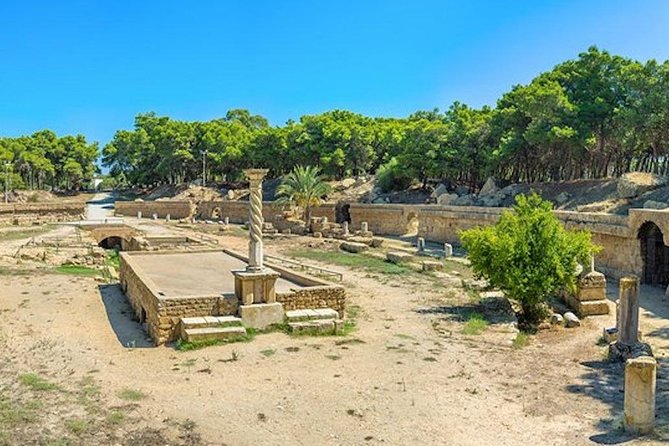
For $35 per person, this is an unusually broad introduction to northern Tunisia. The price matters because the tour combines several admission sites with pickup and a private guide, rather than asking you to arrange separate transport between Hammamet, Carthage, the museum, and central Tunis.
You should still read the price in context. Eight hours is enough to see the main points, not enough to study every ruin or museum room. The value comes from the range and convenience. You can get your bearings quickly, then decide which places deserve a longer return visit.
The tour is offered from Hammamet or Tunis, and pickup is available. Since the route crosses several parts of the Tunis area, confirm the pickup details and starting point when you book. The vehicle has been described as air-conditioned in tour experiences, an important comfort in Tunisia’s warmer months.
This is a private activity, so you are not tied to the interests of a large group. That flexibility helped one family traveling with a seven-month-old, whose driver adjusted the day and made the outing easier. It also suits couples or small groups who want explanations in English, French, German, or another available language, though you should request your preferred language when arranging the tour.
More Carthage and Sidi Bou Said Tours in Hammamet
- Private tour: Medina,Carthage ,Sidi Bou Said, Bardo Museum+lunch
★ 5.0 · 194 reviews - Tunis, Sidi Bousaid and Carthage day trip from Hammamet
★ 4.5 · 44 reviews - Tunis Carthage airport transfer to Hammamet
★ 5.0 · 34 reviews
Carthage: begin with a city built for scale
The first Carthage visit lasts about two hours and includes admission. This is where the day moves beyond postcard views and gives you a sense of how large the ancient city once was.
Carthage was destroyed by Rome in 146 BC, but the remains reveal a sophisticated urban center. Excavations have uncovered houses reaching five stories, sewage systems, and city walls that once extended about 21 miles, or 34 kilometers, around Byrsa Hill.
That information changes how you read the ruins. You are not just looking at scattered stones. You are seeing traces of homes, public works, defenses, and a city that once controlled an important position on the Mediterranean.
The open archaeological areas also bring wide coastal views. Bring shoes that are comfortable for walking over uneven ground, and keep your camera ready for the contrast between pale stone and sea views.
Your guide matters here. A good explanation can connect the Punic city, Roman destruction, and later Roman rebuilding in a way that makes the remains easier to picture. Bouhdid has been praised for clear English, interesting facts, and an ability to shape the pace around the group. Other named guides, including Boutheina and Saïf, have also been praised for making the historical material lively and accessible.
The Antonine Baths: Carthage at its grandest
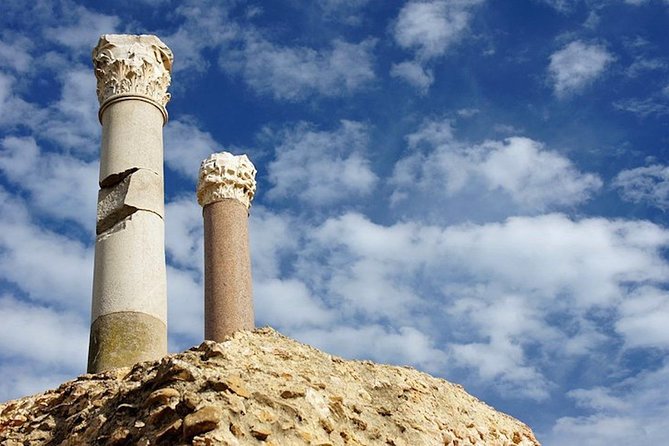
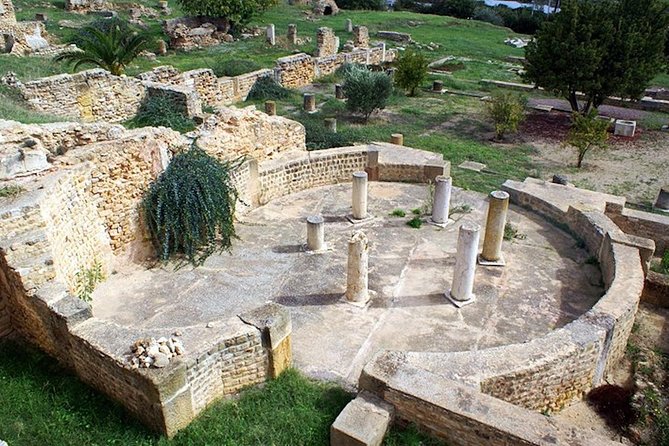
The separate stop at the Baths of Antoninus lasts about 30 minutes. That sounds brief, but it is enough for an introduction to one of the most striking Roman sites in Carthage.
The baths help you imagine public life in Roman North Africa. Their surviving columns, foundations, and broad setting show that this was not a minor provincial outpost. It was a major Roman city with impressive public buildings and a strong connection to the sea.
This is also one of the most photogenic parts of the route. The ruins open toward the coast, and the setting gives you a better feel for Carthage’s position than a museum display can.
Do not expect a fully reconstructed building. Much of the pleasure comes from reading the foundations and scale with help from your guide. The 30-minute stop is well judged for a first visit, though history fans may want more time.
Tophet and the harder questions of Punic Carthage
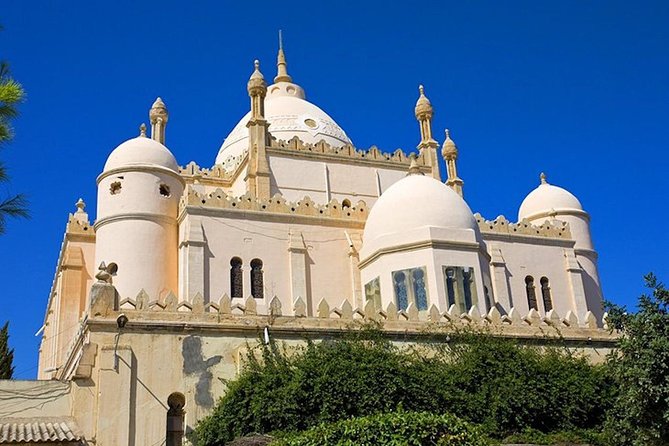
The Tophet de Carthage receives about an hour, with admission included. This site carries more emotional weight than the baths because it raises difficult questions about Punic religious practice and sacrifice.
You will see an archaeological area connected with children’s burials and votive remains. Interpretations of the site have long been debated, so this is a place where a careful guide is especially useful. Listen for the distinction between what archaeologists found and what later writers claimed.
The Tophet is not a light sightseeing stop, and some visitors may find the subject unsettling. Still, it adds depth to the Carthage visit. You see not only the city’s engineering and public life, but also the beliefs and rituals that shaped it.
The hour gives your guide room to explain the site rather than rushing past it. If you are traveling with young children, you may want to ask how the stop will be presented.
Same coast, a completely different day out:
- Quad ride on the hills of Hammamet
★ 4.0 · 104 reviews - 2-Day Tunisian Sahara Tour with Food & Stay from Hammamet
★ 4.5 · 80 reviews - Tour to the Medina of Hammamet and the Spice Market of Nabeul
★ 4.0 · 45 reviews - Half a day in Sidi Bousaid from Hammamet
★ 4.0 · 33 reviews
Carthage Aqueduct: a short look at Roman engineering
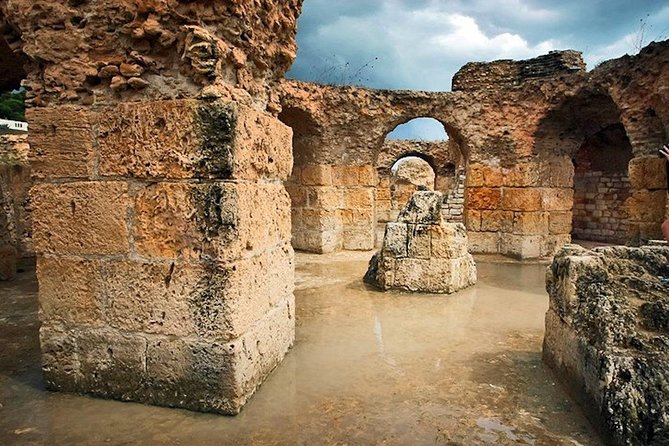
The Carthage Aqueduct stop lasts about 30 minutes. The aqueduct is a reminder that cities depend on systems most people never notice until they fail.
The remains point to the effort required to move water across distance to serve a major urban center. As with the other Carthage stops, much of the structure is fragmentary, so your guide’s commentary gives the site its meaning.
This is a quick stop rather than a long walk. It works well as part of a broad overview, but it will not satisfy anyone hoping to spend an entire morning on Roman infrastructure.
Together, the four Carthage visits create a useful sequence: city, baths, religious site, and water system. That range is one reason the excursion feels fuller than a simple visit to one ruin.
Sidi Bou Said: blue-and-white streets above the sea
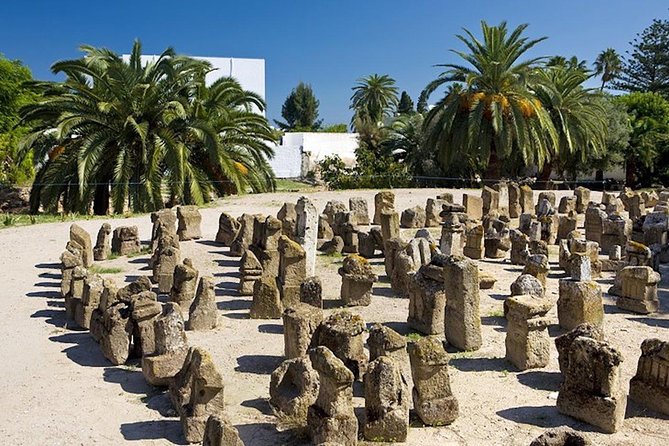
After Carthage, you spend about an hour in Sidi Bou Said. The itinerary also identifies this portion as the centro storico, or historic center. Admission is free.
Sidi Bou Said is famous for its white buildings, blue doors, narrow streets, and position above the Mediterranean. The mood changes at once. After the exposed stones of Carthage, you get a compact village walk with cafés, painted doors, and sea views.
This is the part of the day where you should slow down as much as the schedule allows. Look beyond the main street. Small details, such as doorways, shutters, and blue trim, are what give the village its character.
One hour is enough for a pleasant introduction and photographs, but not for a long, unhurried visit. This is the stop most likely to leave you wishing for extra time, especially if you enjoy views, architecture, or café breaks.
The tour does not list shopping or food as included, so treat any purchases or refreshments as optional extras. Your guide can help you use the hour well, especially if you want to focus on views rather than browsing.
The Bardo Museum: the day’s strongest indoor stop
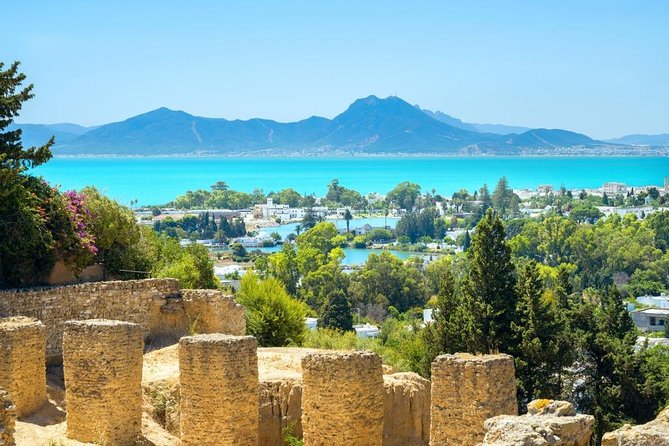
The National Museum of Bardo takes about an hour, with admission included. It is home to one of the world’s largest collections of Roman mosaics and presents a wide range of Tunisian history and art.
For many people, the Bardo will be the most informative stop. Carthage gives you ruins in their original setting, while the museum shows the fine detail that survives indoors: mosaic floors, carved objects, and archaeological pieces from different periods.
The Roman mosaics are the main draw. Their scale, color, and careful design show the wealth and artistic skill present in Roman North Africa. A guide can point out scenes and patterns that are easy to miss if you walk through the galleries alone.
The one-hour visit is practical but short. One family specifically preferred more time in Carthage and Sidi Bou Said and less time at the museum. That is a useful warning, not a criticism. If you love museums, you may want to linger. If you prefer outdoor sites, the Bardo can feel like the longest stop of the day.
The museum is closed on Mondays, so check the date before you reserve. If it is closed, the planned route would need to change.
Bab Bhar and the historic heart of Tunis
The route then reaches Bab Bhar, the famous gate of Tunis. The formal stop lasts about 15 minutes and is free.
Bab Bhar marks the transition into the Medina and gives you an easy visual starting point. It is a short photo and orientation stop, not a full sightseeing visit. From here, the streets become narrower and the architecture more concentrated.
The Medina of Tunis is a UNESCO-listed old city. It is not simply a preserved monument. It is a lived-in part of the capital, with shops, workshops, religious buildings, and markets operating along its lanes.
That difference matters. You are not walking through an empty museum after closing time. You are seeing a historic urban center still used for trade and daily errands.
Zitouna Mosque and the Medina’s working streets
The Medina visit lasts about an hour and is free. The route includes Zitouna Mosque, a traditional cap makers’ market, and a colorful perfume market.
Zitouna Mosque is one of the key landmarks of the old city. Even when your time inside or around the mosque is limited, its presence helps you understand the Medina’s layout and religious importance. Dress with respect and follow your guide’s instructions, since access arrangements can vary.
The cap makers’ market offers a glimpse of a traditional craft trade. The perfume market brings a different sensory note, with shop displays and the close rhythm of small commercial streets.
You will need to stay aware of your footing and surroundings in the narrow lanes. The Medina is best appreciated by walking at an easy pace, listening to your guide, and accepting that the route may feel less orderly than a modern shopping street.
An hour gives you a good first look but cannot cover the whole old city. If you want serious shopping, extensive photography, or time inside every historic building, plan a separate Medina visit.
Guides, drivers, and the human side of the day
The strongest pattern in the tour feedback is the praise for the guides and drivers. Bouhdid is noted for excellent English, humor, and attention to individual interests. Boutheina is described as warm and engaging in the museum and historic parts of the day. Haudi has been praised for creating an easy, friendly atmosphere, while Saïf received strong approval for cultural explanations.
Haythem was singled out for taking special care of a family with a baby. Halim and Momo were praised for calm, safe driving, and one German-language experience specifically valued the air-conditioned vehicle and a punctual guide.
These details matter because the route includes several transfers and four distinct kinds of sightseeing. A patient driver and an attentive guide can make the difference between a tiring checklist and a day that feels manageable.
The experience is private, but the exact guide assigned to your booking may vary. You should not assume a particular person unless the operator confirms it. Still, the repeated emphasis on language ability, timing, safe driving, and personal attention gives you a useful picture of what to request.
Who will get the most from this tour
I would choose this excursion if you are visiting Tunisia for the first time and want a broad introduction without arranging several separate outings. It suits couples, families, and small groups who value a private vehicle and want both famous sights and ordinary city life.
It is also a good fit if you enjoy variety. In one day, you see Roman remains, Punic archaeology, a coastal village, museum art, a historic gate, a mosque, and working markets.
You may want another plan if your main goal is detailed archaeology. Carthage deserves more than two hours for serious study. The same is true of the Bardo Museum and Tunis Medina. The tour gives you a strong first look, not specialist-level time at every site.
The day also includes walking, uneven archaeological ground, and narrow Medina streets. Most people can take part, but anyone with mobility limits should ask for practical details before booking. A vegetarian option is available if you request it in advance.
Timing, value, and booking advice
The advertised duration is about eight hours. That is a full day, especially when you add pickup and driving between Hammamet, Carthage, Sidi Bou Said, the museum, and Tunis.
The average booking lead time is 21 days. That suggests planning ahead, particularly if you need a certain language, have a fixed holiday schedule, or want to avoid Monday for the Bardo Museum.
The tour has a 4.6 rating from 30 reviews, with 93 percent recommending it. Those figures support a strong overall impression, but they do not erase the central tradeoff: this is a wide route with limited time at individual stops.
Free cancellation is available up to 24 hours before the start time. Changes or cancellations inside that window are not refunded, and poor weather or failure to reach the minimum number of participants can lead to a different date or a full refund. The tour requires good weather.
Should you book it?
Book it if you want an affordable private overview of Tunis and its nearby historic sites. The mix of Carthage, Sidi Bou Said, Bardo, and the Medina is hard to beat for a single day, and the guide can help connect places that would otherwise feel unrelated.
Think twice if you want a slow museum visit, a long café stop in Sidi Bou Said, or hours among Carthage’s ruins. For that style of trip, use this tour as an introduction, then return to your favorite area on another day.
At $35 per person, the value is strongest for first-time visitors who want transport, admission to the main paid sites, and a private guide in one package. Ask for your preferred language, mention any dietary needs, check the Bardo’s Monday closure, and tell the operator if you are traveling with a baby or need a gentler pace.
FAQ
Where does the tour start?
Pickup is offered from Hammamet or Tunis. Confirm the exact pickup details when booking.
How long does the experience last?
The tour lasts approximately eight hours.
Is this a private tour?
Yes. Only your group participates in the activity.
What is included at Carthage?
Admission is included for the main Carthage archaeological visits listed on the route, including the general site, Antonine Baths, Tophet de Carthage, and Carthage Aqueduct.
Is admission to Sidi Bou Said included?
Sidi Bou Said has no admission charge on this tour.
How long is the visit to the Bardo Museum?
The planned visit lasts about one hour, and museum admission is included.
Is the Bardo Museum open every day?
The Bardo Museum is closed on Mondays.
What will I see in Tunis Medina?
The route includes Bab Bhar, Zitouna Mosque, narrow historic streets, a traditional cap makers’ market, and a perfume market.
Is a vegetarian meal option available?
Yes. Request the vegetarian option when booking.
Can I cancel for a refund?
You can cancel up to 24 hours before the start time for a full refund. Cancellations or changes made less than 24 hours before the start are not refunded.
More Bardo Museum Tours in Hammamet
- VIP Tour: Tunis Medina/Bardo, Sidi Bou Said, Carthage |PICKUP ALL
★ 5.0 · 512 reviews - Private tour: Medina,Carthage ,Sidi Bou Said, Bardo Museum+lunch
★ 5.0 · 230 reviews - Carthage, Bardo Museum, Sidi Bou Said and Medina Private Day Tour
★ 4.5 · 153 reviews - Tunis: Carthage, Bardo Museum, Sidi Bou Said & Medina Group Tour
★ 4.5 · 33 reviews
Just added around Hammamet
- 4-Day Private Tour: Sahara and Djerba Island from Tunis and Hammamet★ 5.0 · 4 reviews
- Enfidha Private Arrival Airport Transfer to Hammamet★ 4.5 · 4 reviews
- Kairouan, El Djem and Monastir Guided Excursion from Hammamet★ 5.0 · 5 reviews
- Private Guided Excursion Tunis, Carthage and Sidi Bou Said from Hammamet★ 5.0 · 8 reviews
- Executive: Transfer Tunis Airport to Hammamet by Mercedes E Class★ 5.0 · 4 reviews
- Private Excursion of Friguia Park and Medina of Hammamet★ 4.5 · 4 reviews
- 3-Day Private Excursion to the Sahara departing from Hammamet★ 4.5 · 10 reviews
- DayTrip to KORBOUS Thalasso-Thermal Bath & Spectacular SEA Cliffs★ 4.5 · 5 reviews
Carthage and Sidi Bou Said Tours, compared.

VIP Tour: Tunis Medina/Bardo, Sidi Bou Said, Carthage |PICKUP ALL
Read our review →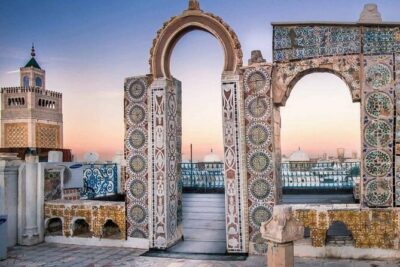
Private tour: Medina,Carthage ,Sidi Bou Said, Bardo Museum+lunch
Read our review →Private tour: Medina,Carthage ,Sidi Bou Said, Bardo Museum+lunch
Read our review →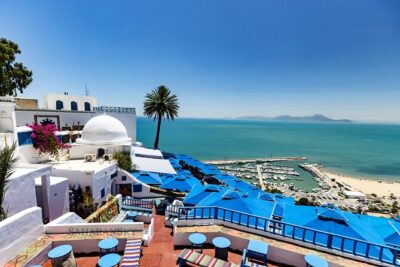
Carthage, Bardo Museum, Sidi Bou Said and Medina Private Day Tour
Read our review →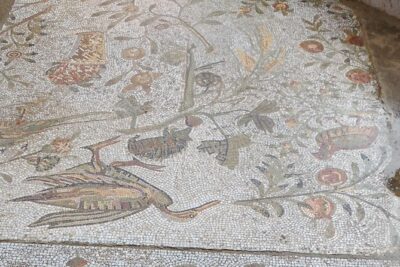
Guided Bike Tour of Carthage Archeological Site in Tunisia
Read our review →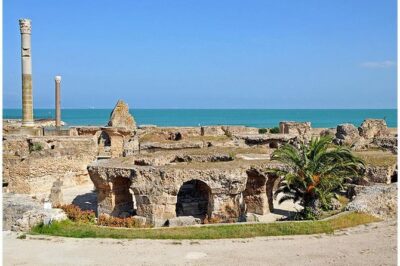
1 day excursion Tunis Sidi Bousaid Carthage departure from Sousse
Read our review →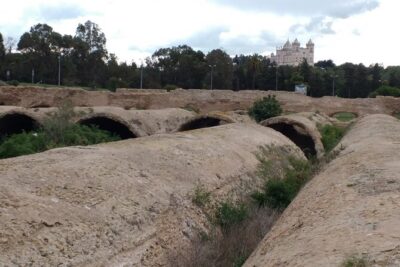
Group Guided Bike Tour of Carthage Archeological Site in Tunisia
Read our review →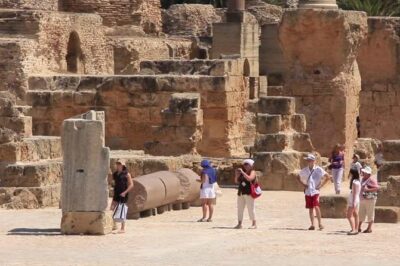
Archaelogical Site Of Carthage + Picturesque Village Of Sidi Bou Said
Read our review →Browse the lists this tour appears in