
Reviewed · DOUGGA AND BULLA REGIA TOURS
Private Day Trip to Testour, Dougga and Bulla Regia from Hammamet
Dougga is the star here: a remarkably complete Roman city where you can walk from the theater to the Capitol, baths, forum, and Libyco-Punic Mausoleum without the gaps you often find at ancient sites. Add Bulla Regia’s underground houses and Testour’s counterclockwise clock, and this becomes a serious archaeology day rather than a quick photo stop.
I like the private format, since your guide can adjust the pace and explain details in English, French, or another arranged language. I also like the local touches, from Testour’s cheese tasting to a possible stop for pomegranate juice or bread baked in an old furnace. The main drawback is the distance: an advertised eight-hour trip can run to around 11.5 hours, and the road day is long.
Key points at a glance
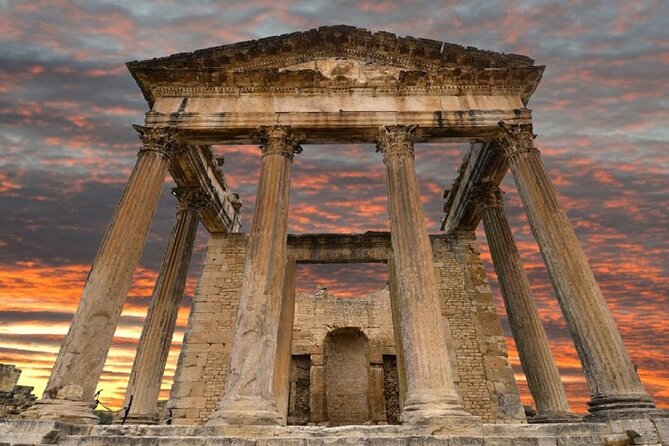
- Dougga’s complete Roman town: Spend about two hours among the Capitol, theater, forum, baths, houses, and triumphal arch.
- Bulla Regia’s unusual architecture: See religious buildings and the remains of a city known for underground homes.
- Testour’s distinctive minaret: The 23-meter octagonal tower has a clock whose hands turn counterclockwise.
- A genuinely private outing: Only your own group takes part, with pickup offered from Hammamet.
- Strong guide-led experience: Guides named Faouzi, Mohamed, and Chaoukni have been praised for clear explanations and careful help.
- Plan for a long day: The stated duration is about eight hours, but one outing lasted 11.5 hours.
Why this day trip is more than a Roman ruins checklist
Tunisia has ancient sites that can feel disconnected when seen one at a time. This route gives you three different chapters in one day. Testour introduces a later Andalusian and Moorish story, Dougga shows an indigenous settlement shaped by Roman rule, and Bulla Regia brings a different Roman town with a striking underground design.
That variety is the real value. You are not simply visiting three sets of broken columns. You are comparing a living village with an unusual Islamic monument, a hilltop Roman city, and an archaeological site known for its religious buildings and lower-level houses.
The price is listed at $133.57 per person. For a private vehicle, hotel pickup, an included admission ticket at Dougga and Bulla Regia, and a full day with a guide and driver, that can be fair value, especially for two or more people sharing the experience. Group discounts may improve the calculation for a larger party.
Still, I would not treat the price as an all-inclusive day out. The supplied details do not state that meals or drinks are included. A cheese tasting is part of the Testour stop, and some outings have included pomegranate juice or freshly baked bread, but you should not assume every food item is covered.
More dougga and bulla regia tours in Hammamet:
- Private Excursion to Testour, Dougga and Bulla Regia from Tunis.
★ 5.0 · 100 reviews - Full Day Dougga & Bulla Regia Via Testour Private tour with Lunch
★ 5.0 · 29 reviews - Private Guided Tour of Dougga and Testour Mosque
★ 4.5 · 15 reviews
Testour and the clock that runs backward
Testour is the shortest and most unusual stop. The village was founded by Moorish people at the beginning of the 17th century, and its Andalusian character gives the opening part of the day a different feel from the Roman sites that follow.
The Great Mosque is the main point of interest. Its 23-meter minaret is octagonal, with small double windows, Andalusian-style inscriptions, and glazed decorative details. At the top is a mechanical clock whose hands turn counterclockwise. The tower resembles the bell towers found in southern Spain, which helps explain why this small Tunisian town feels so different from the usual resort circuit.
You will take a panoramic tour rather than a long archaeological visit. That is a good fit for the schedule. The point is to see the mosque, understand the village’s Andalusian connection, and get a taste of local life before moving into the ancient world.
A cheese tasting is included here, featuring a regional specialty. Some outings have also included a stop for pomegranate juice. Another account describes a roadside pause where a Berber woman was baking bread in an old furnace, followed by a chance to eat the bread. These touches are not presented as guaranteed elements, so think of them as possible extras rather than promises.
I like Testour because it breaks up the ancient ruins. If your main goal is Roman architecture, you may find the stop brief. If you want the day to connect Tunisia’s ancient past with its later cultures, it earns its place.
Dougga, Tunisia’s great Roman walk
Dougga receives about two hours, and that is the right amount of time for a focused visit, though you may wish for longer. The site was added to the UNESCO World Heritage List in 1997 and is often described as the best-preserved small Roman city in North Africa.
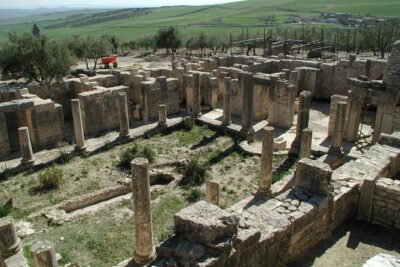
The word small can mislead you. The remains cover enough ground to make comfortable shoes essential, and your guide has a lot to explain. The preserved area includes the monumental center, entertainment buildings, public baths, houses, and funerary monuments.
Start with the theater. Its surviving structure gives you a clear sense of how performances worked in a Roman town, and its setting is one of the memorable parts of the visit. The Capitol is another major stop, with its broad temple front and commanding position. From there, the forum and market help you picture the city as a working public center rather than a collection of isolated stones.
The thermal baths reveal the practical side of Roman life. Houses show how private spaces fitted into the town, while the Place of the Rose of the Winds points to the Roman habit of organizing civic space around symbolic and functional markers.
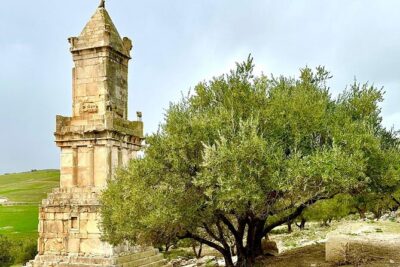
The triumphal arch and Libyco-Punic Mausoleum widen the story. Dougga was not created from nothing under Roman rule. It began as an indigenous settlement, and the site preserves traces of several periods. That mixture is one reason a guide matters here. Without explanation, it is easy to see columns and walls. With context, you can follow how a local foundation changed under Roman influence.
One of the most useful guide comments from this experience is the attention given to key areas rather than a rushed drive-by tour. Faouzi, Mohamed, and Chaoukni are among the guides named in accounts of the outing. Their roles included explaining the monuments, helping with the pace, and giving information during the drives between stops.
Give Dougga your best energy. It is the largest and most rewarding portion of the day for anyone interested in ancient architecture. Rain can also affect the order of the visit. One guide adjusted the route so the main areas could be seen before heavy rain arrived, a practical response that matters at an open-air site.
Bulla Regia and its lower-level Roman homes
Bulla Regia is a different kind of Roman experience. The site lies a few kilometers north of Jendouba in northwestern Tunisia and records more than 17 centuries of settlement.
Its story begins with the Numidians, who founded the town by the end of the sixth century BC at the latest. It later became a royal residence, was autonomous in the early Roman period, became a municipality under the Flavian emperors, and was made a Roman colony under Hadrian between AD 117 and 138.
The ruins include the Capitol, Temple of Apollo, two Christian basilicas, and the Church of Alexander. These buildings show how the town’s public and religious life changed over time. By the end of the fifth century, Augustine regarded its inhabitants as bad Christians, another reminder that ancient sites were shaped by arguments over belief as well as by imperial rule.
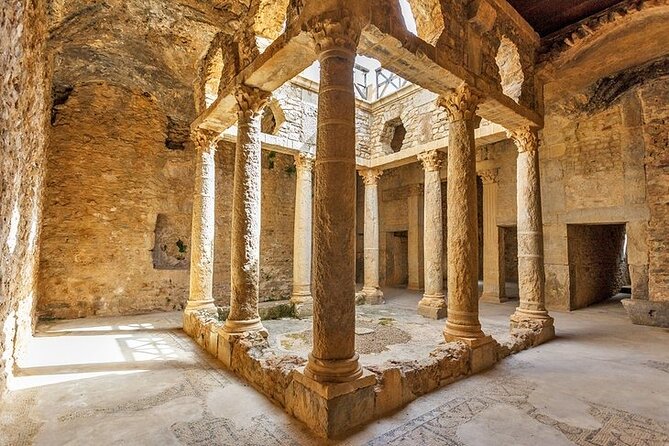
Bulla Regia is best known for its underground houses. The supplied tour description highlights this feature, while the stop also focuses on the religious buildings. The lower-level design is especially useful for understanding how Roman residents adapted their homes to the local climate. You will want to listen closely to the guide here, since the meaning of the remains is easier to grasp when the plan of the houses is explained.
The visit is scheduled for about two hours, matching Dougga. In practice, time may be adjusted because the route is long and weather can change the plan. One account described Bulla Regia as worth a shorter visit after Dougga, which is fair advice if you are already tired. If domestic Roman architecture interests you more than grand temples, you may rate Bulla Regia as the day’s high point.
More hammamet tours in Hammamet:
- Private tour: Medina,Carthage ,Sidi Bou Said, Bardo Museum+lunch
★ 5.0 · 194 reviews - Quad ride on the hills of Hammamet
★ 4.0 · 104 reviews - 2-Day Tunisian Sahara Tour with Food & Stay from Hammamet
★ 4.5 · 80 reviews - Tour to the Medina of Hammamet and the Spice Market of Nabeul
★ 4.0 · 45 reviews
A private car changes the feel of the day
Pickup is offered, with a listed start time of 7:30 am. Since this is a private activity, only your group participates. That matters on a route with three stops spread across northwestern Tunisia. You do not have to wait for a large coach party at each monument, and the guide can respond to your walking speed or interest.
The private setup also makes the early start more bearable. You can settle into the vehicle and use the road time to ask questions about Tunisia, plants, local food, or the history of the places ahead. One account specifically praised a driver for getting the group to each stop quickly and safely, while another described the guide and driver as especially helpful to an older couple.
The day is not a light excursion from Hammamet. The official estimate is about eight hours, but one outing took 11.5 hours. That difference could matter if you have an evening booking, a flight, or a fixed dinner plan. I would keep the evening open.
There is also a safety note that should not be ignored. One reported outing included a collision with another car while the passengers were inside. No serious injuries were reported, but the incident caused delays. This appears to be an isolated account rather than a stated feature of the tour, yet it is a sensible reason to confirm the vehicle and driver arrangements when booking and to keep realistic expectations about road time.
How much history will you get?
This is a guide-led experience, not a self-guided transfer with entrance tickets. The strongest part of the tour is the amount of explanation available at places where the remains can otherwise seem confusing.
The named guides include Faouzi, Mohamed, and Chaoukni. Descriptions of the guiding emphasize careful explanations, friendly service, and thorough coverage of the important areas. One guide was also praised for helping a person with walking difficulties, and another was described as a national Tunisian guide who spoke French very well.
The booking information does not guarantee a particular guide or language, so you should confirm those details before paying if they are important to you. Still, the private format gives you a better chance to ask questions than a large group tour would.
I would ask your guide to point out the difference between Roman public buildings and earlier local traditions at Dougga and Bulla Regia. I would also ask for help understanding the underground houses at Bulla Regia, since this is the feature most likely to be missed if you simply follow the visible walls.
Walking, weather, and what to bring
Dougga and Bulla Regia are archaeological sites, so expect outdoor walking over uneven ground. The supplied information says most people can participate, and service animals are allowed. It does not give a detailed accessibility plan, so anyone with major mobility limits should ask ahead about surfaces, distances, and vehicle access.
Wear shoes suited to ruins rather than fashion. Bring water, sun protection, and a light layer for the early start. The weather policy matters because the experience requires good weather. If poor weather cancels the trip, you are offered another date or a full refund.
Do not schedule this as a tight eight-hour block. The advertised duration is approximate, and the long route can stretch. That is not necessarily bad. The best moments may come from the unplanned local stops, but you need to allow for them.
Who should book this private route?
I would choose this trip if you care about archaeology, Roman town planning, religious buildings, or the layered story of Tunisia. It also suits couples, families, and small groups who want a private vehicle instead of a shared coach.
It is a particularly good match for visitors who have already seen Hammamet’s beaches and want a full day inland. The contrast is strong: Testour offers Andalusian architecture and food, Dougga supplies the grand Roman setting, and Bulla Regia adds a more unusual domestic and religious side of antiquity.
I would think twice if you dislike long drives, want a relaxed holiday morning, or prefer one site explored at length. Dougga deserves more than a quick look, but this route asks you to share your attention with two other stops. The 7:30 am start and possible 11.5-hour day require stamina.
Free cancellation is available up to 24 hours before the start time for a full refund. Changes or cancellations made within 24 hours are not accepted for a refund. Cut-off times use local time, so check carefully if you are booking from abroad.
Should you book it?
Book this tour if Dougga is high on your Tunisia list and you want to add two very different stops without organizing transport yourself. The private format, included admissions at Dougga and Bulla Regia, hotel pickup, and guide support make the $133.57 price easier to justify, especially when shared among a small group.
Go in knowing that the eight-hour estimate may be optimistic. Keep the evening free, expect plenty of road time, and treat the food and roadside encounters as pleasant possibilities rather than guaranteed inclusions. For an archaeology-focused day that reaches beyond Tunisia’s resort towns, this is a strong choice.
FAQ
Where does the tour start?
The tour starts from Hammamet, with pickup offered. The listed start time is 7:30 am.
How long does the experience last?
The advertised duration is approximately eight hours. One recorded outing lasted 11.5 hours, so you should allow extra time.
Is this a private tour?
Yes. Only your group participates in the activity.
What places does the tour visit?
The route visits Testour, Dougga, and Bulla Regia.
Are admission tickets included?
Admission tickets are listed as included for Dougga and Bulla Regia.
What can I see in Testour?
You can see the Great Mosque and its 23-meter octagonal minaret, including the unusual mechanical clock whose hands turn counterclockwise. The stop also includes a local cheese tasting.
What can I see at Dougga?
The visit includes the theater, Capitol, forum, thermal baths, houses, Place of the Rose of the Winds, triumphal arch, and Libyco-Punic Mausoleum. The site is UNESCO-listed and the visit lasts about two hours.
What can I see at Bulla Regia?
The archaeological site includes the Capitol, Temple of Apollo, two Christian basilicas, and Church of Alexander. Bulla Regia is also known for its underground houses, and the planned visit lasts about two hours.
Can I cancel for a full refund?
Yes, if you cancel at least 24 hours before the experience begins. Cancellations or changes made less than 24 hours before the start time are not refunded, and poor weather may result in a different date or full refund.
More 1-Day Tours in Hammamet
- Tunis, Sidi Bousaid and Carthage day trip from Hammamet
★ 4.5 · 44 reviews - Kairouan & El Djem Guided Day Trip with Lunch from Hammamet
★ 4.0 · 18 reviews - Day trip to Cape Bon
★ 4.0 · 5 reviews - 1 day excursion Tunis Sidi Bousaid Carthage departure from Sousse
★ 5.0 · 87 reviews
Just added around Hammamet
- 4-Day Private Tour: Sahara and Djerba Island from Tunis and Hammamet★ 5.0 · 4 reviews
- Enfidha Private Arrival Airport Transfer to Hammamet★ 4.5 · 4 reviews
- Kairouan, El Djem and Monastir Guided Excursion from Hammamet★ 5.0 · 5 reviews
- Private Guided Excursion Tunis, Carthage and Sidi Bou Said from Hammamet★ 5.0 · 8 reviews
- Private Excursion of Friguia Park and Medina of Hammamet★ 4.5 · 4 reviews
- Executive: Transfer Tunis Airport to Hammamet by Mercedes E Class★ 5.0 · 4 reviews
- 3-Day Private Excursion to the Sahara departing from Hammamet★ 4.5 · 10 reviews
- DayTrip to KORBOUS Thalasso-Thermal Bath & Spectacular SEA Cliffs★ 4.5 · 5 reviews
Dougga and Bulla Regia Tours, compared.
Private Excursion to Testour, Dougga and Bulla Regia from Tunis.
Read our review →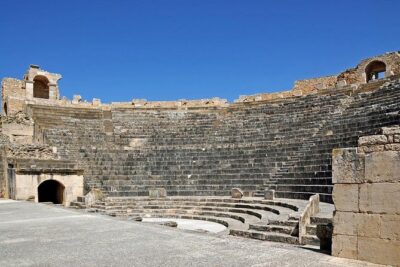
Full Day Dougga & Bulla Regia Via Testour Private tour with Lunch
Read our review →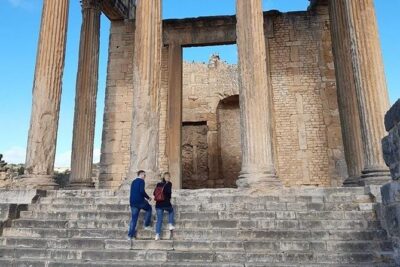
Private Guided Tour of Dougga and Testour Mosque
Read our review →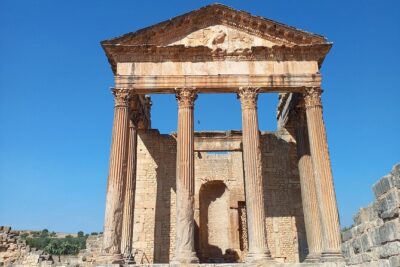
Bulla Regia and Beni Mtir Cascade Daytrip from Tunis
Read our review →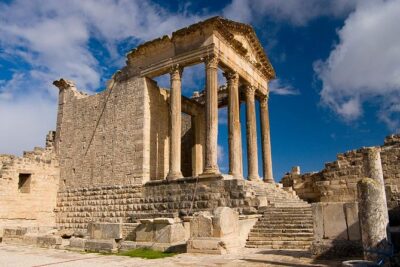
DAY TRIP TO Dougga & Bulla Regia , DEPARTURE FROM Tunis
Read our review →Browse the lists this tour appears in