
Reviewed · DOUGGA AND BULLA REGIA TOURS
Dougga and Bulla Regia Guided Tour From Tunis
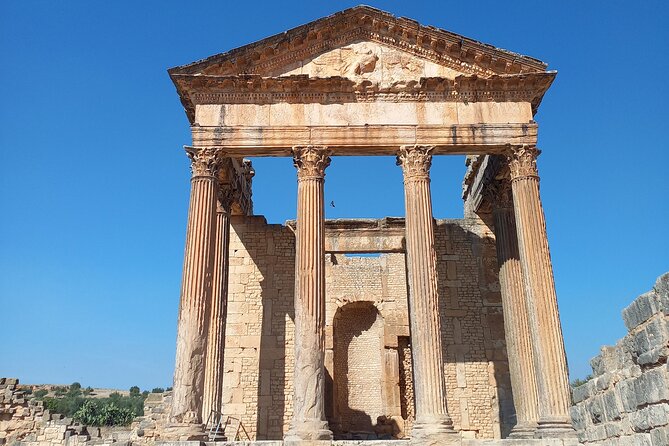
The most remarkable part of this day is the contrast between Dougga’s hilltop Roman ruins and Bulla Regia’s underground homes. In one outing, you see grand public buildings spread across open countryside, then walk into cool rooms built below ground to escape the North African heat.
I like the private car, which gives you hotel pickup, a quieter ride, and a chance to ask questions along the way. I also like the mix of major ruins and small-town culture in Testour, where tea, a mosque visit, and regional cheese add a local touch. The main drawback is the long road time: this is a full 7 to 8 hours, and the food stop may be basic.
Key points to know before booking
- Dougga is the headline stop: Allow about 1 hour 30 minutes to tour Tunisia’s UNESCO-listed Roman site.
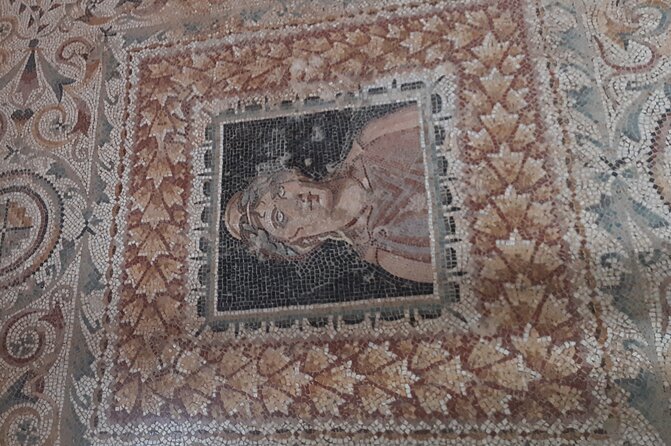
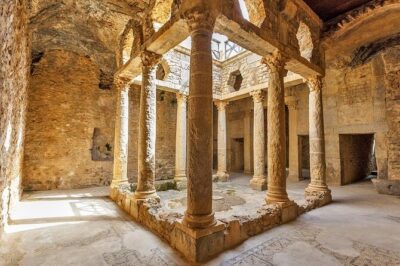
- Bulla Regia offers something different: Its underground houses and Venus mosaic give you a rare look at Roman domestic life.
- Testour breaks up the archaeology: Tea, an Andalusian village, the Great Mosque, and regional cheese add variety.
- Private transport saves effort: Pickup and drop-off are offered, with only your group in the vehicle.
- Guide quality matters: Ghassen has been praised for clear explanations and useful Tunisia advice, while driver Ameur has earned praise for punctual service.
- The value depends on group size: At $141.36 per person, the price is easier to justify for a small private group than for one person traveling alone.
Why this Roman ruins day trip works from Tunis
Dougga and Bulla Regia are not quick side trips from Tunis. They sit well beyond the capital, and seeing both by ordinary public transport would take planning, connections, and patience. This outing handles the driving and joins the two sites in one day.
That matters because the sites show different sides of Roman Tunisia. Dougga gives you monumental scale: a theater, temples, paved streets, and broad views from a high setting. Bulla Regia is more intimate. You move through private houses, courtyards, mosaics, and rooms placed underground.
The trip runs about 7 to 8 hours, including the journeys between stops. You should think of it as a serious full-day excursion, not a relaxed half-day tour. The private format helps. You are not waiting for a large coach to load, and your guide can explain things during the drive.
The published price is $141.36 per person. That is not the cheapest way to see ruins in Tunisia, but it includes private transportation, a certified guide, pickup, drop-off, and admission to Dougga and Bulla Regia. For two or more people, the cost can make good sense because you are paying for a private vehicle and service rather than simply buying entry tickets.
The experience has a 4.7 rating from 11 ratings, with 91 percent recommending it. That is a strong result, though the small number of ratings means I would still pay attention to the language issue and food concern described below.
More dougga and bulla regia tours in Tunis:
- Private Excursion to Testour, Dougga and Bulla Regia from Tunis.
★ 5.0 · 100 reviews - Full Day Dougga & Bulla Regia Via Testour Private tour with Lunch
★ 5.0 · 29 reviews - Private Guided Tour of Dougga and Testour Mosque
★ 4.5 · 15 reviews
Dougga gives you the grandest view
Dougga is the part of the day that deserves the most time. The guided visit lasts about 1 hour 30 minutes, and that is just enough to see the main remains without turning the stop into a rushed photo session.
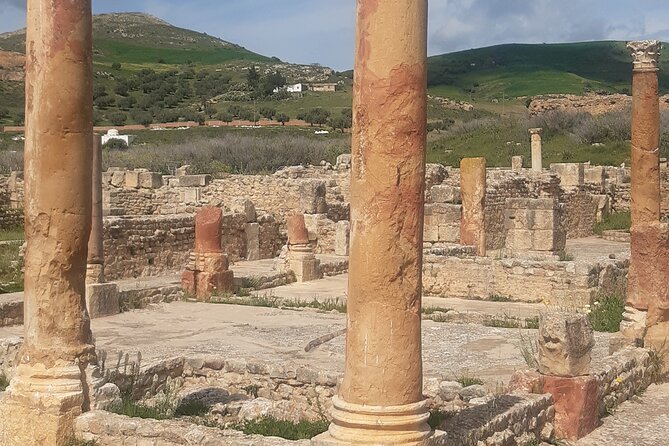
The site sits in an open, elevated setting. As you walk among the ruins, you get both architecture and countryside views. The setting is a large part of Dougga’s appeal. This is not an isolated monument surrounded by modern streets. The remains spread across the hills, making it easier to imagine a substantial ancient town.
Your guide explains what you are seeing in place, rather than leaving you to decode a field of stone. That is important at Dougga, where columns, foundations, temples, and public buildings can blur together without context.
The theater is one of the site’s memorable features. Roman theaters are easy to understand even when partly ruined, since the seating, stage area, and relationship to the surrounding terrain remain visible. You can appreciate the engineering while also taking in the wide view.
The site rewards sturdy shoes and a steady pace. The information provided does not specify the exact walking conditions, so you should expect an archaeological site rather than a polished museum floor. Most people can participate, but anyone with mobility concerns should ask the operator for more detail before booking.
The strongest praise for the outing centers on Dougga. One booking described it as an enormous highlight, and that matches the way the itinerary is weighted. If you had to choose only one of the two major sites, Dougga would likely be the better choice for monumental ruins and views.
Bulla Regia reveals Roman life below ground
Bulla Regia receives about one hour, less than Dougga but enough for a focused guided visit. Its special feature is the underground housing, built partly below street level to create cooler interiors during hot weather.
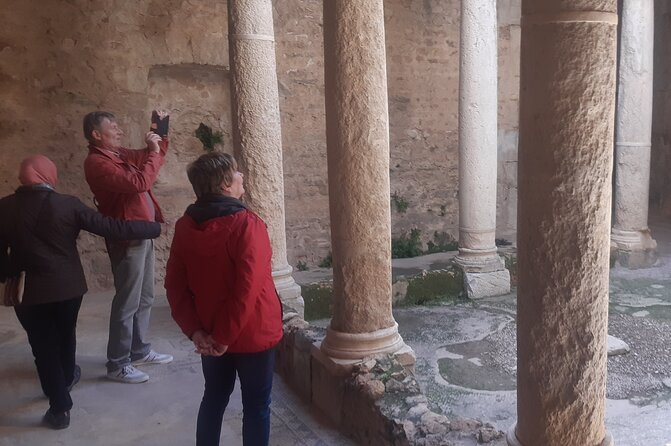
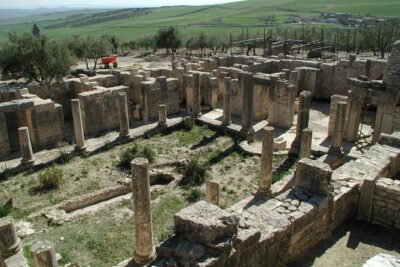
This changes the feel of the visit. At Dougga, you look across a broad ancient town. At Bulla Regia, you move from room to room and pay closer attention to floors, walls, courtyards, and domestic design.
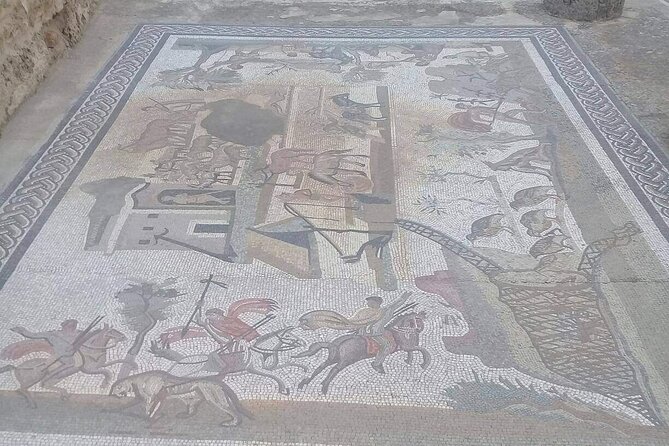
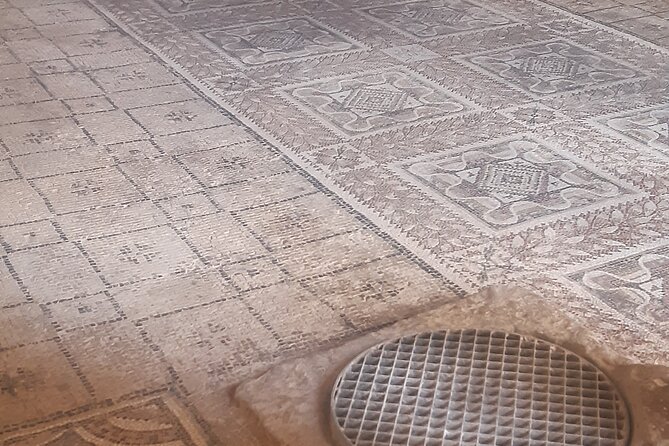
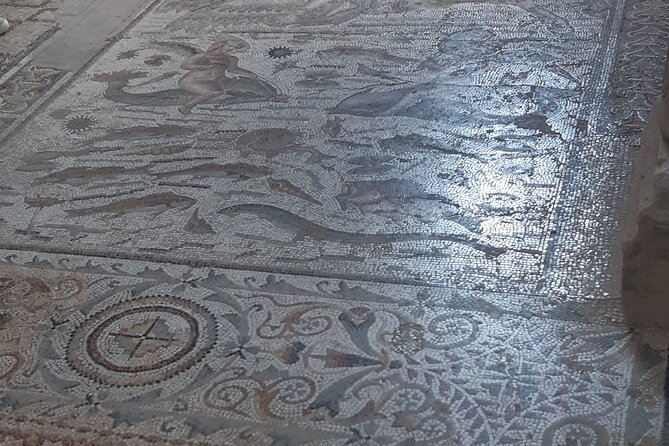
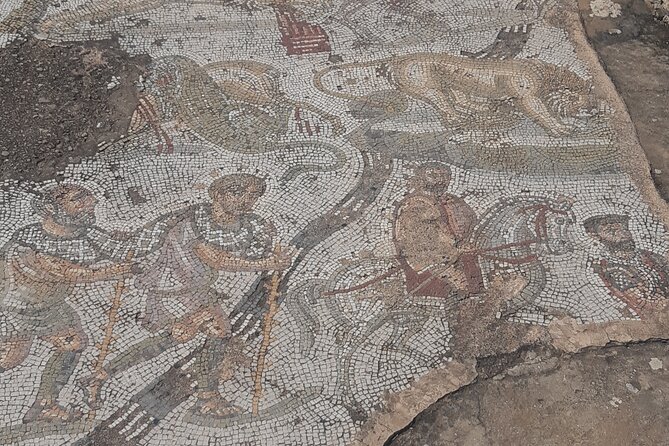
The underground houses are famous for their mosaics. The Venus mosaic is a key sight, and your guide points out what you are looking at in place. Without that explanation, a mosaic can become simply a pretty floor. With context, you begin to see how decoration, room use, and climate shaped Roman homes.
Bulla Regia is also a good counterpoint to Dougga because it shows private life rather than only public monuments. You are not just looking at temples and theaters. You are seeing how affluent residents arranged their homes and used the ground beneath them.
An hour passes quickly here. I would keep your camera ready, but do not let photography eat the whole stop. The value of Bulla Regia comes from noticing the details in the houses and hearing the explanation.
The admission ticket is included. That makes the visit simple, since you do not need to arrange entry separately. The site guide is described as accredited, and the tour format includes an explanation of what you see on site.
Testour adds a small-town pause
Testour is the shortest stop, at about 30 minutes, but it gives the day a welcome change of pace. Instead of another Roman ruin, you visit an Andalusian village with a connection to Cordoba.
The stop includes tea, a visit to the cultural center, and the Great Mosque of Testour. You also taste regional cheese. This is a modest local encounter rather than a long village tour, but it helps break up the archaeological schedule.
The mosque is described as Andalusian medieval architecture. That makes Testour useful for understanding that Tunisia’s story is not only Roman. The country’s built heritage also reflects later Islamic and Andalusian influences.
Timing is the key limitation. Thirty minutes is enough for a quick look and a drink, but not enough for a detailed exploration of every corner of the village. I would treat it as a cultural pause between the two major sites, not as the central reason to book.
The order may depend on the day’s route. The experience description presents Dougga, Bulla Regia, and Testour, while the detailed schedule lists Bulla Regia, Dougga, and Testour. A past route also placed Testour between the two Roman sites. If the sequence matters to you, confirm it when arranging the pickup.
A few more Tunis trips to weigh up
- Guided Bike Tour of Carthage Archeological Site in Tunisia
★ 5.0 · 88 reviews - Guided tour in the UNESCO world heritage Medina of Tunis
★ 5.0 · 68 reviews - Group Guided Bike Tour of Carthage Archeological Site in Tunisia
★ 5.0 · 57 reviews - 7 Day Guided Tunisia Tour Including Pickup
★ 5.0 · 27 reviews
The food stop is practical, not a highlight
The tour includes local street food, and the short stop in Testour includes regional cheese. However, you should keep your expectations sensible. One low-rated experience described a poor wrap eaten standing near a bin.
That does not necessarily define every departure, but it is a useful warning. The food element is not presented as a restaurant meal or a carefully planned culinary experience. It is fuel during a long sightseeing day.
I would bring water and a small snack, especially if you prefer predictable food. The tour’s main value is the archaeological access and private transport, not the lunch. If food quality matters greatly to you, ask what is planned before departure.
This is also where the private format can help. With only your group in the vehicle, you may have more flexibility to discuss a brief food stop or make your preferences clear. The provided details do not promise custom meal arrangements, so do not assume a full choice of restaurants.
What the private car changes
Pickup is offered, and the activity is private, meaning only your group participates. That makes this a much more comfortable choice than a large shared bus if you value quiet travel or want to ask frequent questions.
The road journeys are a major part of the day. The drive gives you a chance to see the countryside around Tunis and talk with the driver or guide. One highly positive account praised the rolling scenery and the chance to discuss Tunisian history and current politics during the ride.
Punctuality is another strong point. The pickup service has been praised for arriving on time, and the return transfer is described as smooth. Drivers such as Ameur have received particular praise for excellent coordination and service.
You should still confirm your pickup details carefully. The supplied information says pickup is offered but does not list every hotel, meeting point, or vehicle specification. Confirmation arrives at booking, and the activity is near public transportation, but this remains a car-based excursion rather than a transit tour.
The vehicle is described as luxurious, though no specific model or seating arrangement is provided. If you need special space or have mobility concerns, ask before you pay.
The guide can make or break the day
A certified guide accompanies you at the archaeological sites. That is a major advantage because Dougga and Bulla Regia are much easier to understand with someone explaining the structures as you stand among them.
Ghassen is specifically praised for clear and detailed explanations, along with useful suggestions for the rest of a Tunisia trip. That kind of advice can add real value, especially if this day is part of a longer visit.
The language arrangement deserves attention. The tour can be booked with a French-speaking guide, and the guide may also speak English. One booking became unhappy when most of the explanation was given in English for a companion who requested it, leaving too little French for the other participant.
If your group uses different languages, state your preference clearly before the day begins. Ask how much time the guide can give each language. This is the most important service detail to settle in advance, particularly when the group includes French and English speakers.
The feedback also includes one complaint about imprecise explanations. That is a reminder that guide quality can vary, even though other accounts describe the guides as very good. A private tour gives you the chance to ask for clarification instead of quietly accepting an explanation you do not understand.
Is $141.36 per person fair?
The price is fair if you value time and convenience. You are covering a long round trip from Tunis, private transport, a certified guide, and admission to two major archaeological sites. Reaching both places independently would require more research and would likely make the day harder to manage.
The value is strongest for couples, families, or small groups. A private vehicle spreads the transport cost across your party, while a solo visitor pays the full per-person rate. Group discounts are available, though the exact reduction is not provided.
The price is less compelling if you only want one ruin or prefer slow independent visits. Dougga and Bulla Regia each deserve more time than this combined schedule allows, and you will spend several hours on the road.
I see this as a convenience-focused day. You trade some freedom and depth for a well-organized route that covers two remote sites in one outing. For a first visit to Tunisia, that trade can be worthwhile.
Who should book this experience?
I would recommend it to anyone staying in Tunis who wants Roman archaeology without renting a car. It is especially suitable if you want a private day, hotel pickup, and a guide who can put the ruins into context.
It also suits first-time visitors who want help with more than ancient monuments. Testour brings in later architecture, tea, and regional cheese, while the drive offers a chance to ask about Tunisia beyond the standard sights.
You may want another option if you need a slow, highly detailed archaeological study. The combined schedule gives Dougga about 1 hour 30 minutes and Bulla Regia about one hour. That is enough for a strong introduction, but not enough to inspect every structure.
I would also reconsider if your group needs a guaranteed single language. The language preference should be confirmed clearly in advance. Finally, do not book this expecting a polished food tour. The meal stop is secondary and may be basic.
What to know before you go
The booking confirmation is issued at the time of purchase. Free cancellation is available if you cancel at least 24 hours before the local start time. Changes or cancellations inside that window are not accepted for a refund.
The activity depends on good weather. If poor weather forces cancellation, you are offered another date or a full refund.
Service animals are allowed, and most people can participate. The total duration includes driving time, so plan your day around a full 7 to 8 hours rather than only the time spent walking through ruins.
Wear shoes suitable for archaeological ground, bring water, and keep some flexibility for the route order. If you want a certain balance of English and French, settle that before leaving Tunis.
Should you book Dougga and Bulla Regia from Tunis?
Yes, if you want to see two of Tunisia’s best Roman sites in one private day and prefer someone else to handle the long driving. Dougga is the main prize, while Bulla Regia supplies the unusual underground architecture and mosaics. Testour gives the schedule a human, local pause.
Book it for convenience, clear site explanations, and private transport. Skip it if you want long hours at each ruin, a guaranteed gourmet meal, or a fully customized language arrangement that has not been confirmed. For most first-time visitors with limited time in Tunis, the $141.36 price is reasonable, especially when shared by a small group.
FAQ
How long does the Dougga and Bulla Regia tour take?
The total experience lasts approximately 7 to 8 hours, including travel time between Tunis and the archaeological sites.
Is hotel pickup offered?
Yes. Pickup and drop-off are offered, though the supplied details do not list specific hotels or pickup times.
Is this a private tour?
Yes. Only your group participates in the activity.
How much time is spent at Dougga?
The guided visit at Dougga lasts about 1 hour 30 minutes.
How much time is spent at Bulla Regia?
The guided visit at Bulla Regia lasts about one hour, and admission is included.
What happens during the Testour stop?
You have tea in the Andalusian village, visit the cultural center and Great Mosque, and taste regional cheese. The stop lasts about 30 minutes.
Are admission tickets included?
Admission tickets are included for both Bulla Regia and Dougga. The Testour visit has no additional admission charge listed.
Can I bring a service animal?
Yes. Service animals are allowed.
What is the cancellation policy?
You can receive a full refund if you cancel at least 24 hours before the experience start time. Cancellations or changes made less than 24 hours in advance are not accepted for a refund. If poor weather causes the operator to cancel, you are offered another date or a full refund.
Just added around Tunis
- Dougga Guided Day Tour from Tunis★ 5.0 · 5 reviews
- Private Arrival Transfer: Tunis Airport to Tunis Hotel★ 4.5 · 5 reviews
- Tunisia 7-Day tour★ 5.0 · 6 reviews
- Roman Archeology Guided Tour Thuburbo Majus & Uthina★ 4.5 · 7 reviews
- Bardo Museum- The ruins of Carthage- Village of Sidi Bou Said★ 5.0 · 4 reviews
- The Medina★ 4.0 · 7 reviews
- Tunis Carthage Private Arrival Airport Transfer to Tunis★ 5.0 · 4 reviews
- Tunis Group Tour: Carthage, Sidi Bou Said, Bardo museum & Medina★ 5.0 · 5 reviews
Dougga and Bulla Regia Tours, compared.
Private Excursion to Testour, Dougga and Bulla Regia from Tunis.
Read our review →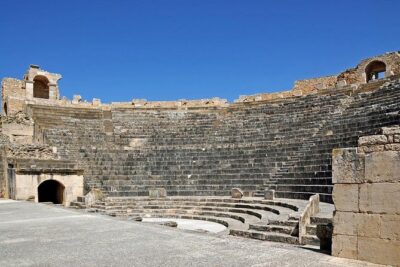
Full Day Dougga & Bulla Regia Via Testour Private tour with Lunch
Read our review →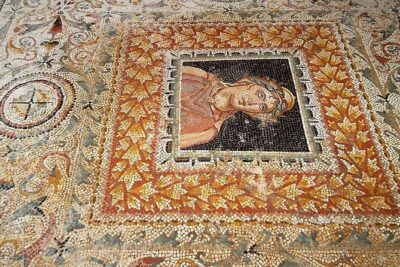
Private Day Trip to Testour, Dougga and Bulla Regia from Hammamet
Read our review →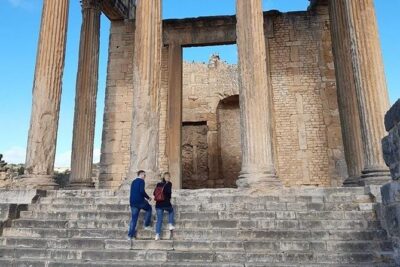
Private Guided Tour of Dougga and Testour Mosque
Read our review →
Bulla Regia and Beni Mtir Cascade Daytrip from Tunis
Read our review →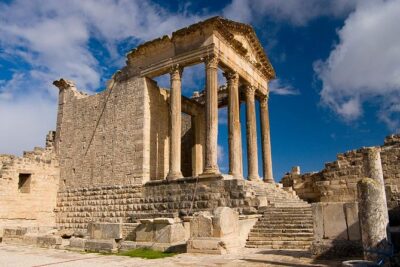
DAY TRIP TO Dougga & Bulla Regia , DEPARTURE FROM Tunis
Read our review →Browse the lists this tour appears in