
Reviewed · EL JEM AMPHITHEATRE TOURS
Kairouan, El Djem, Monastir Self-Guided Excursion from Hammamet
Kairouan’s grand Islamic monuments, El Djem’s enormous Roman amphitheater, and Monastir’s seafront make this one packed day across three very different chapters of Tunisia. You move from Arab-Muslim Kairouan to Roman Thysdrus and then to modern Monastir, without changing vehicles or sharing the day with strangers.
I like the private, air-conditioned transport and the strong mix of sights. The Aghlabid water basins, the Mosque of the Barber, the narrow lanes of Kairouan, El Djem’s arena, and Monastir’s mausoleum give you plenty to see. The drawback is pace: ten hours is a long day, and Monastir may receive less time if earlier visits run late.
Key points to know
- Three eras in one day: Kairouan covers Tunisia’s Islamic heritage, El Djem its Roman past, and Monastir its modern national story.
- El Djem is the headline stop: Plan two hours for the amphitheater, with another hour for the Roman mosaics and objects in its museum.
- Private means flexible, but not always guided: Transportation and taxes are included, while professional guiding and entrance fees are not.
- The $303.51 price covers up to three people: For a full group, that can be fair value for a private ten-hour vehicle and driver.
- Start early at 8:30 am: The schedule is ambitious, so delays can shorten your free time in Monastir.
- Clarify extras before departure: A local guide may be offered separately, and one customer reported confusion over the guide’s price.
Three Tunisian stories from one Hammamet departure
This excursion works because the stops are not interchangeable. Kairouan is a spiritual center, El Djem is a Roman monument on a huge scale, and Monastir links ancient Ruspina with the modern republic.
You begin at 8:30 am, with pickup offered from Hammamet. The ride is in a private, air-conditioned vehicle, and bottled water is supplied. Since the vehicle is reserved for your group of up to three, you avoid the usual problem of waiting for a coach full of other passengers.
The day lasts about ten hours. That sounds generous, but the route has six visits and several hours of sightseeing. I would treat the schedule as a framework rather than a guarantee that every stop will receive its full advertised time.
More El Jem Amphitheatre Tours in Hammamet
- Private and Guided Tour to Kairouan and El Jem and Monastir
★ 4.5 · 22 reviews - Kairouan & El Djem Guided Day Trip with Lunch from Hammamet
★ 4.0 · 18 reviews - Private Day Tour , Kairouan & Amphitheatre of el Jem From Tunis /Hammamet/Sousse
★ 4.5 · 8 reviews
Kairouan’s Aghlabid Basins explain the city’s survival
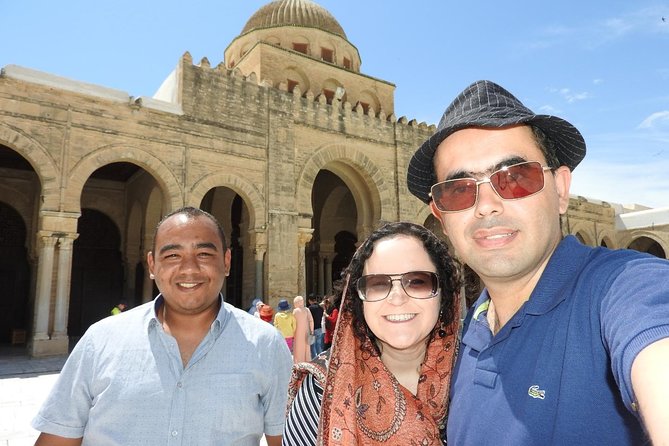
The first stop is the Bassins Aghlabites, outside Kairouan’s medina walls. These great reservoirs date from the early second half of the ninth century and are linked to the Aghlabid period, when water management was vital to the city.
The basins are not a polished palace or a decorated sanctuary. Their appeal is practical. They show how a major inland city supported itself through engineered water storage. That makes them a useful opening to Kairouan: before you study mosques and mausoleums, you see the infrastructure that helped the city function.
You have about 30 minutes here, and the admission ticket is not included. The stop is brief, so do not expect a long archaeological visit. It works best as a quick orientation before the more detailed religious and urban sights.
Sidi Sahbi brings Kairouan’s devotional side into focus
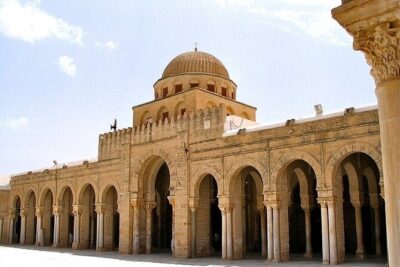
The Mosque of Sidi Sahbi, also called the Mosque of the Barber, sits outside the medina walls. It is known as the mausoleum of Sidi Sahbi and is given about an hour on the schedule.
This stop adds a different mood from the open waterworks. The focus is religious tradition and the importance of Kairouan as the fourth holy city of Islam. The site is not simply another old building to photograph. It helps explain why Kairouan has spiritual weight in Tunisia and across the wider Islamic world.
Admission is listed as free, but dress and conduct still matter at a religious site. Your driver may take you to the entrance, but a professional guide is not included. If you want detailed explanations of the architecture or religious traditions, ask in advance how guiding will work and what any extra charge will be.
That point matters. A local guide may be offered in Kairouan, but one customer reported being quoted a price and then asked for much more. I would agree on the exact amount before accepting any separate guide service.
Kairouan’s medina rewards slow eyes, not a rushed checklist
The medina receives about an hour. Its narrow streets and markets give you the most human-scale part of the Kairouan visit.
The plan includes the Mosque of Three Gates as well as the lanes of the old city. The medina has been on the UNESCO World Heritage List since December 9, 1988, meeting five of the six listed evaluation criteria. You do not need to know every criterion to appreciate the place, but the designation reflects the city’s architectural and cultural importance.
An hour goes quickly here. You can look at doorways, shopfronts, market activity, and the pattern of the lanes, but you will not have time for an unhurried exploration of every corner. I would keep shopping modest unless you have already agreed with your driver to protect the schedule.
The Kairouan section is the most culturally layered part of the morning. It also has the greatest need for context. Without a guide, you will still see the sites, but some meaning may be less clear. With a guide, costs and timing need to be settled first.
More Kairouan Tours in Hammamet
- Kairouan & El Jem Small Group Tour from Tunis, Hammamet or Sousse
★ 5.0 · 6 reviews - Kairouan, El Djem and Monastir Guided Excursion from Hammamet
★ 5.0 · 5 reviews
El Djem is the day’s great visual payoff
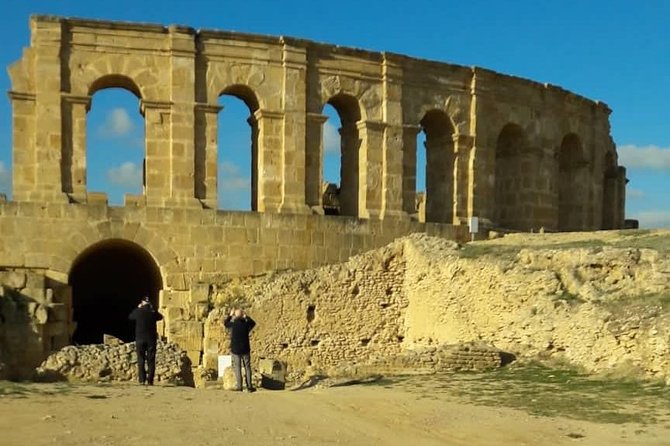
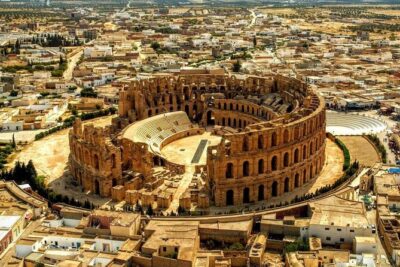
After Kairouan, the tour reaches El Djem, the ancient city of Thysdrus. The main attraction is its Roman amphitheater, built in the third century AD.
The size is the point. The arena could hold about 30,000 spectators and ranks as the third-largest amphitheater in the Roman world after those in Rome and Capua. It is also described as the most impressive Roman monument in Africa, and once you see its massive arches and interior spaces, the claim is easy to understand.
Two hours are allowed for the amphitheater. That is the right amount of time for a serious visit rather than a quick photo stop. You can take in the exterior, enter the arena, and see the underground areas associated with the building. The scale becomes clearer as you move through it. From inside, the structure feels less like a distant ruin and more like a working venue built for crowds, spectacle, and control.
The entrance fee is not included. Since the price is not specified, budget separately for admissions to the amphitheater and museum. All general taxes are included in the excursion price, but that does not cover museum or exhibition tickets.
El Djem is also where the schedule can become difficult. Two hours at the amphitheater is worthwhile, but it leaves less room later if the morning has run long. One customer called El Djem and its museum the highlight of the day, and I can see why. The amphitheater offers the strongest single image on the route.
The El Djem museum adds color to the stonework
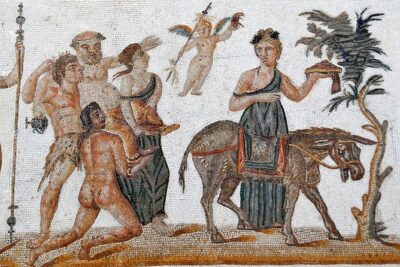
The Archaeological Museum of El Djem occupies a reconstructed Roman villa and receives about an hour. Its collection includes Roman mosaics, statues, terracotta figures, perfume vessels, and other glass objects.
The mosaics are especially useful after the amphitheater. Outside, you see the public scale of Roman life. Inside the museum, you get a closer look at decoration, domestic space, craft, and taste. The collection covers material described as dating from the eleventh century to the fifth century, though the wording of that date range is unusual for a Roman-focused museum. You may want to confirm the precise display periods on site.
Admission is not included. The museum deserves more than a hurried walk-through, especially if you care about art and archaeology rather than only large monuments. If you are less interested in museum objects, you might prefer to keep this visit shorter and preserve time for Monastir.
This is one of the tour’s best pairings. The amphitheater shows engineering and mass entertainment. The villa and its collection show how people decorated and furnished their world.
Monastir connects Ruspina with Tunisia’s modern state
The final section takes you to Monastir, identified with the ancient Punic and Roman city of Ruspina. The schedule gives about an hour around the marina, the mausoleum of Habib Bourguiba, the ribat, and the surrounding area.
The visit begins with a passage in front of Bourguiba’s birthplace. Habib Bourguiba was the first president of the Tunisian Republic, so this is not just an architectural stop. It places you in the story of modern Tunisia and its national identity.
You can visit Bourguiba’s mausoleum and have free time around the ribat and marina. Entrance fees are not included. The hour is tight, particularly if you want to enter more than one site. The ribat, marina, and mausoleum each offer a different experience, so ask your driver early how much time is realistic.
There is an important practical warning here. One customer reported that the driver tried to persuade them to skip Monastir because it was not worthwhile, leaving too little time for the ribat after visiting the mausoleum. If Monastir matters to you, say so clearly at the start and confirm that the stop will remain in the plan.
Monastir is the least protected part of the schedule because it comes last. Traffic, long visits, or a late departure from El Djem can cut into it. If you care most about the ribat or mausoleum, make that priority clear before leaving Hammamet.
What the private vehicle adds to the day
The excursion is private, so only your group participates. That is a real benefit on a route with several stops and a long driving day. You are not waiting for unrelated pickups, and you can ask for a short pause if the schedule allows.
The vehicle is air-conditioned and private transportation is included. Bottled water is also provided. Insurance and all fees and taxes are listed as included, while lunch, admissions, personal spending, professional guiding, and tips are extra.
A private driver is not the same as a professional guide. You will have transport and local assistance, but the included service does not promise detailed explanations inside each monument. That distinction is easy to miss when a tour includes so many historic places.
Driving standards also deserve attention. One customer reported concern about very high speed, including an alleged speed of 150 kilometers per hour. That is a serious safety concern, even though it is one account rather than a stated feature of the service. If the driving feels too fast, ask the driver to slow down. Your comfort matters more than arriving a few minutes early.
Is $303.51 fair for up to three people?
The listed price is $303.51 per group, not per person, for up to three people. For three people, that works out to about $101.17 each before entrance fees, lunch, and tips.
That can be reasonable if you value a private vehicle, air conditioning, pickup, and a full day covering destinations that are spread across central and eastern Tunisia. The cost becomes less attractive for a solo visitor, since one person pays the full group rate.
You should add the entrance charges for the Aghlabid Basins, El Djem amphitheater, El Djem museum, and Monastir attractions where applicable. Lunch is also not included. No lunch stop is specified, so bring a plan for food rather than assuming it will be arranged.
The main value is convenience and coverage. You see Kairouan, El Djem, and Monastir in one outing instead of organizing separate transport. The tradeoff is that you pay extra for a private day while still needing to manage admissions, meals, guiding, and the final timing yourself.
Who will enjoy this route most?
I would recommend it to a small group that wants a broad introduction to Tunisia and does not want to rent a car. Couples, friends, or a family group of up to three can split the price and gain a private vehicle for the day.
It suits you especially well if El Djem is high on your list. The amphitheater and museum receive three hours together, making them the strongest part of the schedule.
It is less suited to you if you prefer long, quiet visits at each location. Six stops in ten hours require discipline. Kairouan’s medina, the museum, and Monastir could all reward more time than the schedule allows.
It also may not suit you if you need a fully guided cultural tour. Professional guiding is not included. You can ask about a local guide, but settle the cost before the service begins.
Timing, tickets, and small details to settle first
Confirmation is provided at booking, and pickup is offered. The stated start time is 8:30 am. Since the meeting point details are not more specific here, confirm the exact pickup location in Hammamet before the day begins.
Free cancellation is available until 24 hours before the start time for a full refund. Cancellations or changes made inside that window are not refunded or accepted, and the cutoff uses local Tunisian time.
Most people can participate, and service animals are allowed. This is a private activity, so you will not be placed with another group.
Before setting off, I would confirm four things:
- The exact pickup point and return arrangement
- Which entrance fees you plan to pay
- Whether you want a local guide in Kairouan
- How much time will be protected for Monastir
These questions take little time and can prevent the two main problems associated with the day: surprise guide pricing and a shortened final stop.
Should you book the Kairouan, El Djem, and Monastir excursion?
Book it if you want maximum historical variety in one private day and El Djem is a priority. The route gives you sacred architecture, old-city streets, Roman engineering, museum art, Bourguiba’s mausoleum, a ribat, and a marina. Few day trips offer such a clear sweep from ancient Rome to modern Tunisia.
I would book it for three people more readily than for one, since the group price becomes easier to justify. I would also protect the plan by confirming all extra costs and insisting that Monastir remain on the schedule.
Skip it if you want a slow Kairouan visit, a relaxed museum afternoon, or a fully guided experience with every admission arranged. For everyone else, this is a demanding but worthwhile day, with El Djem as the main prize and Kairouan providing the strongest cultural setting.
FAQ
Where does the excursion begin?
The excursion begins in Hammamet, with pickup offered. The stated start time is 8:30 am.
How long does the experience last?
The excursion lasts approximately 10 hours.
How many people can join the private tour?
The price covers one private group of up to three people.
Is transportation included?
Yes. Private transportation in an air-conditioned vehicle is included, along with bottled water, insurance, and all fees and taxes listed by the provider.
Is lunch included?
No. Lunch is not included in the price.
Are entrance tickets included?
No. Entrance fees to museums or exhibitions are not included. Tickets are also listed separately for several planned stops.
Is a professional guide included?
No. Professional guiding is not included. A local guide may be offered separately, so confirm the price before accepting that service.
Which places are visited in Kairouan?
The route includes the Bassins Aghlabites, the Mosque of Sidi Sahbi, the Mosque of Three Gates, and the medina of Kairouan.
What is visited in El Djem?
You visit the Roman amphitheater and the Archaeological Museum of El Djem.
What can you see in Monastir?
The Monastir portion includes a passage by Habib Bourguiba’s birthplace, a visit to his mausoleum, and free time for the ribat and marina.
Can I cancel for a full refund?
Yes. You can cancel at least 24 hours before the start time for a full refund. Cancellations or changes made less than 24 hours before the start are not refunded or accepted.
More Self-Guided Tours in Hammamet
- Tunis, Carthage and Sidi Bou Said Self-Guided Excursion from Hammamet
★ 4.5 · 4 reviews - Cap-Bon Self-Guided Excursion from Hammamet
★ 4.5 · 3 reviews - Self guided bike tour of Carthage archeological site
★ 4.5 · 10 reviews
More Monastir Tours in Hammamet
- El Jem and Monastir Full-Day Tour with Lunch from Tunis or Hammamet
★ 4.5 · 7 reviews - Fun VIP Tour: El Jem, Kairouan, Monastir/Sousse (PICKUP ALL City)
★ 5.0 · 451 reviews - Private Tour to Kairouan, El Jem & Monastir from Tunis_hammamet
★ 5.0 · 301 reviews - Fun VIP Tour: Sousse &/OR Monastir (Walking Tour or Car Option)
★ 5.0 · 69 reviews
Just added around Hammamet
- 4-Day Private Tour: Sahara and Djerba Island from Tunis and Hammamet★ 5.0 · 4 reviews
- Enfidha Private Arrival Airport Transfer to Hammamet★ 4.5 · 4 reviews
- Kairouan, El Djem and Monastir Guided Excursion from Hammamet★ 5.0 · 5 reviews
- Private Guided Excursion Tunis, Carthage and Sidi Bou Said from Hammamet★ 5.0 · 8 reviews
- Executive: Transfer Tunis Airport to Hammamet by Mercedes E Class★ 5.0 · 4 reviews
- Private Excursion of Friguia Park and Medina of Hammamet★ 4.5 · 4 reviews
- Day trip to Cape Bon★ 4.0 · 5 reviews
- 3-Day Private Excursion to the Sahara departing from Hammamet★ 4.5 · 10 reviews
El Jem Amphitheatre Tours, compared.
Fun VIP Tour: El Jem, Kairouan, Monastir/Sousse (PICKUP ALL City)
Read our review →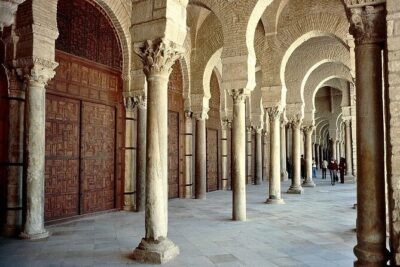
Private Tour to Kairouan, El Jem & Monastir from Tunis_hammamet
Read our review →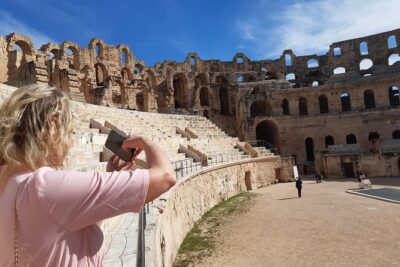
Half-day excursion from Sousse to the amphitheater of El Jem
Read our review →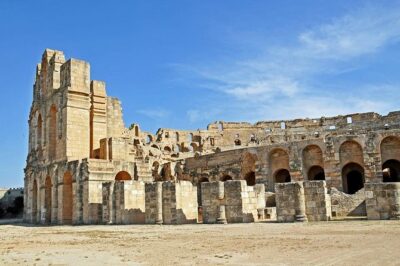
Private and Guided Tour to Kairouan and El Jem and Monastir
Read our review →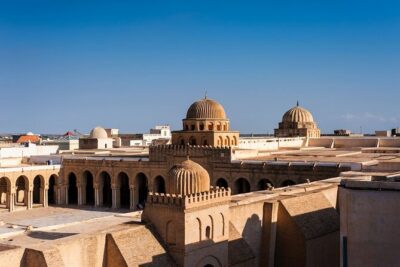
Kairouan & El Djem Guided Day Trip with Lunch from Hammamet
Read our review →Browse the lists this tour appears in