
Reviewed · EL JEM AMPHITHEATRE TOURS
Daytrip to Kairouan and El Jem Colosseum
Kairouan’s Great Mosque and El Jem’s Roman amphitheater make an unusually strong pair: one reveals Tunisia’s Islamic past, the other its Roman one. In a single private day from Tunis, you move from a 7th-century holy city to an arena built for 30,000 spectators.
I like the private format, which lets you set the pace and pause for lunch or shopping. I also like that admission fees, transport, and an air-conditioned vehicle are included, so the $151.21 price is easier to judge as a complete day rather than a bare transfer. The main caution is guide quality: some departures have had excellent English or French-speaking guides, while others have had language problems or limited commentary.
Key points
- Two major sites in one day: See Kairouan’s Great Mosque and medina, then El Jem’s amphitheater and archaeological museum.
- Private transport from Tunis: Pickup and drop-off are provided from your designated spot in an air-conditioned vehicle with WiFi.
- Kairouan’s columns and minaret: The mosque includes ancient columns brought from older sites and a 31.5-meter minaret.
- El Jem’s overlooked museum: Roman mosaics, statues, glassware, and household objects add much more than a quick arena visit.
- Flexible touring pace: Your private group can allow time for lunch, shopping, and questions.
- Check the guiding language: Strong guides such as Ghassen, Mongi, and Helmi have received praise, but language mismatches have also caused serious problems.
Why this private day trip works
This is a long road day, but the rewards are substantial. Kairouan and El Jem show two different chapters of Tunisia without making you arrange separate taxis, train connections, or entrance tickets.
The advertised duration is about 7 hours and 30 minutes. That gives you enough time for the four main stops, but not endless freedom at each one. The drives matter here. A good guide can turn those stretches into useful lessons about Tunisia, while a poor language match can make them feel like dead time.
Because this is a private activity, only your group participates. That is useful if you want to linger at the mosque, walk farther through the medina, or keep shopping short. It also means the quality of your individual driver and guide matters more than it would on a large group coach.
The price is not cheap for a day in Tunisia, but it includes private transportation, all fees and taxes, WiFi on board, air conditioning, and admission to the Great Mosque, amphitheater, and museum. Lunch is extra, and that is worth remembering when you compare the total cost with other excursions.
More El Jem Amphitheatre Tours in Tunis
- Private Tour to Kairouan, El Jem & Monastir from Tunis_hammamet
★ 5.0 · 301 reviews - Kairouan and El Jem Private Day Tour
★ 4.5 · 38 reviews - Private Day Tour , Kairouan & Amphitheatre of el Jem From Tunis /Hammamet/Sousse
★ 4.5 · 8 reviews
The Great Mosque of Kairouan and its ancient columns
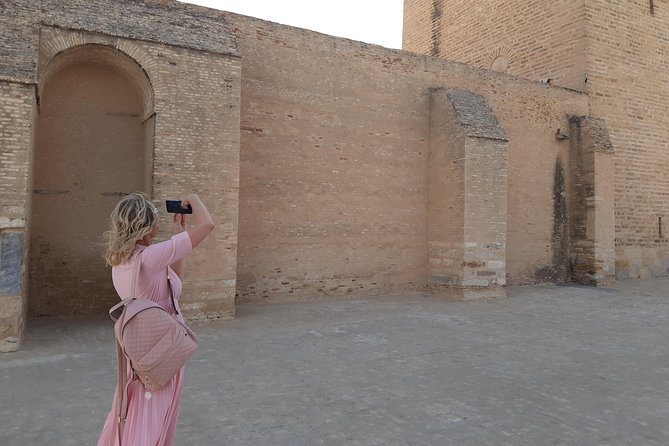
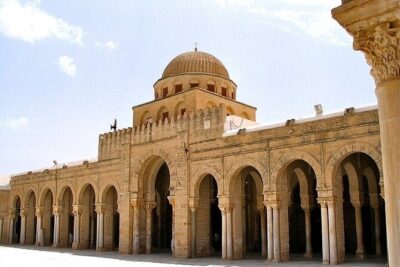
Kairouan’s Great Mosque is the day’s first major stop, with about 40 minutes set aside for the visit. Founded in 670 and rebuilt in 836, it is described as the first great mosque in the Maghreb and helped shape mosque design across the Muslim West, including Andalusia.
The building’s strength is its calm, heavy geometry. A broad courtyard is framed by arcades, while the 31.5-meter minaret rises above it with a form compared to ancient lighthouses, including Alexandria’s famous beacon.
Inside, the prayer hall is filled with rows of columns. Many were taken from ancient sites such as Sbeïtla, a reminder that historic buildings often contain pieces of earlier civilizations. Look for the central aisle, the dome, the symmetry, and the relationship between the courtyard and prayer hall.
The mosque may not deliver the ornate visual drama some visitors expect from Islamic architecture. Its appeal is older and more structural. You are looking at proportion, stonework, repetition, and the way a major religious center influenced later buildings.
A strong guide makes a large difference here. Helmi is specifically praised for knowing the site well and answering questions clearly. Other guides named positively include Ghassen and Mongi. Since the language arrangements can vary, confirm your requested language before departure.
Walking through Kairouan’s medieval medina
After the mosque, you spend about an hour in Kairouan’s medina. This is where the outing becomes less about one monument and more about the city itself.
The route includes the Aghlabid-era medieval quarter, the Three Doors Mosque, narrow streets, and the souks. You can look at local crafts, see carpet production, and try Kairouan’s famous makroudh pastries. The medina offers a more ordinary, street-level view of the city than the monumental mosque alone.
The shopping element needs a clear warning. Some departures have included carpet or craft-shop visits that took up more time than expected, with strong pressure to buy scarves or carpets. If you are interested in Tunisian textiles, this can be useful. If you prefer archaeology and architecture, say so early and ask your guide to protect your time.
The private setup helps here. You can browse, taste a pastry, and walk at a pace that suits you. You can also make it clear that you do not want a prolonged sales stop. A private tour should give you some control, but you still need to use that control directly.
Kairouan is also a good place to ask questions about the city’s place in Tunisia. The mosque, medina, craft traditions, and food all fit together. With a good guide, the stop feels like more than a checklist of religious buildings and shops.
El Jem’s Roman amphitheater in one focused hour
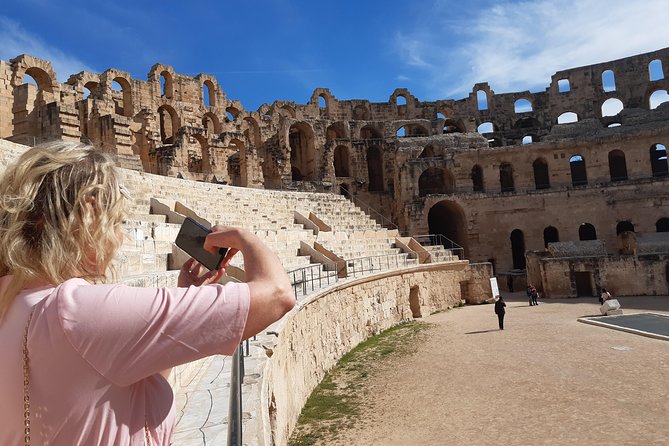
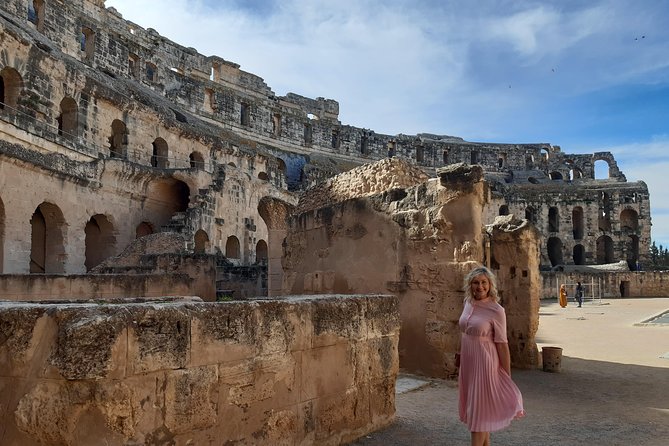
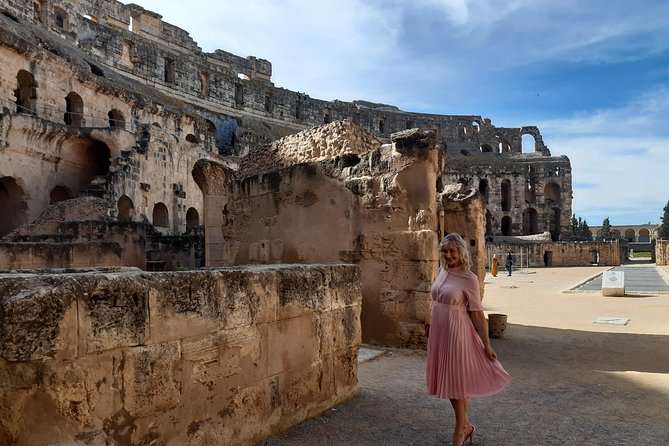
The drive to El Jem brings a dramatic change of setting. The amphitheater was built in the 3rd century AD and could hold about 30,000 spectators. It is classified as a World Heritage site and is described as the third-largest Roman amphitheater after those in Rome and Capua.
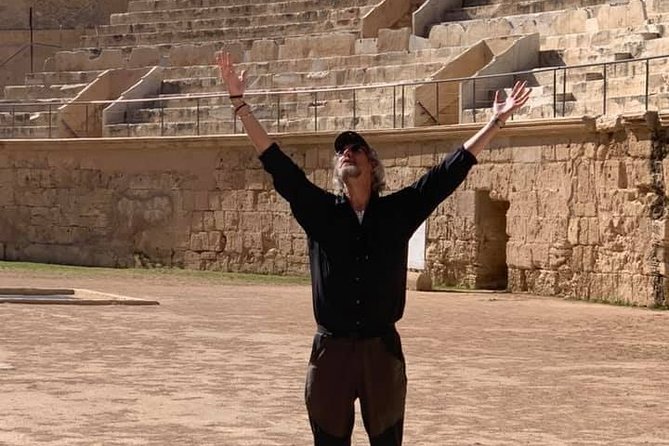
You have about one hour for the guided visit. That is enough to walk through the major areas, see the scale of the arena, and understand how the structure worked. The sight is especially powerful because the stone mass rises from a modern Tunisian town rather than sitting inside a preserved Roman city.
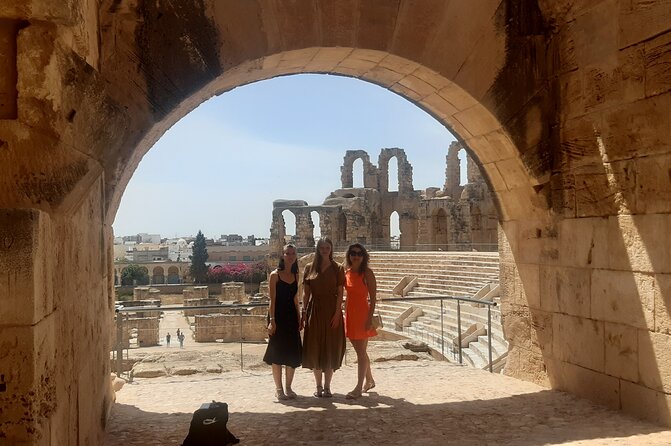
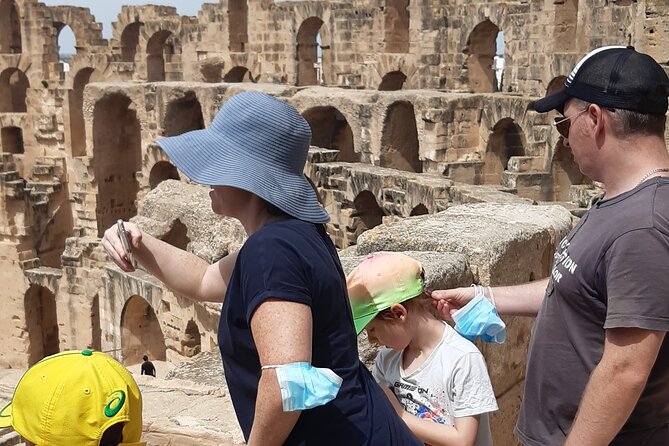
Take time to look beyond the arena floor. The passages, arches, seating levels, and underground areas help you picture the practical machinery of Roman public entertainment. The amphitheater is not simply a ruin to photograph. Its size tells you how important this part of Roman North Africa once was.
Time is the biggest issue. Some departures have allowed a comfortable visit, while others have felt rushed. If El Jem is your main reason for booking, tell the guide that you want the full hour and ask where the guided explanation will take place.
Another concern is commentary. One account describes having an English-speaking guide in Kairouan but no useful guide at El Jem. In that case, the amphitheater became a self-guided walk. That can still be worthwhile, but it is not the same service as a fully guided archaeological visit.
More Kairouan Tours in Tunis
- Full-Day Kairouan and El Jem Tour from Tunis
★ 4.0 · 7 reviews - Daytrip 3 Unesco Sites El Jem Kairouan and Sousse Medina
★ 5.0 · 7 reviews - Kairouan & El Jem Small Group Tour from Tunis, Hammamet or Sousse
★ 5.0 · 6 reviews - El Jem, Monastir, and Kairouan Medina Private Tour
★ 5.0 · 5 reviews
The El Jem Archaeological Museum deserves its own time
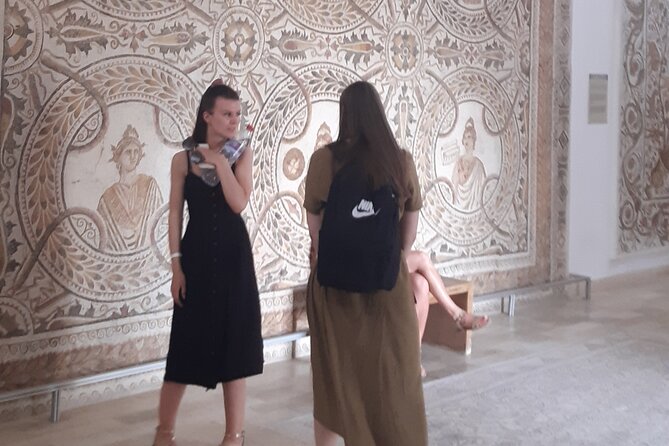
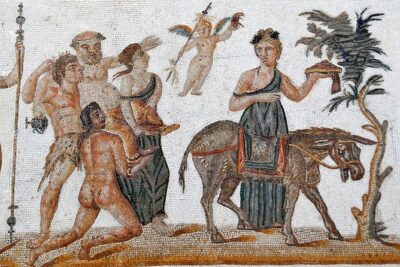
The museum gets about 30 minutes, and I would resist the temptation to treat it as an afterthought. It occupies a reconstructed Roman villa and holds mosaics from the 2nd through 5th centuries, along with statues, terracotta figures, perfume containers, glassware, and other Roman objects.
The mosaics are the chief prize. They give you details that the amphitheater cannot: animals, mythological subjects, decorative patterns, and clues about domestic life. The museum helps explain the wealth and taste behind a Roman city capable of supporting such a huge arena.
Several visitors have considered the El Jem mosaics a highlight, even preferring them to those at the Bardo Museum in Tunis. That is useful advice if you have limited museum time. The arena grabs your attention first, but the villa and its floors provide the finer detail.
Thirty minutes is short, especially if your guide offers proper context. You may need to keep moving. Still, this stop improves the balance of the day by shifting from monumental architecture to objects you can study close up.
Transport, timing, and the value of a private car
Pickup and drop-off are provided from your designated location in Tunis. The vehicle is air-conditioned, and WiFi is included. Those details matter on a day with substantial driving, particularly in warm weather.
A private car also avoids the awkwardness of coordinating two major sites with public transport. You are not paying only for sightseeing. You are paying for a driver, a vehicle, fuel, route planning, and the ability to travel with your own group.
The tour is advertised as suitable for most travelers, with service animals allowed and access to public transportation nearby. No special physical restrictions are stated, but you should expect walking through a historic medina and across the amphitheater site.
Bring water, comfortable shoes, sun protection, and some Tunisian currency for lunch, pastries, or crafts. Lunch is not included, and the schedule leaves room for a meal, but the exact restaurant and cost are not specified.
The vehicle standard has not been perfectly consistent. Some people have praised clean, modern, air-conditioned cars with bottled water. One poor account describes an old vehicle that broke down on the return journey. That appears to be an individual service problem, but it is still a fair reason to confirm the vehicle and pickup details before leaving.
Guide quality can make or break the day
The best part of this experience is not simply the monuments. It is the person explaining them.
Guides named Ghassen, Mongi, and Helmi have received especially warm praise. Ghassen was described as welcoming from the hotel pickup onward, while Mongi was praised for flexibility. Helmi was singled out for strong local knowledge at Kairouan and clear answers to questions.
Good guiding also helps during the long drives. Instead of staring out the window, you can learn how Kairouan fits into Tunisia’s religious and cultural story, and how El Jem connects to Roman Africa. That added context is what turns transportation into part of the tour.
But language must be checked carefully. The tour may be booked with an English-speaking guide, yet some accounts describe a French-speaking driver with little or no English commentary. One especially poor experience involved using Google Translate throughout the day. That is not an acceptable substitute for a promised guide.
Ask the operator to confirm, in writing, the language of both the guide and driver. A driver does not need to be a historian, but the person leading each site should be able to explain it in a language you understand.
Shopping, lunch, and keeping control of the schedule
The tour allows time for shopping and lunch, but neither is included in the price. That flexibility is useful, especially if you want to try makroudh in Kairouan or look at local carpets and ceramics.
The trade-off is that shopping can compete with sightseeing. Some people enjoyed learning about the meaning behind ceramic and carpet designs, visiting homes or factories, and trying street food. Others felt they were pushed toward purchases and lost time at carpet shops.
I would set expectations at the start. Tell the guide how much time you want for shopping, and name your priority: mosque, medina, amphitheater, museum, or lunch. Since the tour is private, your preferences should guide the day more than they would on a fixed group outing.
The admission fees are included, so you do not need to budget for tickets at the main sites. You should still budget for lunch, food tastings, souvenirs, and any purchase you choose to make.
Who should book this Kairouan and El Jem tour?
I would recommend it to first-time visitors based in Tunis who want to see two of Tunisia’s major historic sites without arranging transport themselves. It suits couples, families, and small groups who value a private vehicle and the chance to ask questions.
It is also a good match if you want variety. Kairouan gives you Islamic architecture, a medieval quarter, food, and crafts. El Jem gives you Roman engineering, a huge arena, and some of the country’s finest ancient mosaics.
I would be more cautious if you dislike long drives, have no interest in shopping, or want a slow archaeological study. The day covers a lot of ground, and the scheduled time at each stop is controlled. The amphitheater and museum together receive about 90 minutes, which may feel brief to serious history fans.
At $151.21 per person, the value depends heavily on group size and guide performance. For two or more people, shared private transport and included admission make the cost easier to justify. For a solo visitor, it is a more expensive way to see the sites, though the convenience remains strong.
Should you book it?
Book this tour if you want an efficient private day from Tunis and can confirm an appropriate guide language before paying. The Great Mosque, Kairouan medina, El Jem amphitheater, and Roman museum create a well-balanced route, and the El Jem mosaics are easy to underestimate.
I would not book without clarifying three points: who will guide you, which language they will speak, and how much time will be protected at El Jem. Also decide in advance how much shopping you want.
Free cancellation is available up to 24 hours before the start time. Cancellations or changes made less than 24 hours ahead are not refunded or accepted. The overall rating is 4.6 from 55 reviews, but the sharply mixed experiences show that guide assignment and day-of organization matter. Confirm those details, and this can be one of the most useful history days from Tunis.
FAQ
How long is the Kairouan and El Jem day trip?
The experience lasts approximately 7 hours and 30 minutes.
Is pickup and drop-off included?
Yes. Pickup and drop-off are provided from your designated spot in Tunis.
Are entrance fees included?
Yes. Admission fees for the Great Mosque of Kairouan, El Jem amphitheater, and El Jem Archaeological Museum are included.
Is lunch included?
No. Lunch is not included, so you pay for it separately. The private format allows you to stop for lunch during the day.
Is this a private tour?
Yes. Only your group participates in the activity.
What is included in the transportation?
Private transportation in an air-conditioned vehicle is included, along with WiFi on board. All fees and taxes are also included.
Just added around Tunis
- Dougga Guided Day Tour from Tunis★ 5.0 · 5 reviews
- Private Arrival Transfer: Tunis Airport to Tunis Hotel★ 4.5 · 5 reviews
- Tunisia 7-Day tour★ 5.0 · 6 reviews
- Roman Archeology Guided Tour Thuburbo Majus & Uthina★ 4.5 · 7 reviews
- Bardo Museum- The ruins of Carthage- Village of Sidi Bou Said★ 5.0 · 4 reviews
- The Medina★ 4.0 · 7 reviews
- Tunis Carthage Private Arrival Airport Transfer to Tunis★ 5.0 · 4 reviews
- Tunis Group Tour: Carthage, Sidi Bou Said, Bardo museum & Medina★ 5.0 · 5 reviews
El Jem Amphitheatre Tours, compared.
Fun VIP Tour: El Jem, Kairouan, Monastir/Sousse (PICKUP ALL City)
Read our review →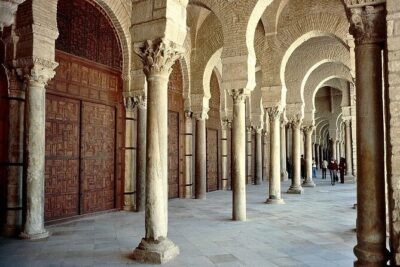
Private Tour to Kairouan, El Jem & Monastir from Tunis_hammamet
Read our review →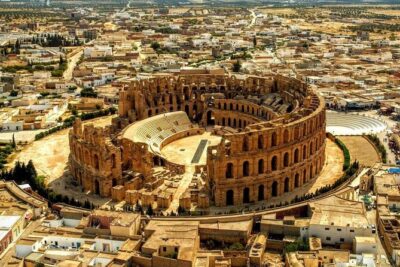
Half-day excursion from Sousse to the amphitheater of El Jem
Read our review →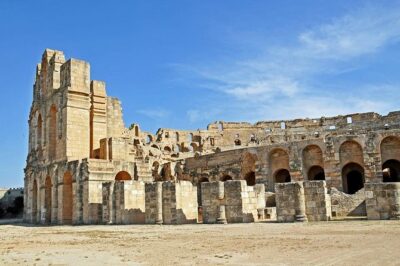
Private and Guided Tour to Kairouan and El Jem and Monastir
Read our review →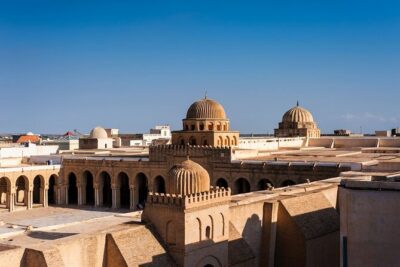
Kairouan & El Djem Guided Day Trip with Lunch from Hammamet
Read our review →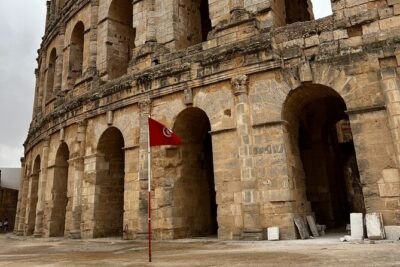
Private Half Day Tour to Roman Coliseum EL JEM from Monastir
Read our review →Browse the lists this tour appears in