
Reviewed · EL JEM AMPHITHEATRE TOURS
Kairouan, El Djem and Monastir Guided Excursion from Hammamet
Kairouan’s Islamic monuments and El Djem’s huge Roman amphitheater give this day a strong one-two punch. You move from ninth-century waterworks and sacred shrines to a coliseum built for 30,000 people, then finish in Monastir, where Roman, Punic, and modern Tunisian stories meet.
I like the private format, since only your group participates and the day can feel more personal than a large coach excursion. I also like the mix of major sights and smaller stops, especially the Aghlabid Basins, the Mosque of the Barber, and the Roman mosaic collection in El Djem.
The trade-off is time. Ten hours is a long day, and six planned stops leave limited room for lingering. Lunch is not included, and entrance fees for El Djem’s amphitheater, museum, and Monastir attractions are extra, so you should budget beyond the $292.47 group price.
Key Points to Know Before Booking
- Three very different chapters of Tunisia: Kairouan represents Arab-Muslim Tunisia, El Djem preserves Roman Africa, and Monastir adds Punic, Roman, and modern national history.
- Private transport for up to two people: The $292.47 price covers the group, not each individual, which can be good value for a couple.
- A full 10-hour outing from Hammamet: The listed visits account for about six hours, with the remaining time used for driving and transfers.
- The El Djem amphitheater is the centerpiece: The third-largest Roman amphitheater in the ancient world could hold about 30,000 spectators.
- Guide quality matters here: Mtir and Taib are named among the team members praised for clear explanations, language skills, and a flexible approach.
- Extra costs are easy to miss: Lunch and admission to the amphitheater, archaeological museum, and Monastir sights are not included.
Why This Day Works So Well
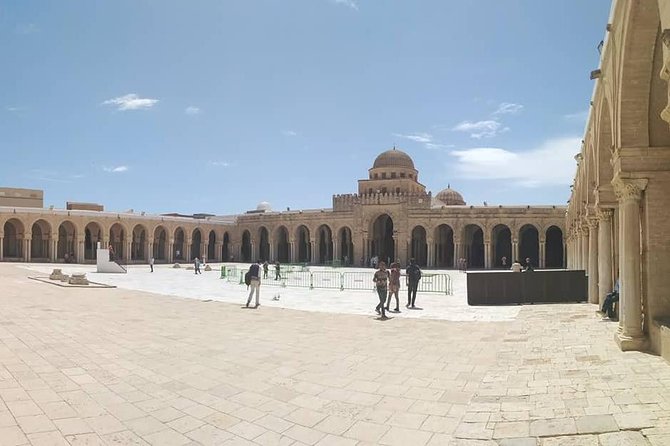
This excursion succeeds because it does not treat Tunisia as one single story. In Kairouan, you explore the country’s spiritual center and one of Islam’s important historic cities. In El Djem, the subject changes completely: Roman spectacle, engineering, mosaics, and the wealth of ancient Thysdrus.
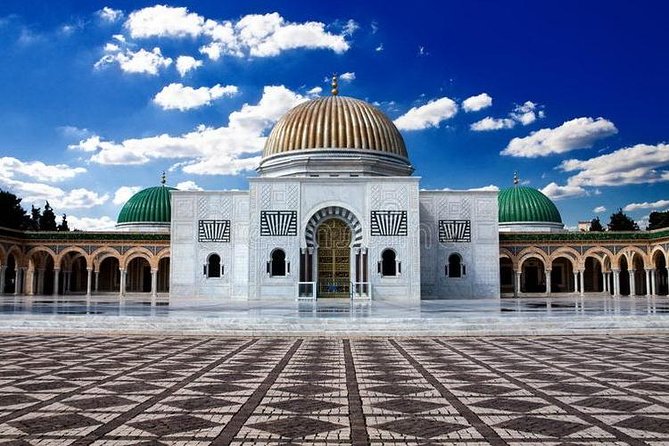
Monastir then brings the day into the modern era. You pass the birthplace of Habib Bourguiba, Tunisia’s first president, visit his mausoleum, and have time around the ribat and marina. That range gives you a useful framework for understanding Tunisia rather than leaving you with one isolated monument.
The private setup is important. You are not joining a large group with a fixed crowd and one-size-fits-all pace. The vehicle is air-conditioned, private transportation is included, bottled water is supplied, and pickup is offered from Hammamet. The guide can also shape the day around your interests to some extent, as the excursion is described as having an individualized itinerary.
The price is $292.47 per group of up to two people. For one person, that is a steep day trip. For two people sharing the full amount, it is more reasonable, especially since transport, a professional guide, taxes, and water are covered. You still need to add lunch and the admission charges.
More El Jem Amphitheatre Tours in Hammamet
- Private and Guided Tour to Kairouan and El Jem and Monastir
★ 4.5 · 22 reviews - Kairouan & El Djem Guided Day Trip with Lunch from Hammamet
★ 4.0 · 18 reviews - Private Day Tour , Kairouan & Amphitheatre of el Jem From Tunis /Hammamet/Sousse
★ 4.5 · 8 reviews
Kairouan’s Aghlabid Basins and Sacred Quarter
Your first stop is the Bassins Aghlabites, or Aghlabid Basins, outside Kairouan’s medina walls. The basins date from the beginning of the second half of the ninth century and were built as part of an ambitious water system.
You get about 30 minutes here. That may sound brief, but it is enough to see the scale of the works and understand why they matter. These are not simply decorative pools. They are described as among the most important hydraulic works in the history of the Muslim world, so the guide’s explanation adds real value.
The admission ticket is listed as free. That helps keep the cost down, though you should not expect a long stop. This is an orientation visit, not a place where you spend half the morning.
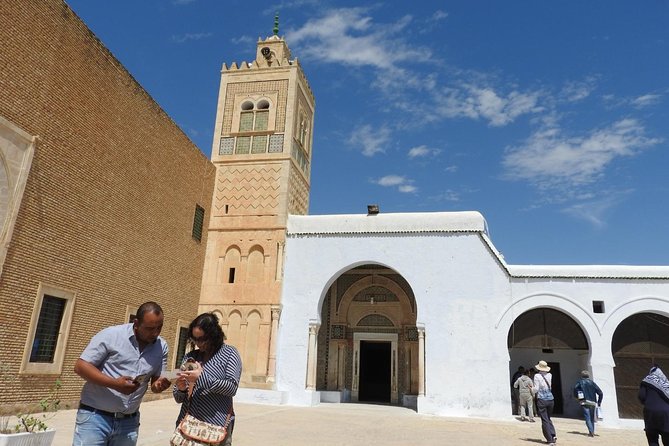
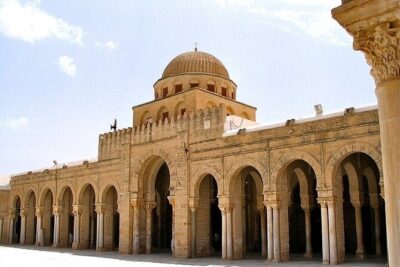
Next comes the Mosque of Sidi Sahbi, also called the Mosque of the Barber. It is outside the medina walls and is connected with the mausoleum of Sidi Sahbi. The stop lasts about an hour and gives you a closer look at Kairouan’s religious identity.
The name refers to Sidi Sahbi, traditionally associated with the Prophet Muhammad. The provided tour information does not list individual architectural features in detail, so your guide’s commentary will shape how much context you receive. Guides such as Mtir have been praised for precise information and for being open to discussion, which is useful at a site where religious and architectural meaning overlap.
The listed admission is free. As with any religious monument, follow the guide’s instructions about appropriate behavior and access during the visit.
Walking Kairouan’s Medina
The Kairouan medina gives you an hour among narrow streets, markets, and historic buildings. It has been on the UNESCO World Heritage List since December 9, 1988, meeting five of the six evaluation criteria used for its designation.
This is the part of the morning where you shift from individual monuments to the shape of the city itself. The narrow lanes and market streets show how Kairouan developed as a living urban center, not just as a collection of famous buildings.
The itinerary also includes a visit to the Mosque with Three Gates. Its exact name is not supplied in the tour details, but the reference points to one of the city’s notable religious buildings. An hour passes quickly here, especially if you want time for photographs, market browsing, and questions.
Kairouan’s medina can be rewarding if you enjoy street-level details more than polished museum displays. It can also feel less relaxed if you want unhurried shopping or long independent walks. The private format helps, since your group can ask for more explanation or adjust the pace within the day’s limits.
The city is one of the fourth holy cities of Islam and is described as Tunisia’s spiritual capital. That status gives the visit weight, but the experience is not only religious. The medina, markets, hydraulic works, and mausoleum show different sides of the city.
El Djem and the Roman Amphitheater
The journey then moves to El Djem, the ancient city of Thysdrus. In Roman Africa, Thysdrus grew prosperous, and its amphitheater remains the clearest reminder of that wealth.
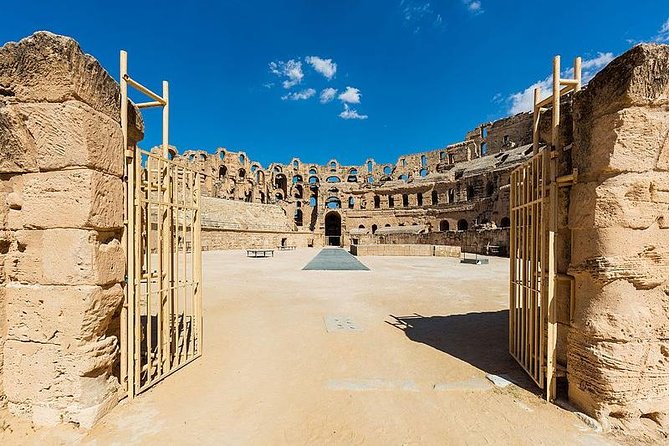
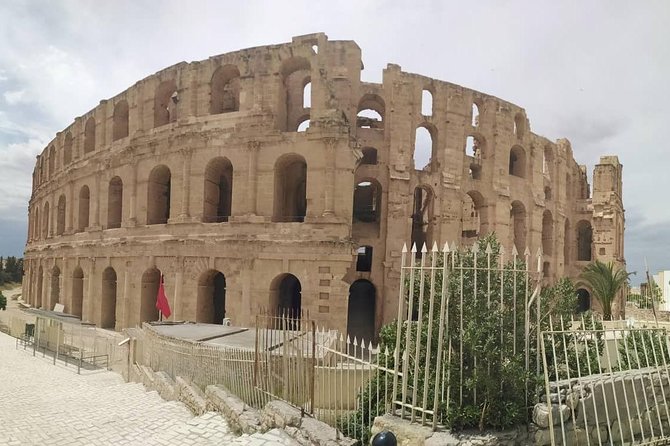
You have two hours scheduled at the amphitheater, with admission charged separately. This is the longest individual stop, and it deserves the time. The building was founded in the third century AD and could accommodate about 30,000 spectators. By size, it ranked third in the Roman world after the amphitheaters of Rome and Capua.
The scale is the point. In a town far smaller than Rome, Roman builders created a huge arena for public shows. You can focus on the structure itself, then use the guide’s explanation to think about what an arena of this size says about local wealth, Roman power, and public entertainment.
The monument was classified as a UNESCO World Heritage site in 1972. It is also described as the most impressive Roman monument in Africa. That is a bold claim, but the amphitheater’s size makes it easy to understand why it receives such attention.
Two hours should allow a substantial visit, though you will need to decide how much time to spend inside the monument and how much on the surrounding area. Since entrance is not included, confirm the current ticket arrangement when booking or before the visit. The supplied information does not give the fee.
This is the visual high point of the day. Kairouan asks you to pay attention to religious history and urban life. El Djem gives you a monument that explains itself through sheer scale.
More Kairouan Tours in Hammamet
- Kairouan & El Jem Small Group Tour from Tunis, Hammamet or Sousse
★ 5.0 · 6 reviews - Kairouan, El Djem, Monastir Self-Guided Excursion from Hammamet
★ 4.5 · 5 reviews
Roman Mosaics at the El Djem Museum
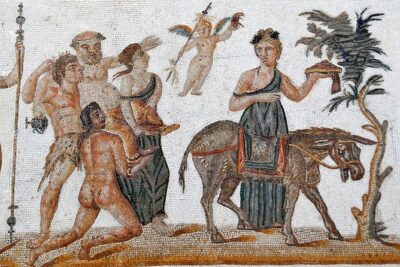
The archaeological museum of El Djem follows the amphitheater and has about an hour. It is installed in a reconstructed Roman villa, an appropriate setting for a collection connected with Roman domestic life.
The museum holds Roman mosaics, statues, terracotta statuettes, perfume containers, and other glass objects. The collection covers a period from the 11th century to the 5th century, as described in the tour material. The dates appear in reverse chronological order in the supplied information, so your guide may clarify the intended period during the visit.
This stop changes the focus from public spectacle to private space. At the amphitheater, you see how Roman society gathered. In the museum, mosaics and household objects offer a closer look at decoration, status, craft, and daily life.
Admission is not included. If you are mainly interested in architecture, you might prefer to spend extra time at the amphitheater. If mosaics and archaeology appeal to you, the museum makes the El Djem stop much more complete.
The guide is especially useful here. A collection of objects can blur together without context, while a clear explanation can show why a mosaic, statue, or glass vessel matters. The excursion has received praise for informative guiding, including from people who found the sights impressive but wanted more explanation. That is the right expectation: the guide is a major part of the museum experience.
Monastir’s Bourguiba Mausoleum and Marina
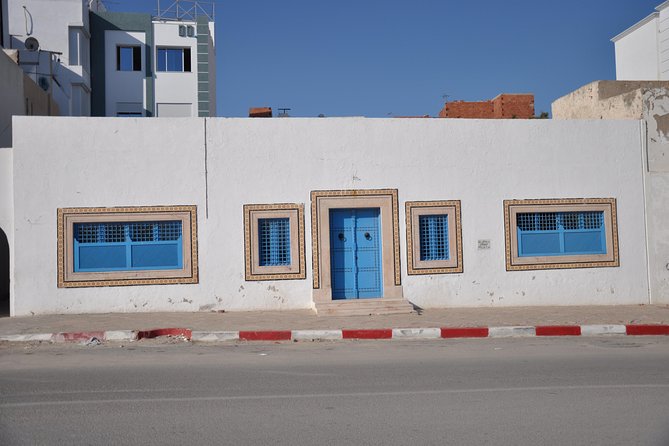
The final major stop is Monastir. The itinerary describes the city as an ancient Punic and Roman settlement known as Ruspina, then connects it to modern Tunisia through Habib Bourguiba, the country’s first president.
You pass in front of Bourguiba’s birthplace and visit his mausoleum. The stop also includes free time to visit the ribat and marina, with about an hour in Monastir.
This is a compact introduction rather than a full city tour. You cannot cover every corner of Monastir in an hour, so think of it as a final selection of key places. The mausoleum represents modern national history, while the ribat points to the city’s fortified and religious past. The marina offers a change of pace after a day of monuments and museums.
Admission fees for the Monastir attractions are not included. The tour information does not say which specific sites require payment, so keep some money available and ask your guide about the choices before entering.
The Monastir stop is also where the itinerary becomes less tightly fixed. Free time gives you a chance to choose between the ribat, the marina, and the mausoleum, though the limited hour means you may need to prioritize. If modern Tunisian history interests you, give Bourguiba’s mausoleum proper attention. If you prefer older architecture, use the time for the ribat.
Transport, Timing, and Guide Style
The excursion lasts about 10 hours, including travel from Hammamet and the transfers between sites. The scheduled stops total roughly six hours: 30 minutes at the Aghlabid Basins, one hour at the Mosque of the Barber, one hour in Kairouan’s medina, two hours at the amphitheater, one hour at the museum, and one hour in Monastir.
That leaves several hours for driving. You should be comfortable with a full day in a vehicle. The air-conditioned vehicle and bottled water are welcome practical touches, particularly during a long route, but this is still a demanding schedule.
Pickup is offered, and the service includes private transportation. The tour is for only your group, up to two people, which gives it a quieter feel and avoids the delays that can come with a large party.
The guide can make or break a day like this. Mtir is specifically praised for precise information, excellent French, cultural knowledge, and openness to discussion. Taib is also named as part of the team. Another booking included a Spanish-speaking guide with extensive experience abroad. The available information does not guarantee a particular guide or language, so confirm your preferred language and guide availability when arranging the excursion.
Punctuality is another positive feature to expect. The service includes hotel pickup at the indicated time, and the excursion is designed around a fixed full-day route. Still, sites, traffic, and ticket procedures can affect the schedule, so do not plan a tight evening appointment in Hammamet.
What the Price Includes and Leaves Out
At $292.47 per group of up to two, the cost works best for a couple or two friends. You are effectively paying for a private vehicle and guide rather than two seats on a shared bus.
Included items are:
- Bottled water
- An air-conditioned vehicle
- Private transportation
- All fees and taxes listed by the operator
- A professional guide
- Pickup service
Lunch is not included. Entrance fees to museums and exhibitions are also excluded. The amphitheater, El Djem archaeological museum, and Monastir attractions list admission as not included, while the Kairouan stops list free admission.
This structure gives you some control over spending, but it also means the advertised price is not the total cost of the day. You should set aside money for lunch, tickets, and personal expenses. The value is strongest if you place a high price on door-to-door transport, a private guide, and a tailored day rather than simply counting the number of included attractions.
Free cancellation is available if you cancel at least 24 hours before the start time. Cancellations within 24 hours are not refunded, and changes within that period are not accepted.
Who Should Book This Excursion
I would choose this trip if you have a limited stay in Hammamet and want to see several of Tunisia’s most important historic places without arranging separate transport. It is especially suitable for two people who want a private day and prefer explanations over independent sightseeing.
It also suits families. The itinerary has variety, so children or adults with different interests can move from open Roman architecture to markets, religious sites, a museum, and a marina. The long driving time is the main concern for younger children, but the private vehicle gives your group more control than a large shared tour.
History fans get the most from the route. You will encounter Islamic religious architecture, medieval urban life, Roman engineering, archaeology, and modern political history in one day.
I would think twice if you want a slow holiday pace, long meals, or lots of free time. Six stops in 10 hours is ambitious. You will see a great deal, but you will not explore each place at leisure.
Should You Book It?
Book this excursion if your priority is range: Kairouan’s sacred monuments, El Djem’s massive amphitheater, and Monastir’s modern and fortified landmarks in one private day. The route is well chosen, the vehicle and guide are included, and the price becomes more attractive when shared by two people.
Before paying, confirm the pickup point, preferred guide language, likely guide assignment, and the extra cost of admissions. Also plan for lunch and accept that the day will involve several hours on the road.
If you want a broad, guided introduction to Tunisia’s major historical eras, this is a strong choice. If you prefer to spend an entire day in one city, choose Kairouan or Monastir separately instead.
FAQ
How long does the excursion last?
The excursion lasts approximately 10 hours.
Where does the tour begin?
The experience is based in Hammamet, and pickup is offered.
How many people can join the private tour?
The price covers a private group of up to two people.
Is transportation included?
Yes. Private transportation in an air-conditioned vehicle is included, along with bottled water.
Are entrance fees included?
No. Entrance fees to museums and exhibitions are not included. Admission for the El Djem amphitheater, El Djem archaeological museum, and Monastir attractions is listed as extra. The Kairouan stops list free admission.
Is lunch included?
No. Lunch and personal expenses are not included.
Can I cancel for a full refund?
Yes, if you cancel at least 24 hours before the experience begins. Cancellations made less than 24 hours before the start time are not refunded.
More Monastir Tours in Hammamet
- El Jem and Monastir Full-Day Tour with Lunch from Tunis or Hammamet
★ 4.5 · 7 reviews - Fun VIP Tour: El Jem, Kairouan, Monastir/Sousse (PICKUP ALL City)
★ 5.0 · 451 reviews - Private Tour to Kairouan, El Jem & Monastir from Tunis_hammamet
★ 5.0 · 301 reviews - Fun VIP Tour: Sousse &/OR Monastir (Walking Tour or Car Option)
★ 5.0 · 69 reviews
Just added around Hammamet
- 4-Day Private Tour: Sahara and Djerba Island from Tunis and Hammamet★ 5.0 · 4 reviews
- Enfidha Private Arrival Airport Transfer to Hammamet★ 4.5 · 4 reviews
- Private Guided Excursion Tunis, Carthage and Sidi Bou Said from Hammamet★ 5.0 · 8 reviews
- Executive: Transfer Tunis Airport to Hammamet by Mercedes E Class★ 5.0 · 4 reviews
- Private Excursion of Friguia Park and Medina of Hammamet★ 4.5 · 4 reviews
- 3-Day Private Excursion to the Sahara departing from Hammamet★ 4.5 · 10 reviews
- DayTrip to KORBOUS Thalasso-Thermal Bath & Spectacular SEA Cliffs★ 4.5 · 5 reviews
- Day trip to Cape Bon★ 4.0 · 5 reviews
El Jem Amphitheatre Tours, compared.
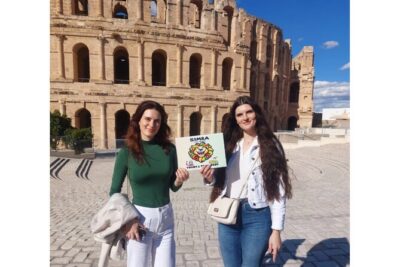
Fun VIP Tour: El Jem, Kairouan, Monastir/Sousse (PICKUP ALL City)
Read our review →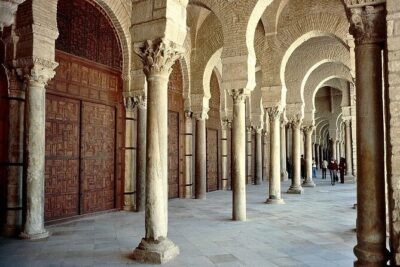
Private Tour to Kairouan, El Jem & Monastir from Tunis_hammamet
Read our review →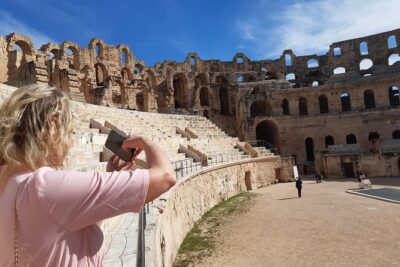
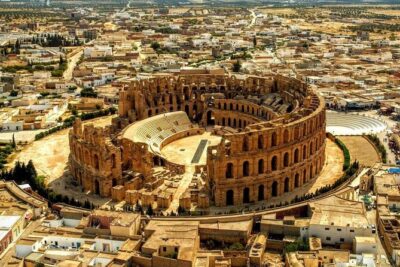
Half-day excursion from Sousse to the amphitheater of El Jem
Read our review →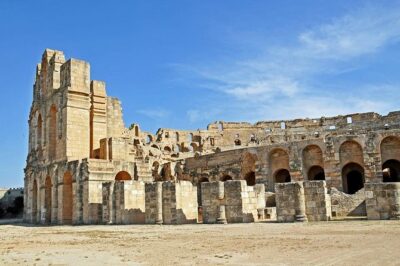
Private and Guided Tour to Kairouan and El Jem and Monastir
Read our review →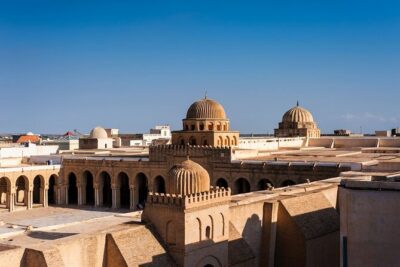
Kairouan & El Djem Guided Day Trip with Lunch from Hammamet
Read our review →Browse the lists this tour appears in