
Reviewed · TUNIS MEDINA TOURS
Guided tour in the UNESCO world heritage Medina of Tunis
The best part of this Tunis Medina tour is that your guide, Saber Arraki, grew up inside the old city. He knows its winding lanes, historic houses, artisans, and religious buildings from professional study and personal experience. That local connection helps turn a maze of shops into a living neighborhood.
I like the mix of grand monuments and ordinary streets, and I like the chance to see quieter corners beyond the main market lanes. The small maximum of 15 people also keeps the walk manageable. The main consideration is that this is a walking tour with no private transport, and the exact length can stretch from two and a half to three and a half hours.
Key points to know before booking
- A guide who grew up in the Medina: Saber Arraki is a nationally certified guide approved by the Tunisian National Tourism Office.
- More than a shopping walk: The route covers mosques, madrasas, palaces, souks, a hammam, traditional crafts, and residential quarters.
- Zitouna Mosque anchors the experience: This is Tunis’s main mosque and one of the Medina’s essential landmarks.
- A useful choice of historic schools: Depending on the visit, you can see either Medersa Slimaniya or Bir Lahjar.
- Small-group format: The tour accepts up to 15 people, with group discounts available.
- Good value for a first visit: At $46.53 per person, the fee includes taxes and listed admission charges, but not transportation.
Why a guide matters in Tunis’s Medina
Tunis’s Medina is easy to underestimate. At first glance, you may see a thick web of lanes lined with shops, perfume bottles, clothing, metalwork, and food. Walk farther, though, and the commercial streets give way to old homes, religious schools, workshops, courtyards, and monuments that are easy to miss without local direction.
That is where Saber’s background matters. He is not simply pointing out buildings from the outside. His role is to explain how the Medina works as a community, how its buildings fit together, and how local traditions connect to the streets around you.
The route also benefits from a human touch. Saber has answered questions about Tunisian culture and his own experience growing up in Tunisia, giving you a first-person view that a standard date-and-name tour often lacks. He is also comfortable guiding in English, and one group received the tour in both English and French.
The tour is described as a group experience, with a maximum of 15 people. That is small enough for questions without promising the intimacy of a private tour. Families with children can participate, and the guide has been patient with younger children who need extra time or attention.
More tunis medina tours in Tunis:
- Private Day Tour Tunis Medina Carthage Sidi Bou Said Bardo Museum
★ 5.0 · 30 reviews - Daytrip Carthage Sidi Bousaid Bardo and Tunis Medina
★ 5.0 · 20 reviews - Private Group Day Tour Tunis Medina Carthage Sidi Bou Said
★ 4.5 · 3 reviews
Zitouna Mosque, the Medina’s great anchor
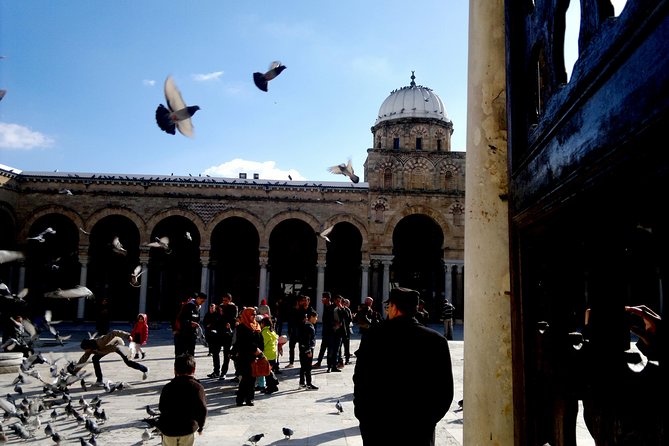
The tour begins around La Kasba at 9:00 a.m. and makes its way through the old city toward the Zitouna Mosque, also called the Mosque of the Olive Tree. This is the main mosque of the Medina and the oldest and largest sanctuary in Tunis.
The scale is impressive. The complex covers about 5,000 square meters and has nine entrances. Its prayer hall contains 184 ancient columns, many of them taken from the nearby ancient site of Carthage. That detail gives the building a direct link to Tunisia’s earlier past, while its later Islamic architecture reflects the importance of Tunis as a religious and cultural center.
Your guide can help you read the building rather than merely photograph it. The mosque is associated with the Maliki tradition, an important point in understanding its place within Tunisian religious life. The visit also sets up the rest of the walk, since many nearby souks and madrasas developed around this central institution.
Access details can vary at religious sites, so you should follow the guide’s instructions and dress respectfully. The supplied tour information does not specify a separate entry fee for Zitouna Mosque, so do not assume that every interior area is included or open at all times.
Dar Lasram and the shape of a traditional home
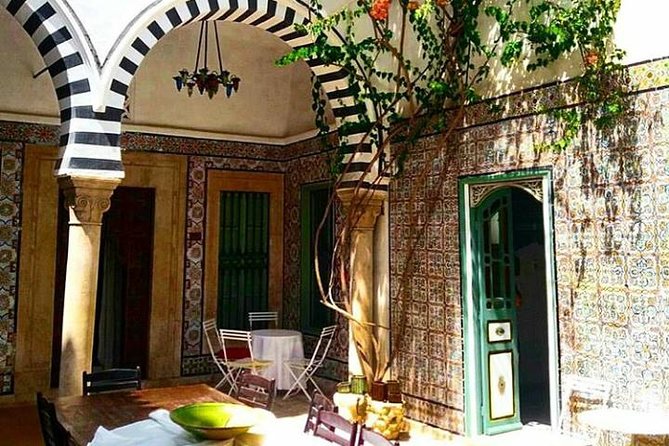
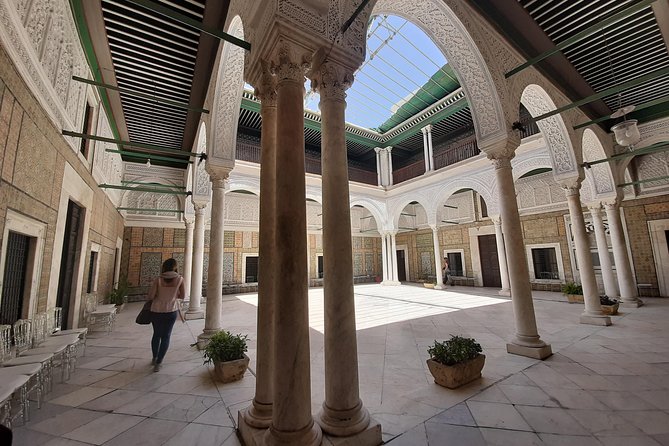
Dar Lasram gives you a look at domestic architecture rather than public worship. Covering about 2,250 square meters, this traditional Tunisian house is arranged vertically and by function.
The ground floor held a shop and service areas. The main family residence occupied the floor above, while the upper level served as a guest house. This layout tells you a great deal about family life, privacy, business, and hospitality in the old city.
The building is now divided between the Medina Safeguarding Association and the Tahar-Haddad Cultural Club. You have about 30 minutes here, but admission is not included in the listed fee. That is an important detail to clarify with the guide on the day, especially if you are watching your budget.
Dar Lasram is one of the tour’s stronger stops for visitors interested in Moorish and Tunisian architecture. It also breaks up the market walking with a closer look at how people once lived behind the plain street doors.
Medersa Slimaniya or Bir Lahjar
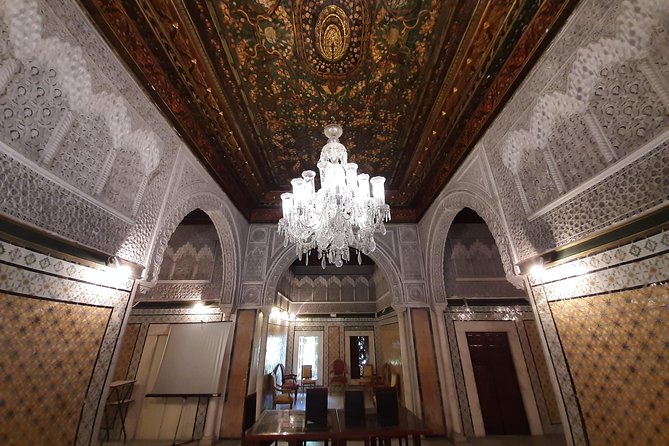
The tour includes a visit to one of two historic madrasas, Medersa Slimaniya or the Arts Center Bir Lahjar. The route description says you have the choice between them, so ask Saber which one fits the day’s schedule and opening conditions.
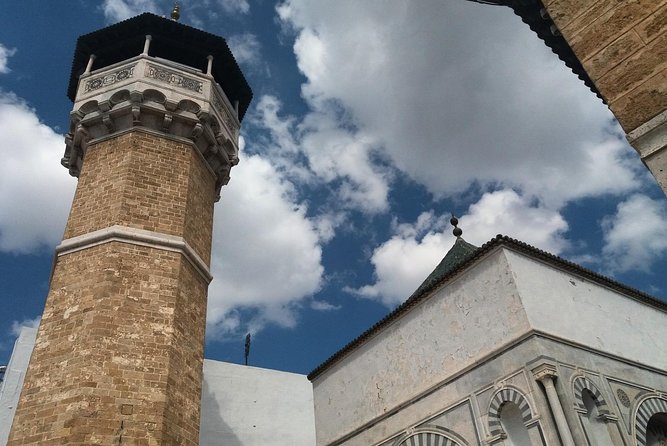
Medersa Slimaniya was built in 1754 by Ali I Pasha in memory of his son Suleiman. It sits close to Zitouna Mosque, at the meeting point of the Souk El Koutbiya and Souk El Kachachine. Its location shows how religious education, trade, and mosque life were closely linked in the Medina.
Bir Lahjar offers a different angle. This former madrasa hosted Maliki students from different regions of Tunisia for many decades. Its past helps explain the Medina’s role as a national center of learning, not just a local market.
The planned visit lasts about 15 minutes, and admission is included. Neither stop is likely to fill an entire morning by itself, but both add useful context to the mosque and souks nearby.
A few more Tunis trips to weigh up
- Historical Tour of Ancient Carthage
★ 5.0 · 51 reviews - 2 Hour Hergla Visit and Sousse Medina Heritage Tour
★ 4.5 · 3 reviews
Perfume lanes and the Souk Al Attarine
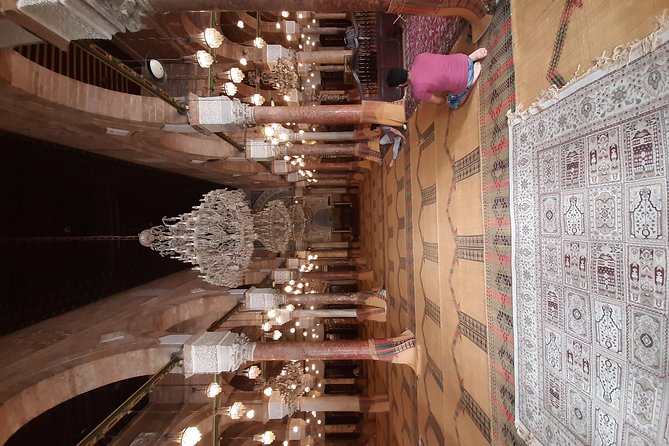
Souk Al Attarine is the perfume market, with shops selling scents and beauty products. It is one of the more concentrated commercial sections of the Medina, and it gives you a clear sense of how different streets developed around particular trades.
You may find the lane crowded and sales-focused, especially compared with the quieter residential areas later in the walk. That contrast is useful. The tour does not treat the souk as a backdrop for shopping alone. Saber can explain the trade and point out details you could easily miss while moving through the crowd.
The stop is scheduled for about 15 minutes, with no separate admission charge. If you want to buy something, remember that shopping is not part of the tour price. The short time also means you should not expect a long, leisurely browsing session unless the group’s pace allows it.
A pause at Café du Souk
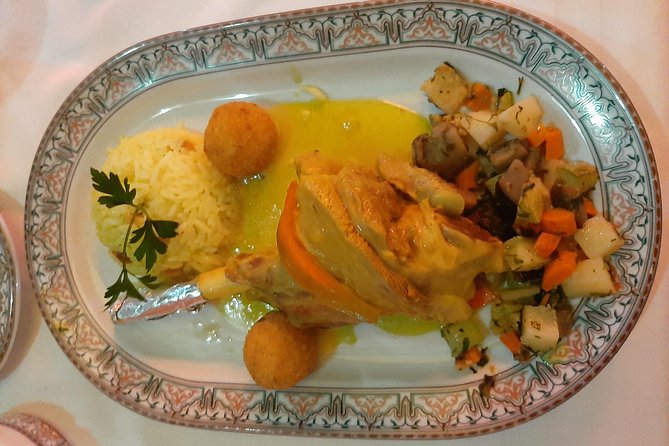
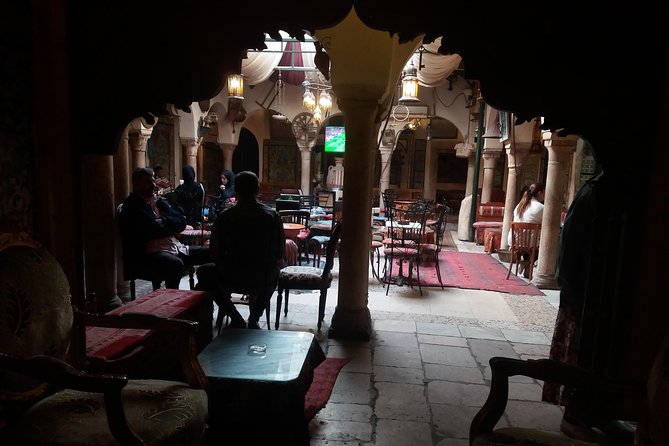
A 30-minute stop at Café du Souk provides a change of pace. It is described as an emblematic café of the Medina, and the pause gives you time to sit, ask questions, and watch the old city around you.
Food and drinks are not listed as included, so plan to pay for anything you order. This is also one of the places where the tour’s timing may feel flexible. A group with many questions or photo stops may use the break differently from a group eager to keep walking.
I like this pause because a guided walk can become a blur of names and doorways. Sitting down helps you absorb the larger picture. You can ask Saber about the buildings already seen, local customs, or what you should visit later on your own.
From Rue de la Kasbah to Souk el-Birka
Rue de la Kasbah brings the route toward the Hammouda Pasha Mosque. The scheduled stop is only five minutes, so expect an exterior discovery or a short explanation rather than a long formal visit.
The nearby Souk el-Birka is the goldsmiths’ market. Again, the planned time is only five minutes. That makes it a quick orientation point, not a dedicated shopping appointment. If you are hoping to buy jewelry, you should not count on having an extended negotiation session during the group walk.
These short stops work best as part of the route’s larger pattern. You move from worship to education, trade, craft, and domestic life, seeing how the Medina’s different parts sit close together.
Hammam el Kachachine and the chechia quarter
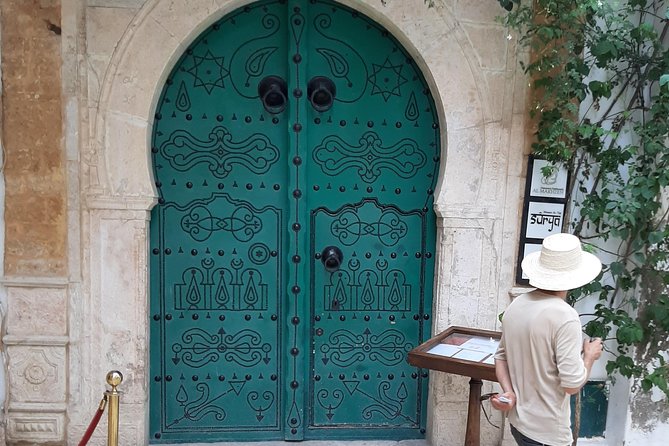
The walk then reaches Hammam el Kachachine, a traditional bathhouse. The visit is scheduled for about five minutes, so the focus is discovery and explanation rather than a bathing experience. It is a useful reminder that the Medina’s old buildings served everyday needs as well as ceremonial ones.
The Grand Souk des Chechias receives about 15 minutes. This is the area associated with traditional chechias, the red felt caps strongly linked with Tunisian dress and craft. The stop adds a hands-on, working side to the tour, especially if Saber introduces you to artisans or explains how the craft fits into local life.
Several visitors especially valued being led to artisans and places they would not have found alone. That is a practical advantage of this tour. You can see more than the obvious shopping lanes, though individual workshop access may depend on the day and the people working there.
Dar El Jeld and Rue du Pacha
Dar El Jeld is an old residence now converted into a gourmet restaurant. The planned stop is five minutes for photographs, not a meal. It is a good example of how historic houses can be reused while retaining their architectural appeal.
Rue du Pacha receives about 30 minutes and is one of the more substantial sections of the walk. The street contains several monuments, including Dar Hammouda Pasha, the Didi Ben Arous mausoleum, and the Hammouda Pasha Mosque.
This part of the tour should appeal to anyone who likes architecture but wants more than a list of dates. The buildings reveal the Medina’s layered functions: homes for important families, religious sites, memorial spaces, and streets that still connect daily life.
Rooftop views and the wider picture
One particularly memorable feature described by participants is a panoramic view from Medina rooftops toward Al-Zaytuna Mosque. The exact rooftop access is not separately detailed in the tour information, so treat it as dependent on the day’s route and access.
If available, this view can change your understanding of the old city. From street level, the Medina feels like a tight maze. From above, you can see the relationship between domes, courtyards, narrow lanes, and larger religious buildings.
The tour’s real value comes from moving between these viewpoints. You get the close details of carved doors and market stalls, then a broader sense of how the district fits together.
Pace, group size, and practical comfort
The advertised duration ranges from two and a half to three and a half hours. That is a meaningful difference, especially if you have a train, lunch reservation, or afternoon excursion planned. Build in extra time rather than assuming you will finish at the shortest estimate.
The route starts at La Kasba and ends in La Medina. Private transportation is not included, and you should expect to walk between stops. The meeting area is near public transportation, but the tour itself is not a vehicle-based sightseeing trip.
The Medina has uneven, narrow routes by its nature, though the supplied information says most people can participate and service animals are allowed. Wear practical shoes and keep your schedule open enough for photo stops and questions. Those pauses are part of the appeal, but they can extend the morning.
Is $46.53 a fair price?
At $46.53 per person, this is a solid price for a two-and-a-half to three-and-a-half-hour guided introduction, particularly because all fees and taxes are included. The fee also covers the listed admission for the madrasa visit.
The value is strongest if you are new to Tunis and want a clear framework before exploring alone. Saber’s local background, language ability, and familiarity with artisans add something you cannot get from a map. The tour can also save you from spending your first hours wandering without knowing which doors and lanes matter.
The price is less attractive if you want a private itinerary, extensive shopping time, or a slow architectural photography walk. The group can include up to 15 people, and the route includes several brief five-minute stops. Dar Lasram admission, food, drinks, and transportation are not included.
The tour is booked about 25 days in advance on average, so do not leave it until the last day of a short Tunis stay if it is important to you.
Who will get the most from this walk?
I would choose this tour for a first visit to Tunis, especially if you want history, architecture, and local culture in one morning. It also suits families, since the guide has been described as patient with children, and the pace includes breaks.
It is a good fit for visitors interested in Moorish design, traditional homes, religious schools, crafts, and Tunisian daily life. It is also useful if you want guidance in English or French.
You may prefer a different format if you dislike walking, need a fixed end time, or want to spend most of the morning shopping. This is a guided introduction to the whole Medina, not a specialist tour devoted only to food, jewelry, mosques, or photography.
Free cancellation is available up to 24 hours before the start time for a full refund. Changes made within 24 hours are not accepted, and poor weather or failure to meet the minimum number of participants can lead to a new date or a full refund.
Should you book this Tunis Medina tour?
Book it if you want the Medina explained by someone who knows it as both a professional guide and a local who grew up there. The strongest reasons are the access to less obvious corners, the mix of monuments and working souks, and Saber’s ability to answer questions about Tunisian life as well as history.
I would book it early, allow the full three and a half hours, and keep the rest of the morning flexible. If you want a gentle, informed introduction before returning to explore alone, this tour offers good value. If your priority is independent wandering or private transport, choose another option.
FAQ
Where does the tour begin?
The tour begins at La Kasba in Tunis at 9:00 a.m.
Where does the tour end?
The tour ends in La Medina, Tunis.
How long does the tour last?
The approximate duration is between two hours and 30 minutes and three hours and 30 minutes.
How much does the tour cost?
The listed price is $46.53 per person.
What is included in the price?
All fees and taxes are included. The listed admission for the madrasa visit is also included.
Is transportation included?
No. Private transportation is not included.
How large is the group?
The experience has a maximum of 15 participants. Group discounts are available.
What happens if I need to cancel?
You can cancel at least 24 hours before the start time for a full refund. Cancellations or changes made less than 24 hours before the start time are not accepted for a refund.
Just added around Tunis
- Dougga Guided Day Tour from Tunis★ 5.0 · 5 reviews
- Private Arrival Transfer: Tunis Airport to Tunis Hotel★ 4.5 · 5 reviews
- Tunisia 7-Day tour★ 5.0 · 6 reviews
- Roman Archeology Guided Tour Thuburbo Majus & Uthina★ 4.5 · 7 reviews
- Bardo Museum- The ruins of Carthage- Village of Sidi Bou Said★ 5.0 · 4 reviews
- The Medina★ 4.0 · 7 reviews
- Tunis Carthage Private Arrival Airport Transfer to Tunis★ 5.0 · 4 reviews
- Tunis Group Tour: Carthage, Sidi Bou Said, Bardo museum & Medina★ 5.0 · 5 reviews
Tunis Medina Tours, compared.

VIP Tour: Tunis Medina/Bardo, Sidi Bou Said, Carthage |PICKUP ALL
Read our review →
Private Day Tour Tunis Medina Carthage Sidi Bou Said Bardo Museum
Read our review →
Daytrip Carthage Sidi Bousaid Bardo and Tunis Medina
Read our review →
Browse the lists this tour appears in