
Reviewed · CARTHAGE AND SIDI BOU SAID TOURS
Historical Tour of Ancient Carthage
The most striking thing about this Carthage tour is how much ground you cover in one half-day. You move from a Roman arena to the old Punic harbor, then on to a religious site and a ruined basilica above the Mediterranean. Tarek, the local guide, adds the links between these places so they feel like parts of one long story, not scattered stones.
I like the private format, since your group can ask questions and adjust the pace within the available time. I also like the private transportation, which makes it practical to reach several spread-out sites without trying to piece together local transport. The main consideration is price: at $104 per person, this is not the cheapest way to see Carthage, especially since lunch is extra.
Key points to know before booking
- Four major Carthage sites in about three and a half hours: You visit the Roman arena, Punic Ports, Tophet, and Saint Cyprian’s Basilica.
- A private tour with Tarek: Only your group takes part, making it easier to ask questions and request a particular focus.
- Private transportation is included: Pickup is offered, and transport helps connect sites that are not presented as one compact museum visit.
- The tour explains Punic and Roman Carthaginian life: You get context for ports, religion, public entertainment, and early Christianity.
- Lunch is not included: The guide can recommend good places and may help with a specific request, such as finding shawarma.
- Free cancellation up to 24 hours ahead: Poor weather can also lead to a new date or full refund.
Why a private Carthage tour helps
Carthage is not one single monument with a clear entrance and a tidy route. Its remains are spread around the modern Tunis suburb of Carthage, with different sites showing different periods of the city’s past.
That makes a guide especially useful. Without context, a ruined wall or open patch of ground can be hard to read. Tarek’s role is to explain what you are seeing, answer questions, and connect the Punic, Roman, and early Christian chapters.
The private setup is one of the strongest features. You do not share the experience with a large group, and only your party participates. That matters at archaeological sites, where a question about religion, warfare, architecture, or daily life can lead to a useful conversation rather than a quick scripted answer.
You should still keep your expectations realistic. The tour lasts about three hours and 30 minutes, so it gives you a well-chosen introduction rather than a complete study of every Carthage ruin. The time at the four main stops adds up to about two hours and 15 minutes, with the remaining time likely used for pickup, driving, and moving between sites.
More Carthage and Sidi Bou Said Tours in Tunis
- Private tour: Medina,Carthage ,Sidi Bou Said, Bardo Museum+lunch
★ 5.0 · 230 reviews - Carthage, Bardo Museum, Sidi Bou Said and Medina Private Day Tour
★ 4.5 · 153 reviews - Guided Bike Tour of Carthage Archeological Site in Tunisia
★ 5.0 · 88 reviews
The Roman arena at Site Archéologique de Carthage
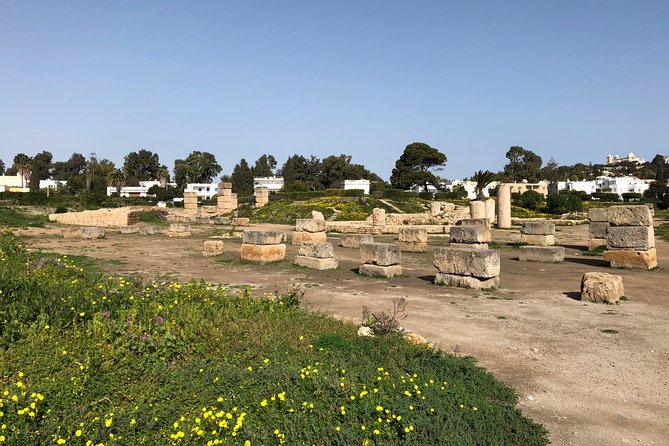
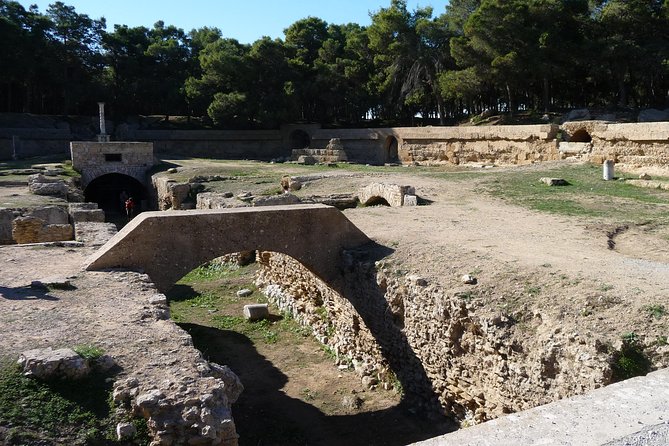
The tour begins at the Site Archéologique de Carthage, described here as an ancient Roman arena. You have about 45 minutes, and admission is included.
This is a good opening stop because it puts Carthage’s later Roman period in view. The name Carthage often brings to mind the Punic city and its conflict with Rome, but the site continued to matter after Rome defeated Carthage. The arena helps you see the city as a place that changed hands and purpose over time.
You can expect Tarek to tell stories about the arena while you explore the remains. That story-based approach is helpful here. Ruins of an arena do not always explain themselves, and the value of the stop lies in understanding how the space functioned as well as seeing its surviving structure.
Forty-five minutes is enough for a focused visit, though it is not a long archaeological session. If you like to inspect every stone or take many photographs, you may find the pace brisk. For most people, this opening stop should give you a clear sense of Roman Carthage without using up the whole morning.
The Punic Ports and their museum
Next comes the Punic Ports and Museum, with about 30 minutes and admission included. This is the place to focus on Carthage as a maritime power.
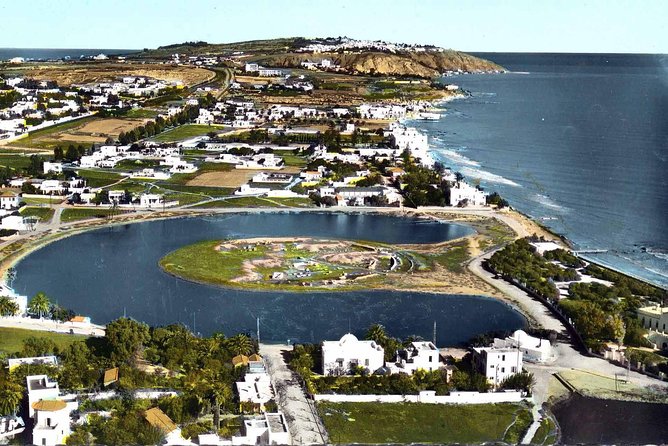
The Punic Port was the ancient harbor of Carthage. Here, you walk through the remains and learn how the port fit into the city’s trade and naval life. The stop gives useful balance to the arena because it shifts the story from Roman public life to the earlier Punic city.
Thirty minutes is a short visit, so this is more about orientation and explanation than a full museum study. I would pay close attention to the layout and ask questions while you are there. A harbor ruin can be difficult to picture without guidance, and Tarek’s explanations should help you understand how the port served the city.
This stop also helps explain why Carthage mattered far beyond modern Tunisia. Its position and harbor supported connections across the Mediterranean. You will not get every detail of Punic history in half an hour, but you will have a stronger framework for the other stops.
Tophet de Carthage and Carthaginian religion
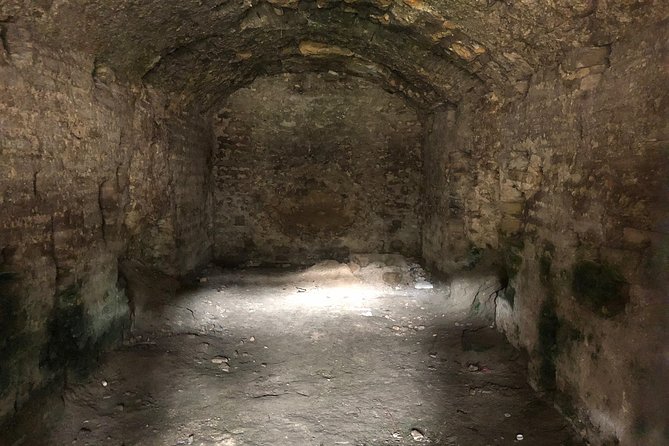
The visit to Tophet de Carthage lasts about 30 minutes. You see the altar and the remains of this ancient religious compound while learning about Carthaginian religious practices.
This is likely the most sensitive stop on the route. Tophet is tied to difficult questions about ancient rituals and religious belief, so a guide’s explanation is important. Tarek can give you the historical setting and help separate what is known from what remains debated.
The site is valuable because it moves beyond military and political history. You get a look at how Carthaginian people understood worship and sacred space. That makes the tour broader than a simple procession through Roman ruins.
Do not expect a large building or a dramatic monument. The interest here comes from the subject, the surviving remains, and the explanation. If you are mainly looking for sweeping views or intact architecture, this may feel quieter than the arena or basilica. If you want to understand Carthage as a society, it is an essential stop.
Same coast, a completely different day out:
- Private Tour to Kairouan, El Jem & Monastir from Tunis_hammamet
★ 5.0 · 301 reviews - Private Excursion to Testour, Dougga and Bulla Regia from Tunis.
★ 5.0 · 100 reviews - Guided tour in the UNESCO world heritage Medina of Tunis
★ 5.0 · 68 reviews - Group Guided Bike Tour of Carthage Archeological Site in Tunisia
★ 5.0 · 57 reviews
Saint Cyprian’s Basilica above the Mediterranean
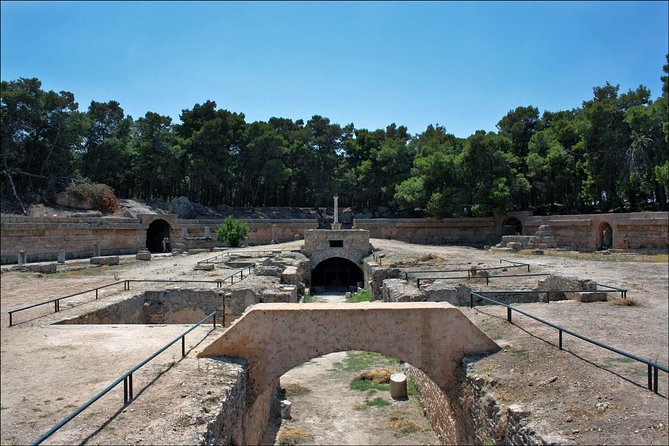
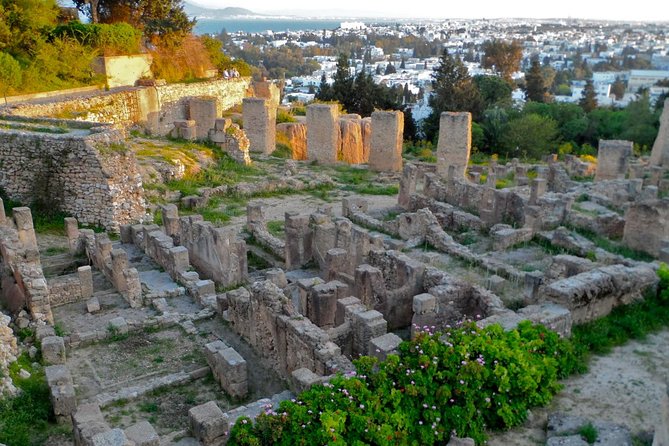
The final listed stop is La Basilique de Saint Cyprien, with about 30 minutes at the ruins. This early Christian basilica is one of the oldest churches in North Africa, and its position above the Mediterranean gives the visit a scenic finish.
The ruins show another major change in Carthage’s story. You begin with Roman public architecture, move through the older Punic port and religious compound, and end with early Christianity. That sequence gives the tour a useful timeline without requiring a full day.
The sea views are a real part of the appeal. After several archaeological stops, the open setting gives you space to pause and take in the location. I would save a little attention for the view rather than rushing through the ruins. The site works best when you consider both the church remains and its position overlooking the water.
As with Tophet, this is not a complete church you can walk through. You are visiting ruins, so the guide’s comments help you imagine the building and its importance. The thirty-minute stop should work well for a focused visit and photographs, though you may wish for more time if early Christian history is a major interest.
What Tarek adds to the experience
The strongest praise for this tour centers on Tarek’s approach. He is described as friendly, kind, interesting, and willing to answer many questions. One account also notes that he accommodated a special request and shaped a short visit around the best historical sights in Tunis.
That flexibility is useful on a private tour. You can ask for more explanation at a site that catches your attention, or request help with a practical matter after the sightseeing. Tarek even helped one person find the shawarma they wanted for lunch, which gives you a sense of the personal service on offer.
You should not assume every private tour will change its route dramatically. The experience still has a planned set of stops and a fixed duration. But a private guide can make the visit feel less rigid than a large coach excursion, especially when you want to stop for a question or need advice about what to do next.
The driver, Mohammed, also receives specific praise for being helpful. Since private transportation is included, the driver matters. Smooth connections between the sites let you spend your limited time looking at Carthage rather than working out how to get from one ruin to the next.
Is $104 per person good value?
At $104 per person, the tour makes the most sense for people who value time, transport, and interpretation. You get private transportation, admission fees, and a local guide across four Carthage sites. You also avoid paying separately for each entrance listed in the itinerary.
The price is harder to justify if you are traveling alone or on a very tight budget. A self-guided visit may cost less, although you would need to handle transportation and make sense of the ruins yourself. The tour’s value comes from combining several sites in one organized outing and having Tarek explain what connects them.
Group size changes the calculation. Since the activity is private, a small group can share the cost while keeping the experience personal. Group discounts are offered, so check the rate for your party before deciding.
Lunch is not included. That is not unusual for a three-and-a-half-hour tour, and optional recommendations for good lunch spots are available. Still, budget for the meal separately. If you have a particular food request, it is worth mentioning it to Tarek.
Timing, pickup, and practical planning
Pickup is offered, and private transportation is included. The experience is also near public transportation, though the included vehicle is the simpler choice for visiting several separate sites in one short outing.
Confirmation arrives at booking, which gives you the basic details promptly. The activity is available with a mobile ticket, so you do not need a printed voucher.
Most people can take part, but the tour is built around outdoor archaeological sites. The information provided does not give a detailed accessibility description, so if you have specific mobility needs, ask the provider before booking.
Plan for changing weather. The tour requires good weather, and if poor conditions force cancellation, you are offered another date or a full refund. For the same reason, keep an eye on the forecast and avoid scheduling this as the only possible activity at the very end of your trip.
The cancellation rule is generous if you plan ahead. You can cancel for a full refund up to 24 hours before the local start time. Changes or cancellations inside that 24-hour window are not accepted for a refund.
Who will get the most from this tour
I would choose this experience if you are visiting Tunis for a short time and want a clear introduction to Carthage. It is also a good match if you care about history but do not want to spend a full day working out how the sites fit together.
Families and mixed-interest groups may appreciate the private format. One person can ask about Roman ruins, another can focus on religion, and the group does not have to keep pace with strangers. The guide’s friendly manner also helps if you want practical help beyond the formal sightseeing.
This tour suits first-time visitors particularly well. The four stops cover several periods and themes, including ports, religious practices, Roman public life, and early Christianity. You finish with a useful outline of Carthage’s past rather than seeing only one famous ruin.
It may be less suitable if you want a slow, specialist archaeological study. The schedule is compact, and each stop has a set amount of time. You will see a lot, but you will not have hours to linger at each site.
Should you book the Historical Tour of Ancient Carthage?
I would book it if you want private transport, a local guide, and four important Carthage sites in one efficient outing. Tarek’s personal attention, the helpful driver Mohammed, and the chance to ask questions are the main reasons to choose this over simply arriving at one site on your own.
The $104 price is fair for a private experience with transport and entrance fees, but it is not a bargain for a solo visitor. Add lunch to your budget, and allow some flexibility for weather.
Choose this tour for a guided historical overview with practical help and strong personal attention. Skip it only if you prefer to explore slowly on your own or want a longer, more specialized archaeological visit.
FAQ
How long does the Historical Tour of Ancient Carthage last?
The tour lasts approximately 3 hours and 30 minutes.
How much does the tour cost?
The listed price is $104 per person.
Is this a private tour?
Yes. Only your group participates in the activity.
Is transportation included?
Yes. Private transportation is included, and pickup is offered.
Which Carthage sites are visited?
The tour includes Site Archéologique de Carthage, Punic Ports and Museum, Tophet de Carthage, and La Basilique de Saint Cyprien.
Is lunch included?
No. Lunch is not included, but optional recommendations for lunch spots are available.
Who leads the tour?
The tour is led by Tarek, a local guide. The driver is named Mohammed.
What happens if the weather is poor?
The experience requires good weather. If it is canceled because of poor weather, you can choose a different date or receive a full refund.
More Historical Tours in Tunis
- 2 Hour Hergla Visit and Sousse Medina Heritage Tour
★ 4.5 · 3 reviews
Just added around Tunis
- Dougga Guided Day Tour from Tunis★ 5.0 · 5 reviews
- Private Arrival Transfer: Tunis Airport to Tunis Hotel★ 4.5 · 5 reviews
- Tunisia 7-Day tour★ 5.0 · 6 reviews
- Roman Archeology Guided Tour Thuburbo Majus & Uthina★ 4.5 · 7 reviews
- Bardo Museum- The ruins of Carthage- Village of Sidi Bou Said★ 5.0 · 4 reviews
- The Medina★ 4.0 · 7 reviews
- Tunis Carthage Private Arrival Airport Transfer to Tunis★ 5.0 · 4 reviews
- Tunis Group Tour: Carthage, Sidi Bou Said, Bardo museum & Medina★ 5.0 · 5 reviews
Carthage and Sidi Bou Said Tours, compared.

VIP Tour: Tunis Medina/Bardo, Sidi Bou Said, Carthage |PICKUP ALL
Read our review →
Private tour: Medina,Carthage ,Sidi Bou Said, Bardo Museum+lunch
Read our review →Private tour: Medina,Carthage ,Sidi Bou Said, Bardo Museum+lunch
Read our review →
Carthage, Bardo Museum, Sidi Bou Said and Medina Private Day Tour
Read our review →
Guided Bike Tour of Carthage Archeological Site in Tunisia
Read our review →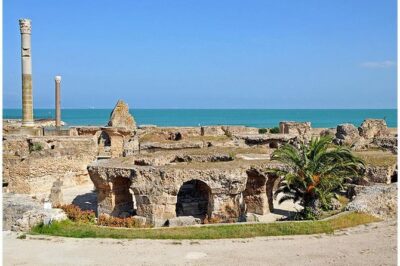
1 day excursion Tunis Sidi Bousaid Carthage departure from Sousse
Read our review →
Group Guided Bike Tour of Carthage Archeological Site in Tunisia
Read our review →
Archaelogical Site Of Carthage + Picturesque Village Of Sidi Bou Said
Read our review →Browse the lists this tour appears in