Reviewed · EL JEM AMPHITHEATRE TOURS
El Jem and Monastir Full-Day Tour with Lunch from Tunis or Hammamet
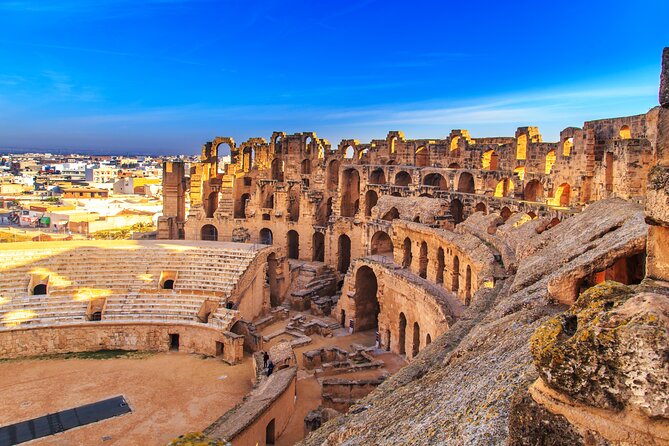
El Jem’s Roman amphitheater is the star here: a massive third-century arena that ranks among the largest surviving Roman amphitheaters anywhere. I like that the visit includes both the monument and the Museum of El Jem, where the mosaics give you a closer look at the wealth and artistic skill behind ancient Thysdrus. I also like the private format, since only your group joins the tour and the pickup can be arranged from Tunis or Hammamet.
The main drawback is the road time. This is an eight-hour day, and one guest rightly noted that you spend a good portion of it in the car. The English guiding is usually strong, with guides such as Bouhdid, Ridha, and Boubou praised for their friendly presentation, but one guest found the English less polished.
Key points at a glance
- El Jem’s arena is the main event: Spend about two hours exploring one of North Africa’s most impressive Roman monuments.
- The mosaic museum adds essential context: Its collection helps turn a quick ruin visit into a fuller picture of ancient life.
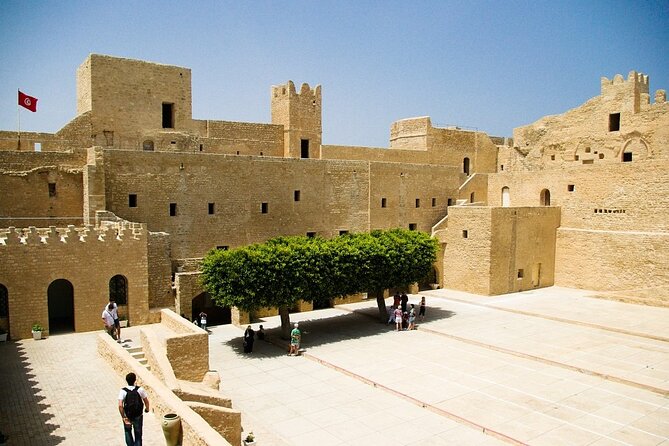
- Monastir brings a different era: The Ribat shifts the focus from Roman Africa to early Islamic defense.
- Bourguiba’s mausoleum is included: You have time to browse the grand resting place of Tunisia’s first president.
- Private transport keeps the day flexible: Only your own group takes part, with pickup offered from Tunis or Hammamet.
- Lunch is included: That makes the $105 price easier to assess as a full-day package rather than a simple transfer.
Why El Jem deserves the long ride
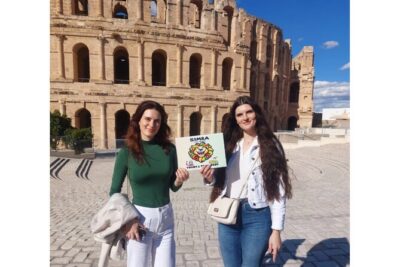
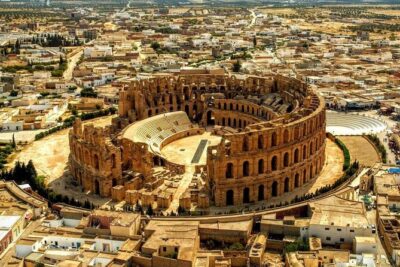
If you have time for only one major Roman site in Tunisia, El Jem makes a strong case. The ancient city was called Thysdrus, and its amphitheater was built around 230 to 240 AD, near the end of the Roman building period. It was not a minor provincial theater. Its enormous scale reflects a prosperous city linked to olive oil production and the Roman economy.
The arena is often ranked third in the Roman world after the amphitheaters of Rome and Verona. That comparison gives you a useful sense of scale, but the site has its own character. It is less polished than Rome’s Colosseum and, in some ways, more rewarding because you can better read the structure itself.
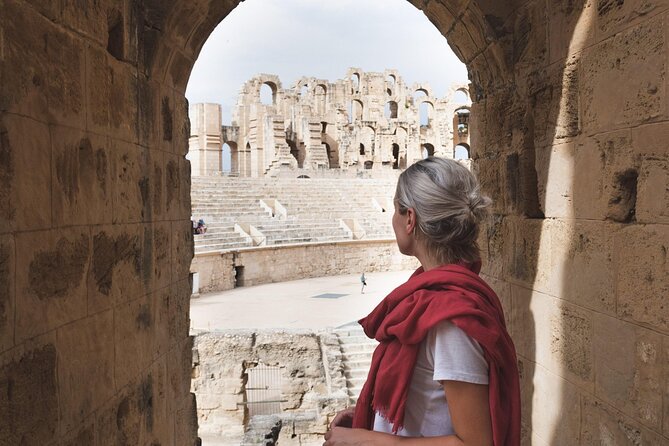
You can expect around two hours at the amphitheater. That is enough time to walk through the entrances, see the arena level, inspect the underground passages, and climb for views across the town. The stonework shows both the power and the practical planning of Roman public entertainment.
The architecture is especially interesting because El Jem was one of the last great amphitheaters built in the Roman period. Its design improved on some features of Rome’s Colosseum. The scale can feel surprising when you first approach it, especially in a modern town where the ancient structure remains the dominant sight.
I would not treat this as a quick photo stop. Give yourself time to notice how the corridors carried people through the building, how the arena floor related to the service areas below, and how the seating was arranged. A guide can help connect those physical details to the wider story of Roman North Africa.
The visit also suits people who are not usually keen on ruins. The amphitheater is easy to understand at a glance. You do not need a long explanation to grasp its size, but a good guide can explain why it was built and how it fits into Tunisia’s Roman past.
More El Jem Amphitheatre Tours in Hammamet
- Private Day Tour , Kairouan & Amphitheatre of el Jem From Tunis /Hammamet/Sousse
★ 4.5 · 8 reviews - Kairouan & El Jem Small Group Tour from Tunis, Hammamet or Sousse
★ 5.0 · 6 reviews - Private and Guided Tour to Kairouan and El Jem and Monastir
★ 4.5 · 22 reviews
The Museum of El Jem and its remarkable mosaics
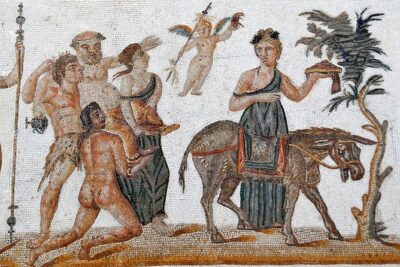
The museum is an important part of the day, not an optional extra to hurry through. It gives you the detail that the amphitheater cannot. The arena shows public power and scale. The museum shows domestic taste, decoration, and daily life.
The collection is especially noted for its mosaics. These are not just colorful floor patterns. They reveal the subjects that mattered to people in ancient Thysdrus, along with the artistic methods used to decorate wealthy homes and public buildings.
You should pay attention to the fine pattern work, repeated borders, figures, and scenes. The museum makes the ancient city feel less abstract. After seeing the huge amphitheater, you can picture the people who lived around it, paid for elaborate homes, and took part in a society that valued spectacle and display.
The two-hour El Jem stop covers both the amphitheater and museum, so the timing has real value. You get the headline monument plus the material that explains it. If you rushed to the arena alone, you would miss much of what makes El Jem more than a large stone ruin.
Monastir’s Ribat changes the story
After El Jem, the tour shifts from Roman antiquity to early Islamic Tunisia. The Ribat of Monastir is an old defensive fortress built by Arab conquerors during the eighth-century Muslim conquest of the Maghreb. It is described as the oldest ribat built by those conquerors and remains Monastir’s most prominent monument.
Plan on about an hour here. The Ribat is not simply another old building to photograph. Its purpose was defense, religious discipline, and protection of the coast. The thick walls and fortified form give you a clear sense of how different this period was from the Roman world you have just left.
The contrast is one of the best features of the tour. At El Jem, you see an imperial arena built for mass entertainment. At Monastir, you see a defensive Islamic structure shaped by conquest and coastal security. In a single day, the tour moves between two major chapters of Tunisian history without requiring a separate hotel move.
Your guide’s role matters more at the Ribat than it does at the amphitheater. The Roman arena communicates its size immediately. The Ribat benefits from explanation about its function, age, and place in Monastir. Guides including Bouhdid and Ridha have been singled out for clear, friendly delivery, while Boubou has been praised for making the day both informative and pleasant.
The one-hour visit should give you time to see the main structure at a reasonable pace. Since the tour is private, you can ask for clarification or spend a little longer on an area that interests you, though the overall day still has a fixed schedule.
A quieter stop at Bourguiba’s mausoleum
The final listed stop is the Bourguiba Mausoleum, the resting place of Habib Bourguiba, Tunisia’s first president. This adds a modern political chapter to a day otherwise focused on ancient and medieval monuments.
You have about an hour to browse at your own pace. That wording matters. This is not presented as a long guided lecture, so you can take in the building and its setting without the same structured pace used at El Jem.
The mausoleum gives the itinerary a useful balance. El Jem represents Roman rule and public spectacle. The Ribat represents early Islamic defense. Bourguiba’s mausoleum brings you to the modern Tunisian republic and one of its central political figures.
If your main interest is archaeology, this may be the least essential stop. If you want a broader understanding of Tunisia, it earns its place. The day is not only about ruins. It also shows how different periods continue to shape the country’s identity.
More El Jem Amphitheatre Tours in Tunis
- Private Tour to Kairouan, El Jem & Monastir from Tunis_hammamet
★ 5.0 · 301 reviews - Daytrip to Kairouan and El Jem Colosseum
★ 4.5 · 55 reviews - Kairouan and El Jem Private Day Tour
★ 4.5 · 38 reviews - Full-Day Kairouan and El Jem Tour from Tunis
★ 4.0 · 7 reviews
Lunch and the rhythm of an eight-hour day
Lunch is included, which removes one practical decision from a busy schedule. The provided information does not specify the restaurant, menu, or meal style, so you should not book this expecting a particular dish or dining setting.
The tour begins at 8:00 am and lasts about eight hours. That early start makes sense. El Jem and Monastir are not next door to Tunis or Hammamet, and a late departure would leave too little time at the sites.
You should expect a full day with substantial driving between stops. One positive account specifically praised the safe driving and good vehicle, while another pointed out that the road time is considerable. That is the tradeoff: private transport makes these sites practical in one day, but the journey itself is part of the experience.
Bring water, comfortable shoes, and something to occupy you during the drive. The site visits are active but not described as strenuous, and the additional information says most people can participate. Still, ancient monuments can involve uneven surfaces and steps, so anyone with mobility concerns should ask the provider for current details before booking.
Private format, pickup, and guide quality
This is a private tour, not a large shared coach excursion. Only your group participates. That can make a big difference on a long day because you are not adjusting to a bus full of strangers or waiting for a large group to return to the vehicle.
Pickup is offered, and the tour is available from Tunis or Hammamet according to the experience title. The listed start time is 8:00 am. The meeting details should be confirmed at booking, especially if you are staying outside the main hotel areas.
The guide can shape the day. Bouhdid has been praised as funny, pleasant, and well informed. Ridha has been described as highly professional, friendly, and fluent in English. Boubou has also received praise for clear knowledge and a warm manner. These specific names give you useful expectations, but guide assignment can vary.
English quality appears generally good, though not perfectly consistent. One guest found the guide’s English weaker than expected. If detailed historical explanation is central to your decision, it is sensible to confirm the language arrangement before departure.
The drivers also receive strong marks for courtesy and safety. That is more important than it may sound. With several hours on the road, a careful driver and a comfortable car affect the whole day.
Is $105 a fair price?
At $105 per person, this is not the cheapest way to see El Jem. It is also not merely an entrance ticket. The price covers a full-day private experience with transport, a guide, admission to the main paid sites, lunch, and stops in both El Jem and Monastir.
The value depends on your starting point and group size. If you are traveling with several people, the private format may compare well with arranging separate transport and guides. Group discounts are offered, which may improve the cost for a larger party.
You are paying for efficiency as much as sightseeing. Reaching El Jem and Monastir independently can require more planning, and combining the two places in one day is difficult without a car. The tour handles the route while you focus on the sites.
The price makes less sense if you dislike long drives or prefer to spend several days in one region. In that case, staying in the Sahel and visiting at a slower pace may suit you better. For a short stay in Tunis or Hammamet, however, this tour packs a great deal of history into one day.
Who should book this tour?
I would recommend it to first-time visitors who want to see one of Tunisia’s major ancient monuments without arranging transport themselves. It also suits couples, families, and small groups who value a private vehicle and the ability to ask questions along the way.
It is a good choice if you want variety. You will see Roman architecture, ancient mosaics, an early Islamic fortress, and a modern national mausoleum in one outing. That range gives you more than a single-site excursion.
You should think twice if you want a slow archaeological study. Two hours at El Jem is useful, but it will not satisfy someone who wants to inspect every detail at length. The driving also makes this a demanding day, especially for anyone who finds long journeys tiring.
The tour requires good weather. If poor conditions cause cancellation, you will be offered another date or a full refund. Otherwise, cancellation is free up to 24 hours before the start time. Changes or cancellations made later are not accepted for a refund.
My verdict: a strong full-day choice
I would book this tour if my base were Tunis or Hammamet and I wanted to reach El Jem without handling the transport myself. The amphitheater alone justifies the effort, while the mosaic museum, Ribat, and mausoleum give the day a useful historical range.
The key question is simple: are you willing to spend part of the day on the road? If yes, the private format, included lunch, careful driving, and strong guide reports make $105 a reasonable price. If no, choose a shorter local outing and save El Jem for a stay closer to Monastir.
FAQ
How long is the El Jem and Monastir tour?
The tour lasts approximately eight hours.
What time does the tour begin?
The listed start time is 8:00 am.
Where does the tour depart from?
Pickup is offered from Tunis or Hammamet according to the tour title. Your exact pickup details should be confirmed when booking.
Is this a private tour?
Yes. Only your group participates in the activity.
Is lunch included?
Yes, lunch is provided during the tour. The available information does not specify the restaurant or menu.
Which sites are included?
The tour includes El Jem’s Roman amphitheater, the Museum of El Jem, the Ribat of Monastir, and the Bourguiba Mausoleum.
Are admission tickets included?
Admission is included for the El Jem amphitheater and the Ribat of Monastir. The Bourguiba Mausoleum is listed with free admission.
Can I cancel for a full refund?
Yes, you can cancel up to 24 hours before the experience start time for a full refund. Cancellations made less than 24 hours in advance are not refunded.
More Lunch Experiences in Tunis
- Private tour: Medina,Carthage ,Sidi Bou Said, Bardo Museum+lunch
★ 5.0 · 230 reviews - Full Day Dougga & Bulla Regia Via Testour Private tour with Lunch
★ 5.0 · 29 reviews - The Best of Tunisia, 3 Days Guided Tour with Lunch
★ 5.0 · 7 reviews - Tour of Tunis Carthage and Sidi Boussaid with local lunch
★ 5.0 · 7 reviews
More Monastir Tours in Tunis
- El Jem, Monastir, and Kairouan Medina Private Tour
★ 5.0 · 5 reviews - Fun VIP Tour: El Jem, Kairouan, Monastir/Sousse (PICKUP ALL City)
★ 5.0 · 451 reviews - Fun VIP Tour: Sousse &/OR Monastir (Walking Tour or Car Option)
★ 5.0 · 69 reviews - Half Day Excursion Sousse, Monastir
★ 5.0 · 18 reviews
Just added around Tunis
- Dougga Guided Day Tour from Tunis★ 5.0 · 5 reviews
- Private Arrival Transfer: Tunis Airport to Tunis Hotel★ 4.5 · 5 reviews
- Tunisia 7-Day tour★ 5.0 · 6 reviews
- Roman Archeology Guided Tour Thuburbo Majus & Uthina★ 4.5 · 7 reviews
- Bardo Museum- The ruins of Carthage- Village of Sidi Bou Said★ 5.0 · 4 reviews
- The Medina★ 4.0 · 7 reviews
- Tunis Carthage Private Arrival Airport Transfer to Tunis★ 5.0 · 4 reviews
- Tunis Group Tour: Carthage, Sidi Bou Said, Bardo museum & Medina★ 5.0 · 5 reviews
El Jem Amphitheatre Tours, compared.
Fun VIP Tour: El Jem, Kairouan, Monastir/Sousse (PICKUP ALL City)
Read our review →
Private Tour to Kairouan, El Jem & Monastir from Tunis_hammamet
Read our review →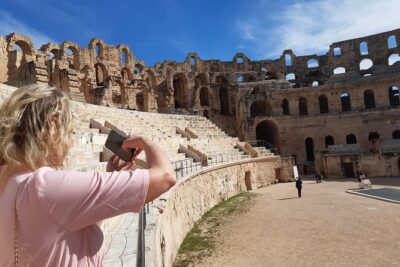
Half-day excursion from Sousse to the amphitheater of El Jem
Read our review →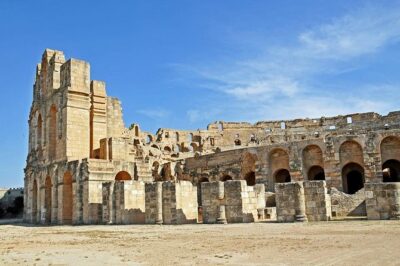
Private and Guided Tour to Kairouan and El Jem and Monastir
Read our review →