
Reviewed · EL JEM AMPHITHEATRE TOURS
Full-Day Kairouan and El Jem Tour from Tunis
Kairouan and El Jem give you two very different views of Tunisia in one long day. Kairouan brings Islamic architecture, courtyards, tilework, and old streets, while El Jem delivers the sheer scale of a Roman amphitheater that once held huge public spectacles. The contrast is the real reason to book this outing.
I like the small maximum group of eight, which should make it easier to hear the guide and ask questions. I also like the useful mix of guided visits and free time, especially in Kairouan’s Medina, where you can browse and explore at your own pace. The main drawback is the amount of time on the road. This is an ambitious day, and the pace may feel tight if you prefer slow sightseeing.
Key points to know before booking
- Kairouan’s Aghlabid Basins offer a quick visual lesson in how this important city managed water during the Middle Ages.
- The Great Okba Mosque is the major architectural stop, with roots reaching back to the 7th century and its present form linked to the 9th century.
- Sidi Sahbi is known for its white plaster decoration, green-blue tiles, courtyards, and minaret.
- Free time in the Medina gives you room to shop or wander beyond the guide’s route.
- El Jem’s amphitheater is the day’s grand finale, one of the largest Roman monuments left in Africa.
- Lunch and transport are included, while drinks are extra and should be budgeted separately.
Why this Tunis day trip works
At about eight hours, this is not a gentle neighborhood outing. You leave your Tunis accommodation at 8:00 am, travel inland, visit two important historic centers, eat lunch, and return to the starting point. The reward is variety: you see religious architecture, old urban streets, Roman engineering, and a local meal in a single outing.
The tour is operated with an air-conditioned minivan and a maximum of eight participants. That small-group limit matters on a full day. You are less likely to feel lost in a crowd, and a guide can usually respond to individual questions more easily than on a large coach tour.
A Blue Badge guide leads the experience. The guide may be multilingual, so it is sensible to confirm the language you need at booking. One past booking involved a private tour with a guide named Mr. Lamjed, who was specifically noted by name, but you should not assume he will lead every departure.
The advertised price is $151.92 per person. That is a serious day-trip price, but it covers the main practical costs: a professional guide, air-conditioned transport, hotel pickup and drop-off as described, and lunch. You are paying for a long-distance route that would be awkward to manage independently in one day, plus the help of a guide at sites where context makes a real difference.
The value is strongest if you want convenience and structure. It is weaker if you already have a rental car, enjoy planning your own route, or want to linger at each monument. The tour does not include drinks, so keep a little extra money available at lunch.
More El Jem Amphitheatre Tours in Tunis
- Private Tour to Kairouan, El Jem & Monastir from Tunis_hammamet
★ 5.0 · 301 reviews - Daytrip to Kairouan and El Jem Colosseum
★ 4.5 · 55 reviews - Kairouan and El Jem Private Day Tour
★ 4.5 · 38 reviews
The Aghlabid Basins offer a smart introduction to Kairouan
Your Kairouan visit begins with the Aghlabid Basins, viewed from the top of the Tourist Information Building. These are the last two surviving basins from a much larger 9th-century water system.
This is a good first stop because it explains why Kairouan became important. A city cannot grow without water, and these huge reservoirs show the practical side of the city’s past before you move on to its religious buildings. From above, the basins are easier to understand as a planned water network rather than isolated pools.
Do not expect a long, elaborate visit here. The basins are an orientation stop, not the central event of the day. Still, I like that the itinerary begins with infrastructure. It gives you a useful frame for the rest of Kairouan, a city whose importance was tied to both faith and organized urban life.
Your guide can also place the city’s Aghlabid period in context. The tour description connects the basins with Kairouan’s glorious age, but the real benefit for you is visual: you see the scale of the public works before entering the older parts of town.
The Great Okba Mosque is Kairouan’s essential visit
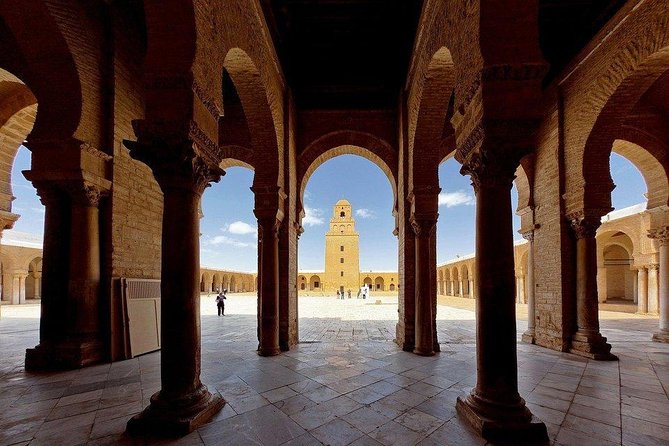
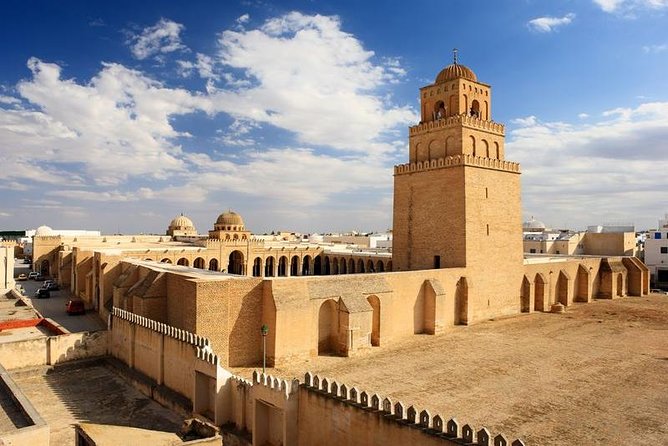
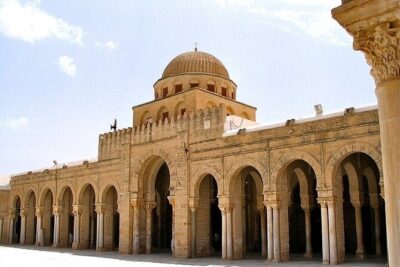
The next stop is the Great Okba Mosque, also called the Great Mosque of Kairouan. Its foundation reaches back to the 7th century, making it the oldest mosque in North Africa according to the supplied tour information. The building you see is associated with a major 9th-century phase.
This is the place where a guide earns his or her keep. The mosque is not simply a beautiful building to photograph. Its strong design expresses the purpose of the space, and a guide can help you notice the relationship between the open courtyard, prayer area, arches, columns, and broad stone surfaces.
The description emphasizes the powerful expression of faith in the 9th-century building. That is a fair way to approach it. The architecture is not fussy. Its impact comes from proportion, repetition, age, and the sense that the building was made for a large religious community rather than for decoration alone.
Dress and behavior should be respectful at religious sites. The supplied information does not set out a specific clothing policy, so confirm current entry rules before you go. Access conditions can vary, and the guide will direct you through the permitted areas.
Allow yourself a little time to look upward and across the courtyard instead of treating this as a quick photo stop. The Great Mosque is the anchor of the Kairouan portion, and rushing through it would undercut one of the best reasons to make the trip.
Sidi Sahbi adds courtyards and tilework
The tour continues to Sidi Sahbi, a religious complex built and expanded between the 17th and 19th centuries. It is associated with a companion of the Prophet, and its appeal comes from a more decorative style than the Great Mosque.
Here, you can expect minaret views, courtyards lined with green-blue tilework, and white plaster stucco. The color contrast is striking, especially after the restrained stone and earth tones of the Great Mosque. The courtyards also change the rhythm of the visit. Instead of one large monumental space, you move through more intimate architectural settings.
Sidi Sahbi is valuable as a counterpoint. The Great Mosque shows early North African religious architecture at a monumental scale. Sidi Sahbi gives you later decoration and a different expression of devotion. Seeing both helps you understand that Kairouan is not represented by one building or one period.
The stop may appeal especially to visitors who enjoy craft details. Look at the tile patterns, plaster surfaces, and the way the courtyards are framed. You do not need specialist knowledge to appreciate the workmanship, but the guide’s explanation can help you see why these details matter.
More Kairouan Tours in Tunis
- Private Day Tour , Kairouan & Amphitheatre of el Jem From Tunis /Hammamet/Sousse
★ 4.5 · 8 reviews - Daytrip 3 Unesco Sites El Jem Kairouan and Sousse Medina
★ 5.0 · 7 reviews - Kairouan & El Jem Small Group Tour from Tunis, Hammamet or Sousse
★ 5.0 · 6 reviews - El Jem, Monastir, and Kairouan Medina Private Tour
★ 5.0 · 5 reviews
Kairouan’s Medina gives you time to wander
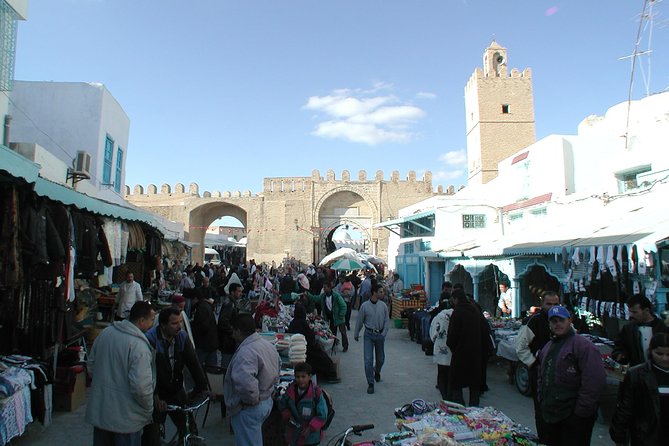
After the main monuments, you enter the Medina for a guided walk along its main street toward Bir Barrouta. This is where the day becomes less formal. You are no longer moving only from one major monument to the next. You get a sense of the old city as a place of passage, trade, worship, and daily activity.
Bir Barrouta is listed as the point along the route, and the Medina portion includes free time for individual discovery and shopping. That free time is one of the strongest features of the tour. Many guided day trips fill every minute with commentary and leave no room to look around on your own. Here, you have a chance to pause, browse, and follow your own interest.
Keep your expectations practical. The information provided does not promise a particular shop, craft demonstration, or shopping allowance. You might find the free time best suited to a short walk and a few purchases rather than an extended market session, especially with El Jem still ahead.
I recommend using this pause to notice the street pattern and building fronts, not just shop displays. The Medina is part of the experience, not merely a place to buy souvenirs. If you want to shop, ask the guide about timing so you do not lose track of the group.
Lunch at a local restaurant follows the Medina visit. Lunch is included, which simplifies the day and protects your sightseeing time. Drinks are not included, so plan to pay for those separately. The supplied information does not specify the menu, so do not book this expecting a particular dish.
The drive to El Jem takes about 70 kilometers
After lunch, you transfer to El Jem, about 70 kilometers away. The stated drive time is roughly one hour and 15 minutes. This is a useful point to consider before booking: Kairouan and El Jem are not neighboring sights that you can casually connect with a short taxi ride.
The air-conditioned minivan makes this transfer more comfortable, especially during a warm Tunisian day. Still, the road time is part of the tour, not dead space you can simply remove. If you dislike long drives, the itinerary may feel demanding. If you want to see both major sites without arranging transport yourself, the transfer is exactly what makes the day workable.
The route also explains why this outing is best treated as a full-day excursion rather than a quick add-on from Tunis. You are covering a lot of ground, and the fixed departure at 8:00 am helps fit the two destinations into one schedule.
El Jem’s amphitheater supplies the big finish
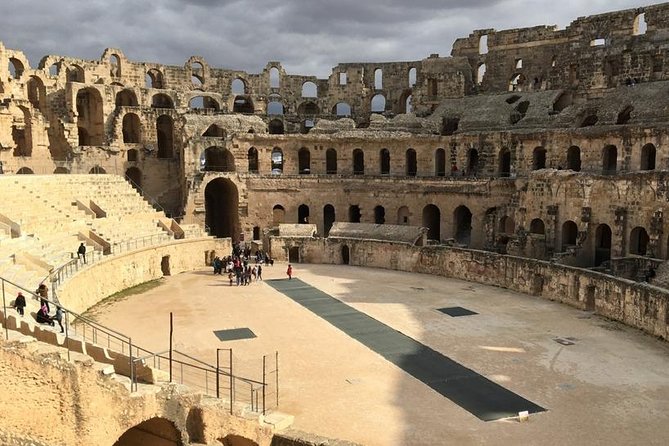
El Jem’s Roman amphitheater is the most visually dramatic stop. Built around 230 to 240 AD, it is described as the largest Roman monument left in Africa and the third-largest amphitheater in the Roman Empire after those in Rome and Verona.
Those rankings help explain the scale, but you do not need statistics to feel the impact. The structure is enormous, and its survival in El Jem gives you a direct sense of Roman public architecture far from the better-known monuments of Italy. The amphitheater was one of the last large arenas built during the Roman period, and its design improved on the Colosseum of Rome in several ways, even though it is somewhat smaller.
The important word here is scale. At the Great Okba Mosque, you focus on religious space and proportion. At El Jem, you look at mass, tiers, entrances, and the practical design of a building meant to hold large crowds. The contrast makes the two stops work well together.
The amphitheater is the main attraction in El Jem, and you should expect it to receive the most attention on this part of the day. The tour also includes the El Jem museum in its overview, giving you a chance to place the arena within the wider Roman setting. The exact balance of time between the amphitheater and museum is not specified, so ask your guide early if one is especially important to you.
Do not let the final stop become a rushed photo opportunity. Look from different levels and take in how the arena fits into the town around it. Even without a long technical lecture, the building’s size and design make it easy to understand why El Jem is one of Tunisia’s most visited historic sites.
Timing, group size, and the practical trade-offs
The tour begins at 8:00 am and ends back at the meeting point or your arranged drop-off location. The overview promises convenient round-trip hotel transport, while the additional information says the activity ends back at the meeting point. Because those details use different wording, confirm the exact pickup and return arrangement for your accommodation.
A minimum of two people is required per booking, and the group can have no more than eight. Most people can participate, but the supplied details do not provide a specific accessibility statement for wheelchairs or mobility equipment. If that matters to you, ask the provider before paying.
The tour may operate with a multilingual guide. That can be useful for mixed groups, but it may also mean commentary is shared across languages. Confirm your preferred language and ask how the guiding will work if clear, detailed explanation is important to you.
The tour has an overall rating of 4.1 from seven ratings, a small sample that should be read with caution. The strongest praise centers on the enjoyable full-day outing, the guide’s preparation and availability, and the fact that the long drive from Tunis is worthwhile for the sights. One Italian-language response specifically praised the guide as well prepared and helpful, while another account described a private visit with Mr. Lamjed and the driver.
One practical warning comes from a visit during Ramadan and Eid al-Fitr. Religious holidays can affect social activity and opening patterns across Tunisia, and date changes were an issue in that case. If your visit falls during Ramadan or a major holiday, confirm the schedule and site access before departure.
Who will get the most from this day?
I would recommend this tour to you if you are based in Tunis and want to see two major inland sites without arranging a car, driver, meals, and site visits on your own. It also suits first-time visitors who want historical context rather than a simple point-to-point transfer.
The trip is a good match for people who enjoy variety. You will not spend the day looking at one type of monument. Instead, you move from waterworks to a major mosque, a decorated religious complex, an old Medina, a local lunch, and a Roman arena.
You may want a different plan if your priority is slow photography, long shopping sessions, or detailed independent study. Eight hours is enough to see the highlights, but it is not enough to explore every corner of Kairouan and El Jem at a leisurely pace.
The small group is also useful for solo visitors and couples who want company without joining a large bus. Since the minimum is two people, a solo booking may depend on another booking or the operator’s arrangements. Confirm this before relying on the tour for a fixed date.
Should you book the Kairouan and El Jem tour?
Book it if you want the most efficient way to pair Kairouan’s Islamic monuments with El Jem’s Roman amphitheater from Tunis. The included lunch, air-conditioned transport, small group, and professional guide make the $151.92 price reasonable for a long day with substantial driving.
Skip it if you want complete control over timing or plan to spend a full day in only one destination. The route is ambitious, and the free time in the Medina is welcome but limited by the need to reach El Jem and return to Tunis.
Before booking, confirm the pickup point, guide language, holiday operating hours, and the amount of time planned for the El Jem museum. You can cancel for a full refund up to 24 hours before the local start time. Those checks will not change the monuments, but they can make the day much easier.
FAQ
What time does the tour start?
The tour starts at 8:00 am.
How long does the tour last?
The experience lasts approximately eight hours.
Where does the tour begin?
Departure is from your Tunis accommodation according to the tour overview. The additional information refers to a meeting point, so confirm the exact pickup arrangement when booking.
How many people can join the tour?
The maximum group size is eight people.
Is there a minimum number of people required?
Yes. A minimum of two people per booking is required.
Is lunch included?
Yes, lunch at a local restaurant is included.
Are drinks included with lunch?
No. Drinks are not included.
Which places are visited?
The itinerary includes the Aghlabid Basins, Great Okba Mosque, Sidi Sahbi, Kairouan’s Medina and Bir Barrouta, El Jem’s amphitheater, and the El Jem museum as described in the tour overview.
Can I cancel the booking for a full refund?
Yes. You can cancel at least 24 hours before the experience starts for a full refund. Changes or cancellations made less than 24 hours before the start time are not accepted for a refund.
More Full-Day in Tunis
- Full Day Dougga & Bulla Regia Via Testour Private tour with Lunch
★ 5.0 · 29 reviews - El Jem and Monastir Full-Day Tour with Lunch from Tunis or Hammamet
★ 4.5 · 7 reviews - Full day Star Wars Tour
★ 4.5 · 10 reviews - Full-Day Shore Excursion Private Tour in Tunisia Carthage ,Medina, Sidi Bou said
★ 4.5 · 6 reviews
Just added around Tunis
- Dougga Guided Day Tour from Tunis★ 5.0 · 5 reviews
- Private Arrival Transfer: Tunis Airport to Tunis Hotel★ 4.5 · 5 reviews
- Tunisia 7-Day tour★ 5.0 · 6 reviews
- Roman Archeology Guided Tour Thuburbo Majus & Uthina★ 4.5 · 7 reviews
- Bardo Museum- The ruins of Carthage- Village of Sidi Bou Said★ 5.0 · 4 reviews
- The Medina★ 4.0 · 7 reviews
- Tunis Carthage Private Arrival Airport Transfer to Tunis★ 5.0 · 4 reviews
- Tunis Group Tour: Carthage, Sidi Bou Said, Bardo museum & Medina★ 5.0 · 5 reviews
El Jem Amphitheatre Tours, compared.
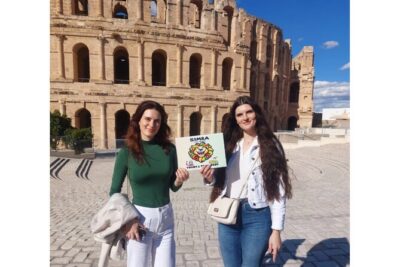
Fun VIP Tour: El Jem, Kairouan, Monastir/Sousse (PICKUP ALL City)
Read our review →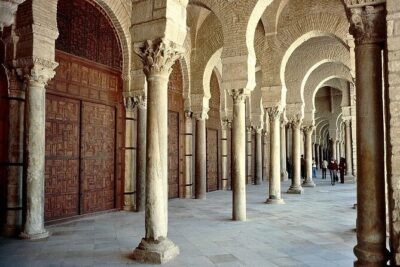
Private Tour to Kairouan, El Jem & Monastir from Tunis_hammamet
Read our review →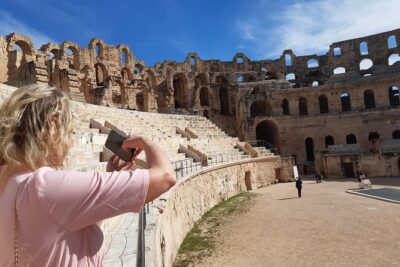
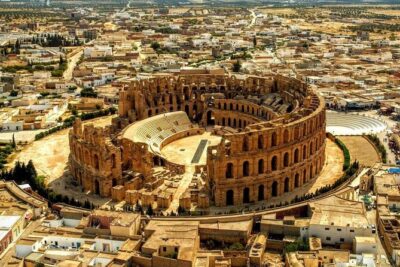
Half-day excursion from Sousse to the amphitheater of El Jem
Read our review →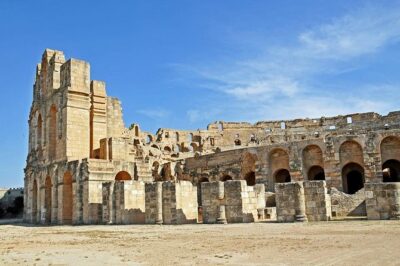
Private and Guided Tour to Kairouan and El Jem and Monastir
Read our review →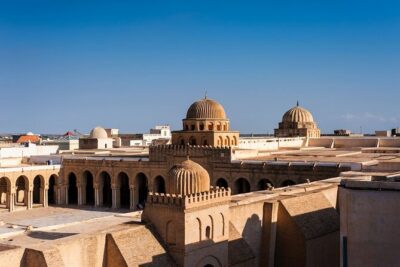
Kairouan & El Djem Guided Day Trip with Lunch from Hammamet
Read our review →Browse the lists this tour appears in