
Reviewed · CARTHAGE AND SIDI BOU SAID TOURS
Daytrip Carthage Sidi Bousaid Bardo and Tunis Medina
Carthage is the star here: Punic ports, Roman baths, museum treasures, and the old city’s hilltop setting give you thousands of years of Tunisian history in one sweep. I like the private vehicle and flexible guide, especially when guides such as Ghassen or Sana can adjust the focus to your interests. I also like pairing ancient ruins with the blue-and-white streets of Sidi Bou Said.
The drawback is the pace. Seven stops in roughly seven to eight hours leaves little room to linger, eat a long lunch, or study every museum display. The Bardo Museum is closed on Mondays, and admission to the Baths of Antoninus is not included, so check those details before booking.
Key points to know before booking
- Carthage gets the historical focus: Tophet, the Punic ports, the Baths of Antoninus, and the Carthage Museum reveal different chapters of the same ancient city.
- A private day means personal attention: Ghassen, Sana, Mohammed, and Moncef are among the guides associated with this experience, with special strength in archaeology and local history.
- Sidi Bou Said adds a visual change: Blue-and-white buildings, cobbled lanes, and wide sea views break up the ruins and museum visits.
- Tunis Medina takes you into daily city life: Souqs, mosques, palaces, hammams, schools, artisans, and painted doorways fill the old quarter.
- The Bardo is a major payoff: Its mosaic collection connects Tunisia to the many civilizations that shaped the Mediterranean.
- The day is efficient but full: Pickup, transport, and several admissions are included, while lunch and the Baths of Antoninus admission are extra.
One day, three different faces of Tunis
This private tour works because it joins three places that feel very different. Carthage gives you open archaeological sites and the remains of a powerful Punic and Roman city. Sidi Bou Said gives you a compact hilltop village made for walking and photographs. Tunis Medina brings you into a dense medieval quarter where historic buildings sit beside ordinary shops and working streets.
You travel in an air-conditioned private vehicle from your hotel in Tunis or Hammamet, then return there at the end of the day. That matters in Tunisia’s heat and also saves you from arranging separate transport between widely spaced sites.
The quoted price is $162.60 per person. That is not a budget outing, but it covers a private full-day service rather than a large coach tour. Pickup, the vehicle, a guide, and several admissions are part of the package. You should still allow extra money for lunch and for the Baths of Antoninus, where admission is not included.
The schedule lists about five hours and 25 minutes of sightseeing time, before driving between stops. That makes the day workable, but not leisurely. If you want to examine every mosaic, shop slowly in the souqs, or sit over lunch, this itinerary may feel tight.
More Bardo Museum Tours in Tunis
- Private tour: Medina,Carthage ,Sidi Bou Said, Bardo Museum+lunch
★ 5.0 · 230 reviews - Carthage, Bardo Museum, Sidi Bou Said and Medina Private Day Tour
★ 4.5 · 153 reviews - Tunis: Carthage, Bardo Museum, Sidi Bou Said & Medina Group Tour
★ 4.5 · 33 reviews
Starting at Tophet, where Carthage becomes human
The first stop is Tophet de Carthage, also called Sanctuary of Tanit. You get about 20 minutes here, with admission included.
Tophet has long been linked in popular accounts to child sacrifice and the god Moloch. The site is more complicated than the old dramatic stories suggest. Many historians now consider it a children’s cemetery, while the ritual interpretation remains part of the long debate about what happened here.
That uncertainty is part of what makes the stop worthwhile. You are not simply looking at stones and accepting a famous legend. You are considering how archaeology, ancient texts, and later storytelling shaped the modern image of Carthage.
Twenty minutes is enough for an introduction, but not a detailed archaeological study. I would listen closely to the guide here, since the meaning of the site can be lost if you only take photographs and move on.
Seeing the Punic ports that powered Carthage
At the Punic Ports and Museum, the guide explains the design that helped make Carthage a major commercial and naval power. The southern port was an oblong merchant harbor, while the northern naval port was circular and hidden from direct view.
A narrow channel connected the two. The military harbor could hold around 220 vessels in dry docks and along the quay, while the commercial port covered about seven hectares and had warehouses along its edges.
The original ports were filled in after Scipio destroyed Carthage in 146 BC. Under Roman rule, the islet was later reshaped into a circular form. What you see today is therefore not a perfectly preserved Punic harbor, but the remains and outline of a place that changed across centuries.
This is another short stop, about 20 minutes, and admission is free. The value comes from the explanation. Without a guide, it can be hard to understand how the port was arranged or why its concealed naval basin mattered.
The Baths of Antoninus and the Roman chapter
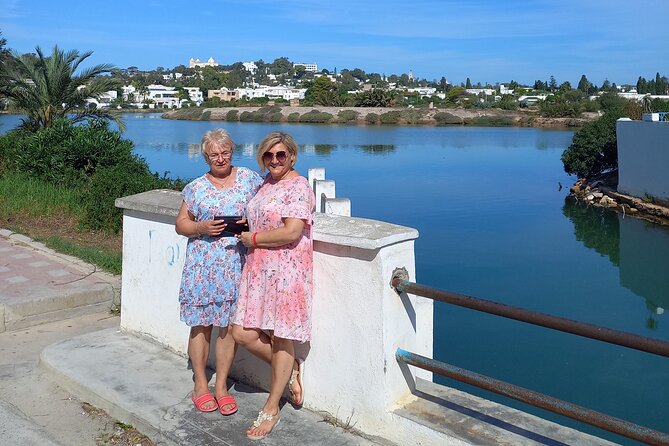
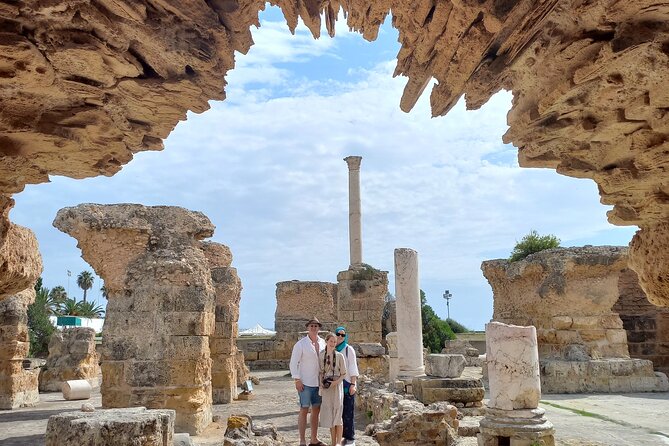
The Baths of Antoninus are the largest Roman remains on the day’s route. Built in the second century, the baths now form part of an archaeological park, with broad ruins that help you picture the scale of Roman public life.
You have 45 minutes here, which is more generous than at the Punic ports. The site gives you a useful contrast: Carthage was not only the enemy Rome defeated. It later became an important Roman city with monumental public buildings.
Admission is not included, so budget for that separately. This is a small but important practical detail because other stops include admission or are free. Ask your guide about the current fee if you want to keep your spending clear.
The open setting also means you should be ready for sun and uneven ground. The tour requires moderate physical fitness, and this stop helps explain why: you will be walking among archaeological remains rather than simply stepping off the vehicle at a viewpoint.
More Carthage and Sidi Bou Said Tours in Tunis
- Guided Bike Tour of Carthage Archeological Site in Tunisia
★ 5.0 · 88 reviews - Group Guided Bike Tour of Carthage Archeological Site in Tunisia
★ 5.0 · 57 reviews - Archaelogical Site Of Carthage + Picturesque Village Of Sidi Bou Said
★ 5.0 · 56 reviews - Historical Tour of Ancient Carthage
★ 5.0 · 51 reviews
Byrsa Hill and the Carthage Museum
The Carthage Museum sits on Byrsa Hill, a symbolic location at the center of ancient Carthage. The hilltop setting adds a useful sense of place, since you can look around and understand how the Punic city occupied this part of the coast.
The museum was created in 1875 and is described as Tunisia’s oldest museum. Its displays bring together archaeological discoveries from Carthage, including material from the Punic and Roman periods.
You have 30 minutes inside, with admission included. That is enough for a guided introduction and a selection of important objects, but it is not enough for a slow museum visit. If archaeology is your main reason for booking, tell the guide that early. Ghassen has been particularly effective at shaping the day around Punic history and the Punic Wars, according to the experience details.
The museum also gives needed context to the outdoor sites. At Tophet, you confront a disputed ritual space. At the ports, you see an outline. At the museum, objects help fill in the daily and political world behind those ruins.
Sidi Bou Said, Tunisia’s blue-and-white pause
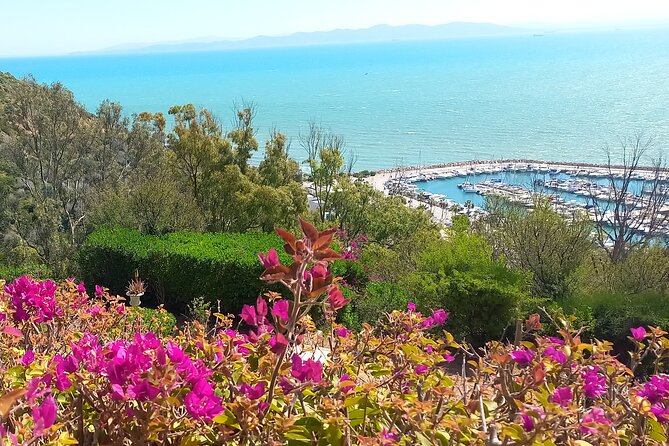
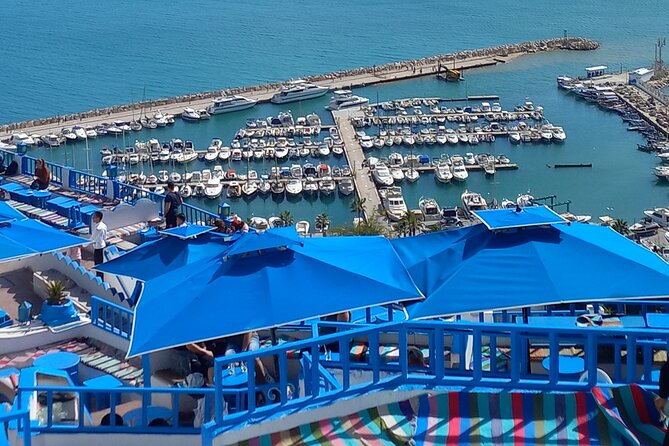
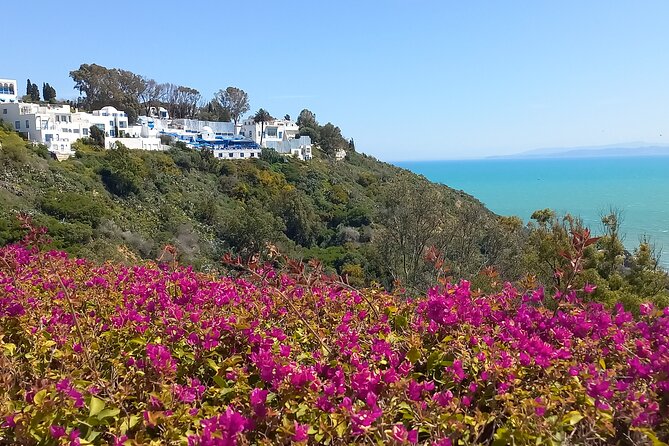
After Carthage, Sidi Bou Said changes the mood completely. This hilltop village is known for white buildings with blue doors and shutters, cobbled streets, and views toward the sea. You have one hour to walk around.
The village takes its name from a 13th-century Sufi saint. Its architecture reflects Ottoman and Andalusian influences, including the arrival of Spanish Muslims in the 16th century. The French later protected the character of the village in 1915, helping preserve the look that makes it so recognizable today.
You will find this stop especially rewarding if you want a break from formal sites. The hour gives you time for photographs and a short walk, though the narrow streets and incline mean comfortable shoes matter.
Sana is praised in the tour information for being attentive to the rhythm of the day and for handling narrow roads and tight parking spaces calmly. She is also described as a good source of information without forcing constant commentary. That style can make a big difference in Sidi Bou Said, where you need time to look around rather than hear a lecture at every corner.
Walking through Tunis Medina
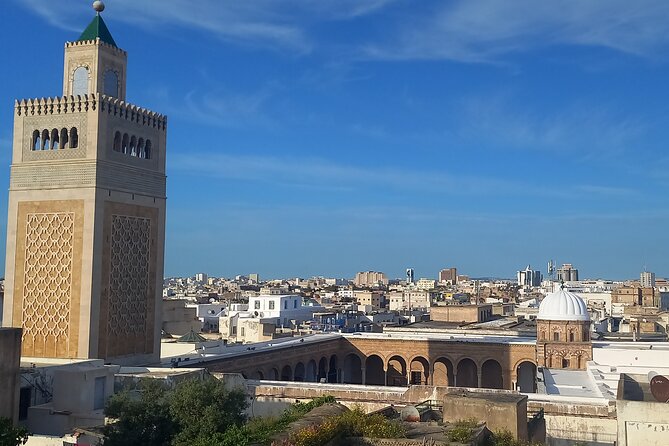
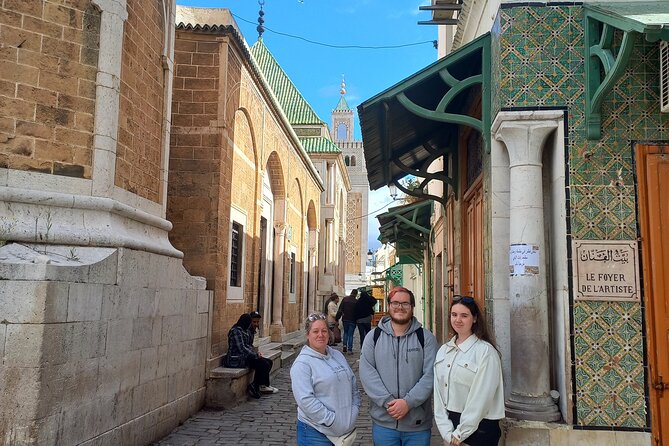
The Medina of Tunis is the most active part of the day. You get about 90 minutes in a maze of old streets and covered souqs, with historic palaces, mosques, hammams, and Quranic schools tucked among shops and residential lanes.
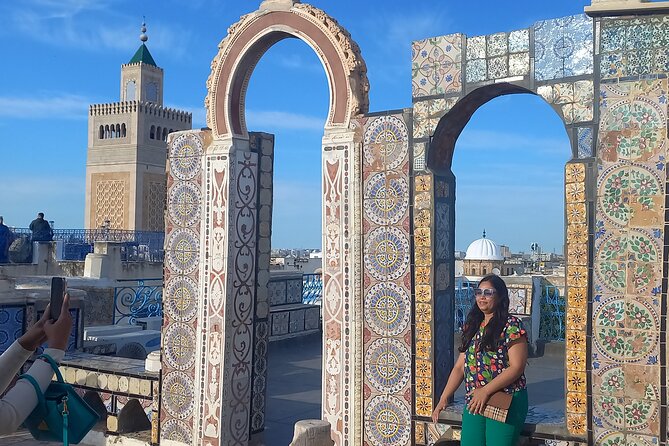
This is not a museum district. It is a working quarter. You may see shoes, shisha pipes, crafts, cafés, painted doorways, and artisans at work. The architecture is the reward for looking up and slowing down: tiled surfaces, carved stucco, marble columns, and brightly painted entrances can appear in places that seem plain from the outside.
A guide is useful here because the lanes can feel confusing, and the important buildings are not always easy to identify. You can ask to focus on architecture, photography, shopping, religion, or ordinary city life. Guides have been especially praised for finding good photo locations in the Medina and Sidi Bou Said.
Ninety minutes is a sensible introduction, but it is not enough to cover the entire quarter. If you want serious shopping time, the schedule may feel rushed. If you want a guided orientation before exploring on your own later, it works well.
Finishing at the Bardo Museum
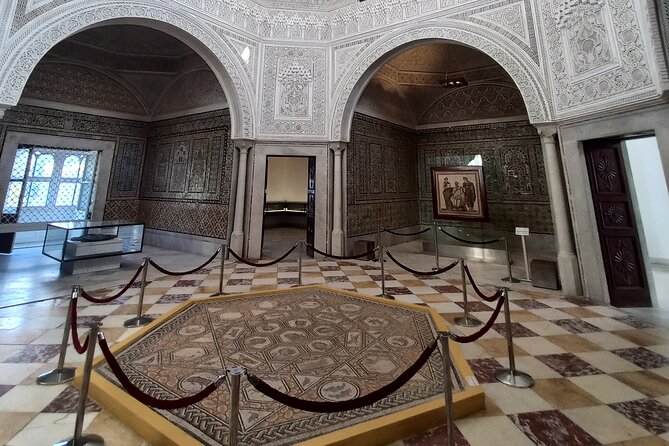
The National Bardo Museum is the final listed stop, with about one hour for a guided visit. It is one of Africa’s most important museums, particularly for its mosaic collections and objects tied to the civilizations that developed around the Mediterranean.
The Bardo helps connect the rest of the day. Carthage shows you ancient urban power, Sidi Bou Said shows a later architectural tradition, and the Medina shows medieval Tunis. The museum puts many of Tunisia’s cultures into one place, with mosaics as the major draw.
The quality of this stop depends heavily on the guide. The tour information gives strong marks to the guides overall, but one specific assessment found the Bardo explanation less detailed than expected. I would treat that as useful advice: if the museum matters most to you, say so at the start and ask for more depth rather than assuming the standard explanation will cover every room.
The Bardo is closed on Mondays. Do not book this exact schedule for a Monday if seeing the museum is important to you.
How the guides shape the day
This is a private activity, so only your group participates. That gives you more control than a standard group excursion. You can ask for more time on Carthage, more attention to photography, or a clearer explanation of the Medina’s architecture.
Ghassen is noted for adapting the day to an interest in Carthage and the Punic Wars. Sana is described as friendly, attentive, well-informed, and confident behind the wheel. Mohammed and Moncef are also associated with informative private outings through Tunisia.
The guide names do not guarantee who will lead your particular departure, but they show the range of people connected with the service. The strongest theme is personal attention. This is a good fit if you want conversation and questions rather than a fixed script.
Timing, walking, and what to bring
The full experience lasts about seven to eight hours. That includes pickup, driving, and the stops, so the sightseeing portions are short in comparison with the total day.
Plan for moderate walking. Carthage includes open archaeological areas, while Sidi Bou Said and the Medina involve cobbled streets, lanes, and some inclines. Wear shoes that can handle uneven surfaces and bring sun protection, especially for the Roman ruins.
Lunch is not included. The tour information does not specify a set restaurant or a fixed meal break, so ask your guide how lunch will fit into the route. A long meal could reduce time at one of the sights.
Pickup is offered from Tunis or Hammamet, and the vehicle is air-conditioned. That is one of the tour’s clearest practical advantages, particularly when you are trying to connect several areas in a single day.
Confirmation is provided when you book. Service animals are allowed, and the experience is near public transportation, although the private pickup means you do not need to rely on public transport for the main route.
Who gets the best value from this tour
I would choose this tour if you have one full day in the Tunis area and want a broad introduction without arranging four separate excursions. It is particularly good for first-time visitors, history fans, couples, families who value a private vehicle, and anyone staying in Hammamet who wants to cover the capital region efficiently.
You get the best value when you care about context. The ruins alone can be difficult to read, but a guide can explain how Punic Carthage, Roman Carthage, medieval Tunis, and modern Tunisia fit together.
I would hesitate if you dislike full schedules or prefer to spend half a day in one museum. The price is easier to justify for two or more people sharing the private experience, especially since group discounts may be available. For a solo visitor, $162.60 is a bigger outlay, though pickup, transport, guiding, and included admissions reduce the number of details you must arrange yourself.
Cancellation is free up to 24 hours before the start time. Inside that window, the amount paid is not refunded, and changes are not accepted.
Should you book it?
Book this tour if you want the essential Tunis-area sights in one organized day, with a private vehicle and a guide who can adjust the emphasis. Carthage is the main reason to go, but the Medina, Sidi Bou Said, and Bardo Museum prevent the day from becoming a single-theme ruins tour.
Before paying, confirm three things: your pickup point, the guide’s planned focus, and how lunch will fit into the schedule. Avoid Monday if the Bardo is important, and set aside extra money for lunch and the Baths of Antoninus. If you can accept the brisk pace, this is a strong, efficient introduction to northern Tunisia.
FAQ
Where does the tour take place?
The tour is based in Tunis, Tunisia, with pickup offered from hotels in Tunis or Hammamet.
How long does the experience last?
The tour lasts approximately seven to eight hours.
Is this a private tour?
Yes. Only your group participates in the private tour or activity.
Is hotel pickup included?
Pickup is offered, and the tour uses an air-conditioned private vehicle to travel from and back to your hotel.
Which UNESCO World Heritage sites are included?
The tour visits the Medina of Tunis and the archaeological site of Carthage, both UNESCO World Heritage sites.
Is admission included at every stop?
Admission is included at Tophet de Carthage, the Carthage Museum, and the Bardo Museum. The Punic Ports and Museum stop is free, while admission to the Baths of Antoninus is not included.
Is lunch included?
No. Lunch is not included in the tour price.
Is the Bardo Museum open every day?
The Bardo Museum is closed on Mondays, so there is no museum visit on that day.
What level of fitness is required?
A moderate level of physical fitness is recommended. The day includes walking through archaeological areas, Sidi Bou Said, and the Medina.
Can I cancel for a full refund?
Yes, if you cancel at least 24 hours before the experience start time. Cancellations or changes made less than 24 hours before the start time are not refunded or accepted.
More Tunis Medina Tours in Tunis
- Guided tour in the UNESCO world heritage Medina of Tunis
★ 5.0 · 68 reviews - Private Day Tour Tunis Medina Carthage Sidi Bou Said Bardo Museum
★ 5.0 · 30 reviews - Private Group Day Tour Tunis Medina Carthage Sidi Bou Said
★ 4.5 · 3 reviews - VIP Tour: Tunis Medina/Bardo, Sidi Bou Said, Carthage |PICKUP ALL
★ 5.0 · 512 reviews
Just added around Tunis
- Dougga Guided Day Tour from Tunis★ 5.0 · 5 reviews
- Private Arrival Transfer: Tunis Airport to Tunis Hotel★ 4.5 · 5 reviews
- Tunisia 7-Day tour★ 5.0 · 6 reviews
- Roman Archeology Guided Tour Thuburbo Majus & Uthina★ 4.5 · 7 reviews
- Bardo Museum- The ruins of Carthage- Village of Sidi Bou Said★ 5.0 · 4 reviews
- Tunis Carthage Private Arrival Airport Transfer to Tunis★ 5.0 · 4 reviews
- Tunis Group Tour: Carthage, Sidi Bou Said, Bardo museum & Medina★ 5.0 · 5 reviews
- The Medina★ 4.0 · 7 reviews
Carthage and Sidi Bou Said Tours, compared.

VIP Tour: Tunis Medina/Bardo, Sidi Bou Said, Carthage |PICKUP ALL
Read our review →
Private tour: Medina,Carthage ,Sidi Bou Said, Bardo Museum+lunch
Read our review →Private tour: Medina,Carthage ,Sidi Bou Said, Bardo Museum+lunch
Read our review →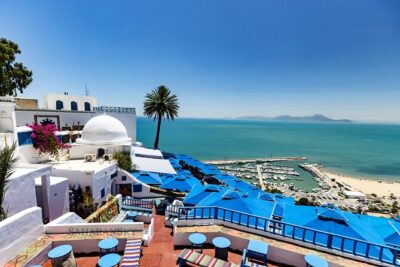
Carthage, Bardo Museum, Sidi Bou Said and Medina Private Day Tour
Read our review →
Guided Bike Tour of Carthage Archeological Site in Tunisia
Read our review →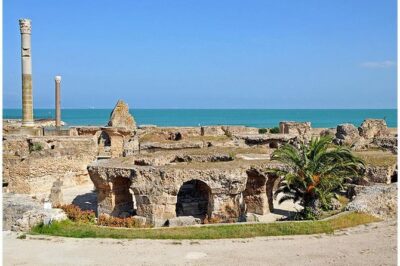
1 day excursion Tunis Sidi Bousaid Carthage departure from Sousse
Read our review →
Group Guided Bike Tour of Carthage Archeological Site in Tunisia
Read our review →
Archaelogical Site Of Carthage + Picturesque Village Of Sidi Bou Said
Read our review →Browse the lists this tour appears in