
Reviewed · DOUGGA AND BULLA REGIA TOURS
Private Excursion to Testour, Dougga and Bulla Regia from Tunis.
Dougga is the star here: a remarkably complete Roman city set above the countryside, with a theater, Capitol, forum, baths, houses, and a Libyco-Punic mausoleum. The ruins feel open and uncrowded, and the views from the Capitol add real drama to the archaeology.
I like the mix of Roman, Numidian, and Andalusian culture in one day. I also like the private format, which lets your group ask questions and adjust the pace. The tradeoff is the long road day, plus steep, uneven steps at the sites and a potentially brief stop in Testour.
Key points to know before booking
- Dougga gets three hours: This is enough time to see the major monuments without rushing every stop.
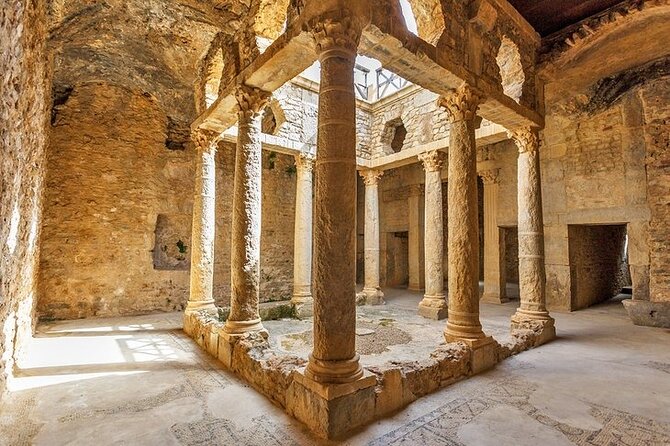
- Bulla Regia is different: Its underground villas and mosaics show how people adapted Roman homes to hot weather.
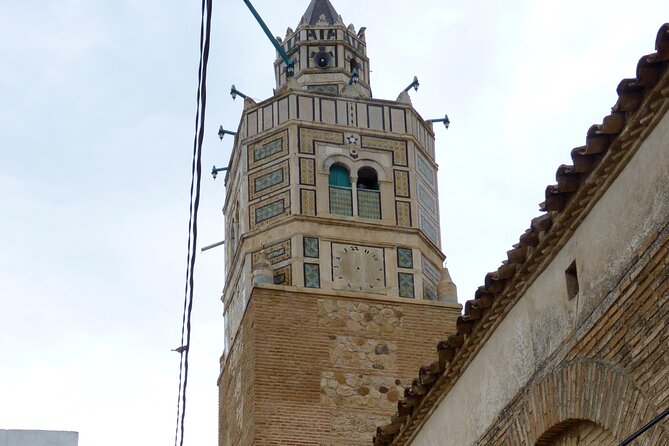
- Testour may be brief: The usual focus is a panoramic look at the town and its remarkable mosque minaret.
- Private transport matters: Only your group participates, with pickup offered from Tunis.
- Guides vary by departure: Chaouki, Yahya, Rabia, Iskander, Yosra, and others have led departures, with strong praise for their historical explanations.
- Plan for uneven ground: Most people can take part, but stairs and rough paths require steady footing.
Why Dougga deserves the long ride from Tunis
If you have only one day for ancient Tunisia outside the capital, Dougga is a powerful choice. The old city, known in antiquity as Thugga, spreads across a hilltop with enough surviving buildings to make the Roman town feel like a real place rather than a collection of scattered stones.
The site was placed on the UNESCO World Heritage List in 1997 because it is considered the best-preserved small Roman city in North Africa. That description is useful, but the experience is better than the label. You can walk from the theater to the forum, pass public baths and houses, and then look across the countryside from the Capitol.
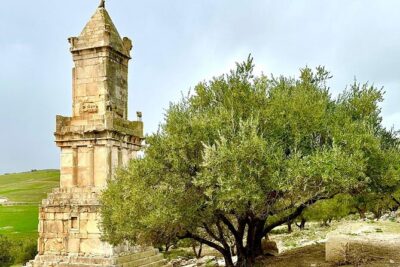
The city also tells a longer story than its Roman monuments suggest. Dougga began as an indigenous settlement and developed through Numidian, Punic, and Roman periods. The Libyco-Punic Mausoleum is a valuable reminder that the Roman chapter was only one part of the city’s life.
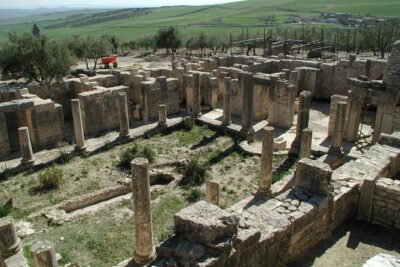
Your three-hour visit should cover the main center of Dougga. Expect to see the Capitol, forum, market, Wind Rose Square, theater, circus, thermal baths, triumphal arch, houses, and mausoleum, though the exact order depends on your guide and the day’s pace.
I especially like the way Dougga rewards both casual interest and serious study. You can appreciate the columns and views without knowing every emperor, but a strong guide can explain how the public buildings worked and how the city changed over time. Guides such as Chaouki, Yahya, Rabia, and Iskander have been praised for answering questions and adding context about Tunisia beyond the ruins.
More dougga and bulla regia tours in Tunis:
- Full Day Dougga & Bulla Regia Via Testour Private tour with Lunch
★ 5.0 · 29 reviews - Private Guided Tour of Dougga and Testour Mosque
★ 4.5 · 15 reviews - Dougga and Bulla Regia Guided Tour From Tunis
★ 4.5 · 11 reviews
The Capitol, theater, and Roman city plan
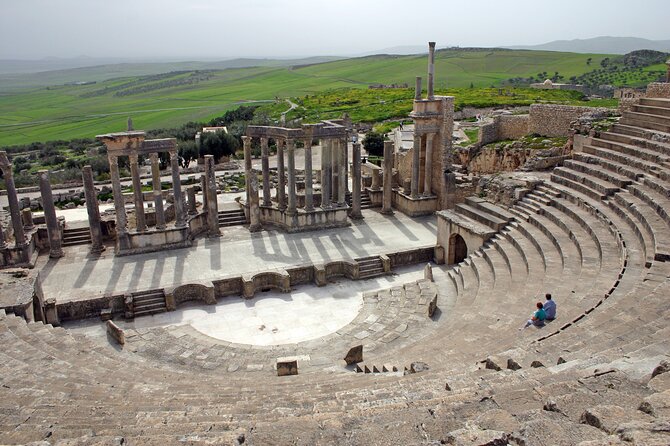
The Capitol is one of Dougga’s defining sights. It overlooks the forum and surrounding countryside, giving you a clear sense of how the town was arranged. This is the place to pause rather than simply take a photograph and move on.
The theater helps explain the social side of Roman life. Its survival gives scale to the settlement and makes it easier to picture performances and public gatherings. The forum, market, baths, and streets then fill out the picture: Dougga was not just a ceremonial center, but a working town with civic, commercial, and domestic spaces.
The Wind Rose Square is another useful stop because it reflects Roman planning and public design. The triumphal arch and houses add smaller details between the headline monuments. I find this variety important. You are not spending three hours looking at one temple from different angles.
There is a physical price for seeing so much. The ground is uneven, and some stairs are steep. One account describes the walking as reasonable but points out the rough steps. Wear shoes with a firm sole, take your time, and do not let the guide’s schedule pressure you into unsafe footing.
Testour’s Andalusian mosque and unusual clock
Testour is an appealing cultural opening to the day, but you should set your expectations carefully. The town was founded by Moorish people in the early 17th century, and its architecture reflects Andalusian influence rather than ancient Roman Tunisia.
The Grand Mosque is the main sight. Its minaret is about 23 meters tall and octagonal, with small double windows, decorative glazed inscriptions, and a mechanical clock whose hands turn counterclockwise. Its form recalls bell towers in southern Spain, making it an unusual building to encounter in rural Tunisia.
The stop is described as a panoramic tour, and the amount of time can feel short. Some departures have included only a quick look at the mosque, while others have allowed a tea break, shopping, or a little more time in town. If Testour matters to you, ask ahead about the planned duration and request extra time when arranging the private excursion.
That flexibility is one of the reasons to choose a private tour instead of a fixed group outing. Still, flexibility depends on the full route. Dougga and Bulla Regia are the main archaeological visits, and the schedule has to leave enough time for both.
You may also see daily life in smaller towns along the road. One departure included a stop near a local market and a chance to try Tunisian mandarins. That kind of unscripted roadside observation can be a pleasant bonus, but it should not be treated as a guaranteed part of every departure.
Bulla Regia’s underground villas and mosaics
Bulla Regia gives you a different view of Roman North Africa. The site lies near Jendouba in northwestern Tunisia and preserves more than 17 centuries of occupation. The settlement was founded by the Numidians by the end of the sixth century BC at the latest, later became a royal residence, and developed into a Roman municipality and then a colony under Hadrian.
Its best-known feature is the underground housing. At first glance, these lower-level rooms may seem less grand than Dougga’s Capitol or theater. Give them time. The design helped residents escape the heat, and the surviving rooms provide a more intimate look at domestic life.
The mosaics are a major reason to include Bulla Regia. Two villas contain especially memorable examples, and the floors help you picture how Roman homes were decorated. The visible section is not enormous, and some areas remain less exposed than you might hope, but the combination of mosaics, courtyards, and underground rooms makes the site unlike Dougga.
The religious buildings add another layer. You can see the Capitol, Temple of Apollo, two Christian basilicas, and the Church of Alexander. These remains reflect the town’s changing religious life, from Roman worship to Christianity.
The site’s written history also reaches into late antiquity. By the end of the fifth century, Augustine regarded the inhabitants as bad Christians. That detail gives your guide a chance to explain how religious and political change affected communities long after the imperial period.
The scheduled visit lasts about two hours. That is enough to see the central features, especially if you move steadily. If mosaics are your priority, tell the guide early. A private format makes it easier to spend a little longer where the floors and villas interest you most, provided the wider schedule allows it.
A few more Tunis trips to weigh up
- Private Tour to Kairouan, El Jem & Monastir from Tunis_hammamet
★ 5.0 · 301 reviews - Private tour: Medina,Carthage ,Sidi Bou Said, Bardo Museum+lunch
★ 5.0 · 230 reviews - Carthage, Bardo Museum, Sidi Bou Said and Medina Private Day Tour
★ 4.5 · 153 reviews - Kairouan and El Jem Private Day Tour
★ 4.5 · 38 reviews
A full day with plenty of road time
The excursion starts at about 8:00 a.m. and lasts roughly eight hours. That is a substantial day, though the time on the road is part of the experience. You pass through northern Tunisia rather than staying within the capital’s urban sights, and the changing towns and countryside help connect the archaeological sites to the country you see today.
Pickup is offered, and the activity is private, so only your group participates. That is a real advantage for families, couples, and small groups with different walking speeds. It also means you can ask for explanations tailored to your interests rather than listening to a standard speech meant for a large bus.
The transport team normally includes a driver and guide. Guide quality is one of the strongest parts of the experience when the assigned person is a good match. Chaouki has been singled out for detailed historical explanations and for taking photographs during the day. Yahya has been praised for a friendly manner and for answering questions. Rabia, Iskander, and Yosra have also led well-regarded departures.
The driver experience has not been completely consistent. Most comments describe pleasant or smooth transport, but two accounts raise serious concerns about fast driving and attention behind the wheel. Those complaints should not be ignored. If you see unsafe behavior, speak up immediately and ask for a slower, more careful journey. The operator has stated that safety concerns are investigated and that vehicles have an electronic speed limit, but your comfort and attention to the road still matter.
Is $127.95 per person a fair value?
The listed price is $127.95 per person. Value depends heavily on how many people are in your private group. For one or two people, the cost is significant compared with ordinary transport in Tunisia. For a small group, the price becomes easier to justify because you are paying for private transport, a driver, a guide, and admission to both archaeological sites.
The entrances to Dougga and Bulla Regia are included, which makes the price clearer. You are not booking a basic taxi and then arranging site tickets and explanations separately. You are paying for a long day with a specialist focus, and a good guide can make a major difference at ruins where signs alone cannot explain the buildings.
The weaker value appears when the guide offers little detail or when Testour is presented as a substantial stop but turns into ten minutes beside the mosque. The excursion description gives Testour a real place in the route, but the archaeological sites receive far more time and attention. Book this for Dougga and Bulla Regia first. Treat Testour as an extra cultural stop unless you confirm otherwise.
A traditional lunch may be arranged during the day, and one departure included a meal in a small town near Bulla Regia. Food is not clearly listed as included, so budget for it separately and ask what is planned before setting out. A cheese tasting was not provided on at least one departure, so do not assume every food feature mentioned in conversation will happen.
Who will enjoy this private excursion?
I would choose this outing if you have at least three days in Tunisia and want to see major ancient sites beyond Tunis. It suits people who prefer ruins, mosaics, and historical explanation over a relaxed city day.
It is also a good match for a small family or group of friends. Private transport gives you more control, and the guide can adjust explanations for children, first-time archaeology fans, or people already familiar with Roman sites.
You should think twice if you dislike long drives, uneven ground, or tightly timed sightseeing. Dougga and Bulla Regia are not gentle museum visits. The terrain calls for careful walking, and the eight-hour schedule leaves little room for a slow lunch and a long exploration of Testour.
The experience is listed as suitable for most people, with service animals allowed and public transportation nearby. That does not remove the need to consider stairs and rough surfaces. If anyone in your group has limited mobility, ask for a practical description of the walking route before booking.
Booking details worth checking
Confirmation is provided at booking, and mobile tickets are available. Group discounts may also apply, so compare the per-person cost for your party rather than judging the headline price alone.
Free cancellation is available up to 24 hours before the 8:00 a.m. start time. Changes made within 24 hours are not accepted, and late cancellations are not refunded. The excursion requires good weather. If poor weather forces cancellation, you can receive a full refund or choose another date.
Ask two questions before you finalize: How much time will be spent in Testour, and who is scheduled as the guide? The assigned guides have included several different people, and the quality of interpretation is central to the tour’s value. Also confirm the driving arrangements if road safety is a major concern for you.
Should you book it?
Book this tour if Dougga is high on your Tunisia wish list and you want to pair it with Bulla Regia without arranging several trains, taxis, or local guides. Dougga’s scale and preservation are the main payoff, while Bulla Regia adds mosaics, underground homes, and a different chapter of ancient life.
I would not book it mainly for Testour. The mosque and counterclockwise clock are worth seeing, but the stop may be brief. I would also avoid booking without accepting the physical demands and the possibility of a long day in the vehicle.
For history-focused visitors, the package is strong: two exceptional archaeological sites, included admission, private transport, and the chance to work with guides such as Chaouki, Yahya, Rabia, or Iskander. Confirm the timing, ask about the assigned guide, and make sure your group is comfortable with the price. With those points settled, this is one of the most rewarding day trips from Tunis.
FAQ
How long does the excursion last?
The excursion lasts approximately eight hours.
What time does the tour start?
The scheduled start time is 8:00 a.m.
Is pickup from Tunis offered?
Yes, pickup is offered.
Is this a private tour?
Yes. Only your group participates in the activity.
Are admission fees included?
Admission tickets for Dougga and Bulla Regia are included.
How long is the visit to Dougga?
The planned visit to Dougga lasts about three hours.
How long is the visit to Bulla Regia?
The planned visit to Bulla Regia lasts about two hours.
What will I see in Testour?
You will see the Andalusian village, including the Grand Mosque and its 23-meter octagonal minaret with a counterclockwise mechanical clock. The stop is described as a panoramic visit, and the exact amount of time may vary.
Can I cancel for a full refund?
Yes. You can cancel at least 24 hours before the start time for a full refund. If poor weather causes the excursion to be canceled, you will be offered another date or a full refund.
Just added around Tunis
- Dougga Guided Day Tour from Tunis★ 5.0 · 5 reviews
- Private Arrival Transfer: Tunis Airport to Tunis Hotel★ 4.5 · 5 reviews
- Tunisia 7-Day tour★ 5.0 · 6 reviews
- Roman Archeology Guided Tour Thuburbo Majus & Uthina★ 4.5 · 7 reviews
- Bardo Museum- The ruins of Carthage- Village of Sidi Bou Said★ 5.0 · 4 reviews
- The Medina★ 4.0 · 7 reviews
- Tunis Carthage Private Arrival Airport Transfer to Tunis★ 5.0 · 4 reviews
- Tunis Group Tour: Carthage, Sidi Bou Said, Bardo museum & Medina★ 5.0 · 5 reviews
Dougga and Bulla Regia Tours, compared.
Full Day Dougga & Bulla Regia Via Testour Private tour with Lunch
Read our review →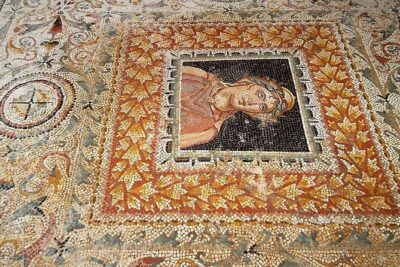
Private Day Trip to Testour, Dougga and Bulla Regia from Hammamet
Read our review →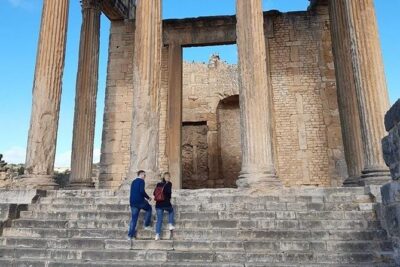
Private Guided Tour of Dougga and Testour Mosque
Read our review →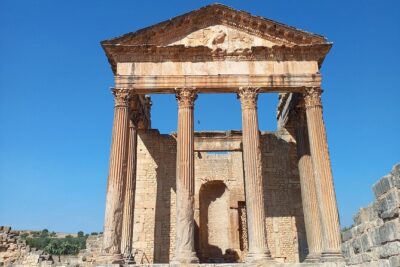
Bulla Regia and Beni Mtir Cascade Daytrip from Tunis
Read our review →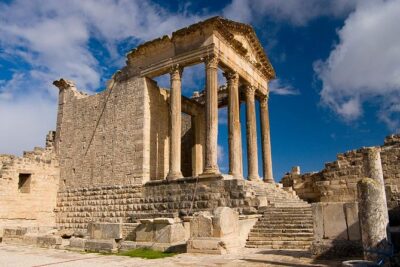
DAY TRIP TO Dougga & Bulla Regia , DEPARTURE FROM Tunis
Read our review →Browse the lists this tour appears in