
Reviewed · DOUGGA AND BULLA REGIA TOURS
Private Day Tour Dougga
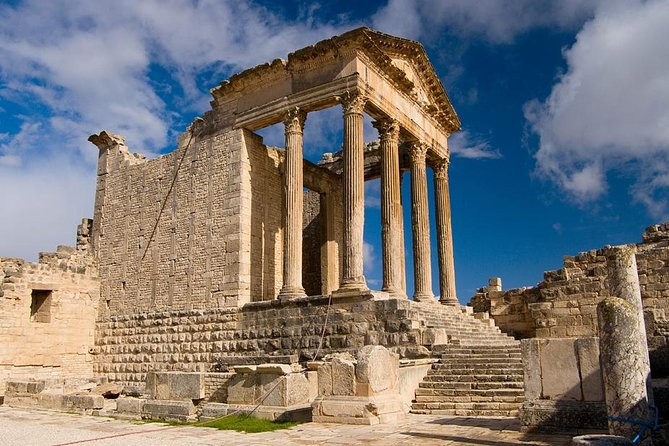
Dougga is the sort of ancient site that rewards having a guide. The ruins cover about 185 acres, and a private visit with Noureddine Boukari helps you find the important temples, theaters, and Roman remains without wandering through the hilltop site without a plan.
I like the private format, which lets you ask questions and set a comfortable pace. I also like the option to add Medjez-El-Bab War Cemetery, a thoughtful extra for visitors interested in the Second World War. The main drawback is the limited time: about seven hours covers the journey and site visit, but Dougga is large enough that you will not see every corner.
Key points to know before booking
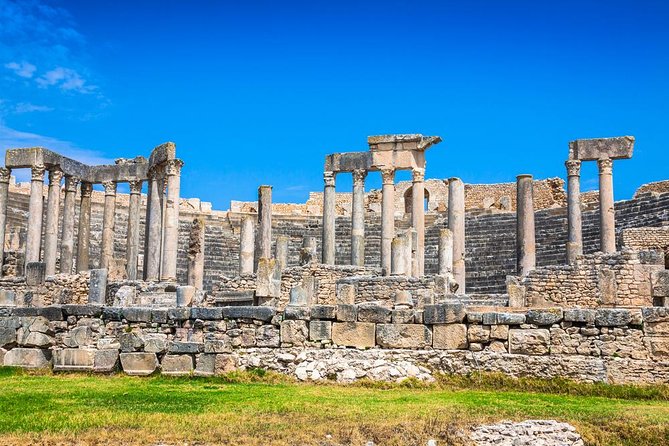
- Dougga covers 185 acres: A guide helps turn a large archaeological site into a clear, manageable visit.
- Noureddine Boukari leads the experience: His background in Phoenician and Roman history, Tunisian culture, politics, and art adds context beyond basic sightseeing.
- Private transport is included: Pickup and drop-off are offered from hotels in Tunis or Hammamet.
- You get roughly three hours at the ruins: Enough for the principal sights, but not for a slow look at every structure.
- Medjez-El-Bab War Cemetery is available on request: This optional stop adds a modern historical layer to the day.
- Entrance costs extra: Dougga admission is listed at 5 euros per person, while the tour price is $236.02 for a group of up to three.
Why Dougga deserves a full day from Tunis
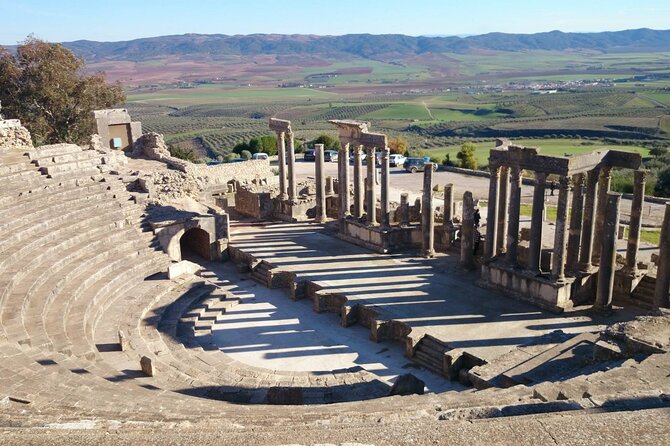
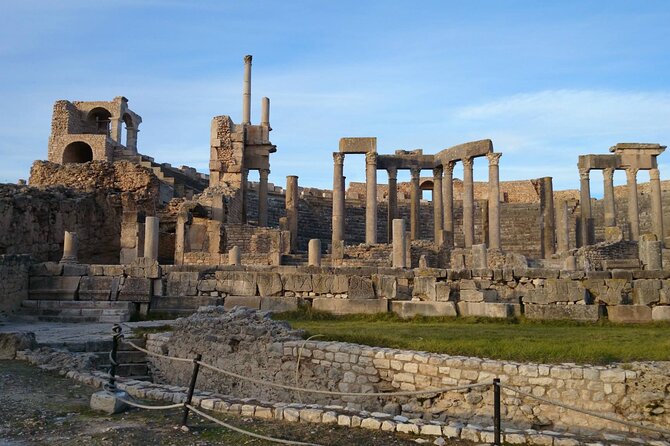
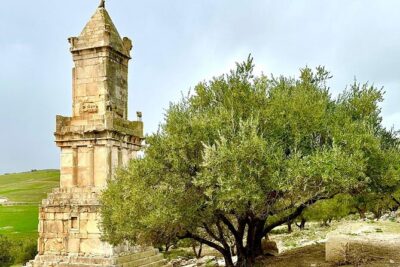
Dougga is one of North Africa’s finest Roman archaeological sites, but its appeal goes beyond a handful of impressive columns. It is a broad hilltop settlement where ancient streets, temples, public buildings, and theaters spread across open ground.
That scale is exciting, but it can also be confusing. You may arrive knowing that Dougga is important, then find yourself looking at a jumble of stones with no clear idea which building mattered most. A guide changes that. Instead of treating the site as a collection of ruins, you can understand how its different parts fitted together.
The private tour is built around that advantage. You are not tied to a large group’s pace, and you can ask for more explanation when a subject catches your interest. If you prefer to move quickly, you can keep going. If you want to stop and discuss Roman rule, Phoenician influence, or Tunisian history, the format gives you room to do so.
The site visit itself lasts about three hours. That is a useful amount of time for the main highlights, though I would not mistake it for a complete survey of all 185 acres. Dougga is best approached as a focused introduction, not an archaeological expedition.
More dougga and bulla regia tours in Tunis:
- Private Excursion to Testour, Dougga and Bulla Regia from Tunis.
★ 5.0 · 100 reviews - Full Day Dougga & Bulla Regia Via Testour Private tour with Lunch
★ 5.0 · 29 reviews - Private Guided Tour of Dougga and Testour Mosque
★ 4.5 · 15 reviews
The drive from Tunis or Hammamet
The tour begins with an 8:30 am pickup from your hotel in Tunis or Hammamet. Private transportation is included, which removes the need to arrange a separate vehicle for a remote archaeological site.
That matters most for small groups. The price is $236.02 per group of up to three people, not per person. For three people sharing the vehicle and guide, the cost works out to roughly $79 per person before the entrance fee. For two people, the per-person cost is higher, but you still gain the comfort and flexibility of a private outing.
The starting point also makes the tour practical for visitors staying in either of Tunisia’s major tourism bases named here. You should confirm that your hotel falls within the selected pickup area when booking, since pickup is not described as universal across the country.
The seven-hour duration is approximate. It includes transportation, the Dougga visit, and the return journey, so the amount of time in the vehicle will depend on where you are staying. From Hammamet, the day may feel especially travel-heavy. From Tunis, the outing is easier to fit into a city-based itinerary.
Entering Dougga’s 185-acre archaeological site
Your guide takes you into Dougga and points out the principal remains rather than leaving you to work out a route on your own. The site’s hilltop setting and large footprint are part of its charm, but they also mean you should expect walking over uneven ground and between widely spaced ruins.
The experience requires a moderate level of physical fitness. That is not a minor footnote. You should be comfortable walking for several hours around an open archaeological area, with no promise of a short, flat route between every sight.
Three hours gives your visit a clear shape. You can focus on the structures that best explain Dougga’s ancient civic and religious life, then use any spare time for photographs or a closer look at areas that interest you. Your guide’s job is especially useful here because the value of a ruin often lies in what is not immediately visible.
Noureddine Boukari is praised for explaining Phoenician and Roman history and for connecting the ancient site with Tunisian culture, art, political science, and recent events. That range can make Dougga feel less isolated from the rest of the country. You are not simply hearing dates and names. You are getting a wider sense of how Tunisia’s past is discussed and remembered.
What a private guide adds to the Roman ruins
A private guide is most useful at a site where the buildings are impressive but the story is not always obvious. Columns and walls can tell you that a place was once important. They do not automatically tell you how it worked, who used it, or why one monument matters more than another.
This is where Boukari’s historical focus should help. His explanations have been praised for covering both Phoenician and Roman periods, giving you a longer view of Dougga than a narrow Roman-only tour would provide.
That matters because Dougga was not created in one single moment. The site reflects different periods of North African history, and the guide can help you recognize those layers. You can ask questions as they arise, rather than waiting for a standard group explanation to catch up.
The private setting also suits different interests within one small party. One person may care about ancient political life, another about architecture, and another about Tunisia’s more recent past. With only your group participating, the conversation can follow those interests instead of sticking to a fixed script.
The guide’s enthusiasm is another strong point. Boukari is described as bringing energy to subjects including history, art, culture, and recent Tunisian events. That is valuable at a large site because it helps keep the visit from becoming a march between monuments.
A few more Tunis trips to weigh up
- Private Tour to Kairouan, El Jem & Monastir from Tunis_hammamet
★ 5.0 · 301 reviews - Private tour: Medina,Carthage ,Sidi Bou Said, Bardo Museum+lunch
★ 5.0 · 230 reviews - Carthage, Bardo Museum, Sidi Bou Said and Medina Private Day Tour
★ 4.5 · 153 reviews - Kairouan and El Jem Private Day Tour
★ 4.5 · 38 reviews
The optional stop at Medjez-El-Bab War Cemetery
On request, the tour can include a stop at Medjez-El-Bab War Cemetery. This is not part of the main Dougga program by default, so you need to ask for it in advance or during the booking process.
The cemetery offers a different kind of historical experience. Dougga takes you into the ancient world, while Medjez-El-Bab connects the day with the Second World War. Putting both stops together gives you a wider view of Tunisia’s past, from Phoenician and Roman history to the conflicts of the twentieth century.
The trade-off is time. The Dougga visit is already listed at about three hours, and the full excursion lasts around seven hours. Adding another stop may reduce flexibility at the ruins or make the day feel more tightly scheduled.
I would choose the cemetery option if modern military history matters to you, or if you have already seen Tunisia’s major ancient sites and want a more varied day. If Dougga is your main reason for booking, ask how the extra stop will affect your time among the ruins.
Price, entrance fees, and what you receive
The tour costs $236.02 per group of up to three. That includes private transportation and a licensed tour guide. The Dougga entrance fee is not included and is listed as 5 euros per person.
For a full private day with a guide, the group price can be sensible when divided among three people. You are paying for a dedicated vehicle, a personal guide, hotel pickup, and the ability to move at your own speed. A solo visitor or couple will pay more per person than a group of three, but the private arrangement may still be worthwhile if you value direct attention.
The price does not cover every possible expense. At minimum, you should budget for the separate entrance fee. The available information does not specify meals, drinks, or other personal costs, so ask before booking if you need those details.
The strongest value here is not simply transport to Dougga. It is the interpretation. A cheaper transfer could get you to the ruins, but it would leave you to understand the site on your own. If you already have strong archaeological knowledge and prefer independent exploration, the guide may be less important. For most visitors, however, the context is what makes a large ruin site memorable.
Who will get the most from this tour
This experience is a good match for a small group that wants an efficient day outside Tunis or Hammamet. It works especially well for people who prefer a private guide to a fixed group schedule.
You will likely appreciate it most if you:
- Want Dougga explained rather than simply photographed
- Prefer private transportation and hotel pickup
- Enjoy Roman and Phoenician history
- Like asking questions during a tour
- Have moderate physical fitness for several hours of site walking
- Want the option of adding a Second World War cemetery
- Are traveling as one, two, or three people
It may be less suitable if you want a very slow, all-day archaeological study. The site is large, and three hours can pass quickly. It may also feel expensive for a solo visitor who is comfortable arranging transport and reading the ruins independently.
The tour is also not a strong fit if you need a fully accessible route. The information only states that a moderate level of physical fitness is required, so you should ask the provider about current walking conditions and specific mobility needs before reserving.
Practical ways to make the day better
Start by confirming your pickup location and asking whether the optional cemetery stop will fit your preferred schedule. The tour starts at 8:30 am, so have your hotel arrangements clear before the morning of departure.
Wear shoes suitable for uneven archaeological ground. Dougga spreads across a hilltop area, and the visit involves walking between monuments rather than viewing everything from one central point.
Bring water and plan for time outdoors. The tour information does not list meals or refreshments, so you should not assume that food is included. Keeping the day simple will also leave more attention for Boukari’s explanations.
Tell the guide what interests you most. If you care about Roman architecture, Phoenician history, military history, or modern Tunisia, say so early. The private format is most valuable when you use it to shape the conversation.
Allow time for photographs, but do not spend the entire visit looking through a camera. Dougga’s scale is easier to understand when you pause between monuments and take in how the settlement spreads across the hilltop.
What the six ratings suggest about the experience
The tour has a five-star rating from six ratings, a small sample that should be treated as encouraging rather than conclusive. The praise focuses heavily on the guide, especially his historical knowledge, enthusiasm, and ability to explain Dougga clearly.
One account describes Boukari as an outstanding guide and historian with strong knowledge of Phoenician and Roman history. Another emphasizes his attention and the way his explanations helped reveal more of Tunisia itself, not just the ruins.
That pattern tells you where the tour’s main strength lies. You are booking a guided interpretation of Dougga, not just a ride to an ancient site. The quality of the day will depend greatly on how much you enjoy conversation and historical explanation.
The comments also suggest that Boukari brings interest in recent Tunisian events, political science, culture, and art into the experience. If you want only a short list of dates, that wider approach may feel more than you need. If you like connecting ancient history with modern Tunisia, it should be a welcome feature.
Cancellation and booking details
Free cancellation is available if you cancel at least 24 hours before the experience starts. Cancellations made less than 24 hours before the start time are not refunded, and changes within that window are not accepted.
Confirmation is provided at the time of booking. Since pickup is offered from hotels in Tunis or Hammamet, give accurate accommodation details and confirm the pickup area.
The activity is private, so only your own group participates. That is the central practical advantage: no strangers, no shared schedule, and no need to keep pace with a larger party.
Should you book the private Dougga day tour?
Book it if you want a focused, guided introduction to Dougga and value private transport more than the lowest possible price. The combination of a licensed guide, hotel pickup, flexible pacing, and a group price for up to three makes the most sense for a small party.
I would be especially inclined to book if you are staying in Tunis, want a clear route through a very large site, and enjoy history presented with energy. Boukari’s wide interests in Phoenician and Roman history, Tunisian culture, art, politics, and recent events are a major reason to choose this experience.
Think twice if you want a full day at Dougga itself, since the site visit is about three hours. Also remember that entrance fees are extra and the optional Medjez-El-Bab stop may reduce your time at the ruins.
For a first visit to Dougga, this is a practical choice. You get the site’s major stories without having to solve the logistics alone, while the private setup gives you room to explore at a pace that suits your group.
FAQ
Where does the tour pick me up?
Pickup is offered from hotels in Tunis or Hammamet. The tour starts at 8:30 am.
How long does the experience last?
The full tour lasts approximately seven hours. The Dougga visit itself is listed as about three hours.
How many people can join the private tour?
The price covers one private group of up to three people. Only your group participates.
Is transportation included?
Yes. Private transportation and a licensed tour guide are included.
Is the Dougga entrance fee included?
No. The entrance fee is listed separately at 5 euros per person.
Can I visit Medjez-El-Bab War Cemetery?
Yes, the tour can stop at Medjez-El-Bab War Cemetery on request. Ask about adding it when arranging the tour, since it is an optional stop.
Just added around Tunis
- Dougga Guided Day Tour from Tunis★ 5.0 · 5 reviews
- Private Arrival Transfer: Tunis Airport to Tunis Hotel★ 4.5 · 5 reviews
- Tunisia 7-Day tour★ 5.0 · 6 reviews
- Roman Archeology Guided Tour Thuburbo Majus & Uthina★ 4.5 · 7 reviews
- Bardo Museum- The ruins of Carthage- Village of Sidi Bou Said★ 5.0 · 4 reviews
- Tunis Carthage Private Arrival Airport Transfer to Tunis★ 5.0 · 4 reviews
- Tunis Group Tour: Carthage, Sidi Bou Said, Bardo museum & Medina★ 5.0 · 5 reviews
- The Medina★ 4.0 · 7 reviews
Dougga and Bulla Regia Tours, compared.
Private Excursion to Testour, Dougga and Bulla Regia from Tunis.
Read our review →
Full Day Dougga & Bulla Regia Via Testour Private tour with Lunch
Read our review →
Private Day Trip to Testour, Dougga and Bulla Regia from Hammamet
Read our review →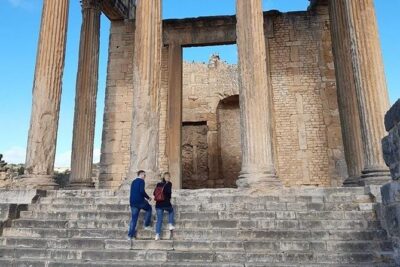
Private Guided Tour of Dougga and Testour Mosque
Read our review →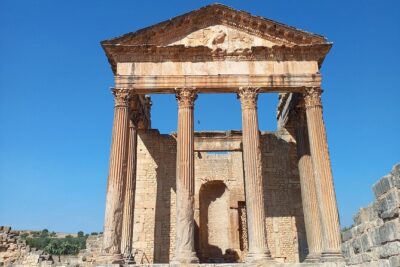
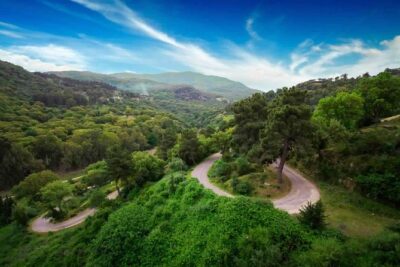
Bulla Regia and Beni Mtir Cascade Daytrip from Tunis
Read our review →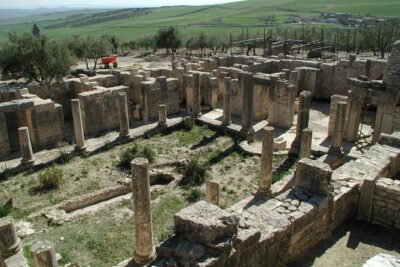
DAY TRIP TO Dougga & Bulla Regia , DEPARTURE FROM Tunis
Read our review →Browse the lists this tour appears in