
Reviewed · CARTHAGE AND SIDI BOU SAID TOURS
Self guided bike tour of Carthage archeological site
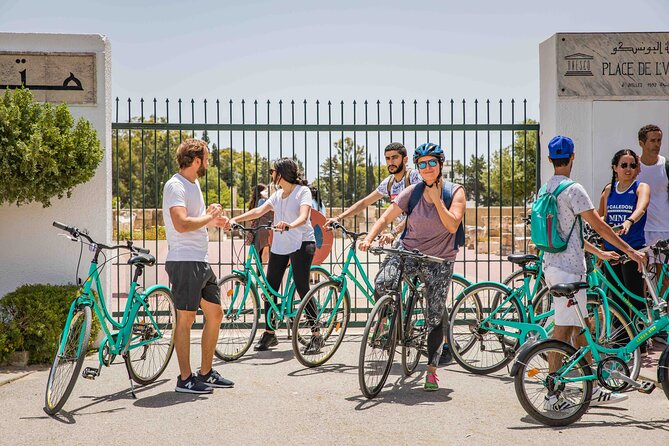
Carthage is spread across modern Tunis, so a bicycle makes practical sense. Instead of walking long stretches between scattered ruins or paying for taxis from one site to the next, you can set your own pace and connect the Punic ports, Roman villas, theaters, and baths in one outing.
I like two things right away: you control the timetable, and the route gives you room to add Sidi Bou Said. The French guidebook also adds useful context, and a guide named Jibram has been praised for explaining Tunisia and its culture with care. The main drawback is clear: the written guidebook is French only, and admission fees at most archaeological stops are not included.
Key points to know before you book
- Carthage is spread across several sites: Cycling links the ruins more easily than walking between every stop.
- You choose the pace: Plan anywhere from about one hour to a full day, depending on how much time you spend at each ruin.
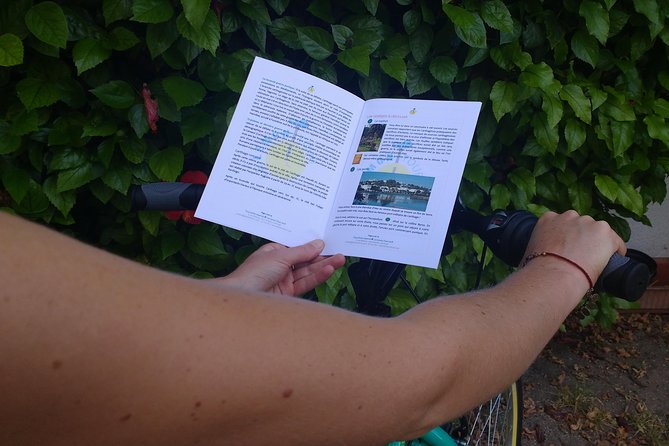
- The French guidebook is included: It covers Carthage and the surrounding area, but no English written guide is provided.
- Most entrance fees are extra: The North Africa American Cemetery is free, while admission to the main archaeological sites is not included.
- Sidi Bou Said can be added: The route gives you the option to combine ancient ruins with one of Tunisia’s most attractive nearby towns.
- The meeting point matters: Start at 9 Rue Hannibal by the Carthage archaeological site, where the operator identifies its local office as Le Lemon Tour.
Why a bicycle works so well in Carthage
Carthage does not present itself as one compact ruin. Its remains are scattered across a large area near the coast and among today’s roads, homes, and neighborhoods. That makes a bicycle more useful here than it might be at a single enclosed archaeological park.
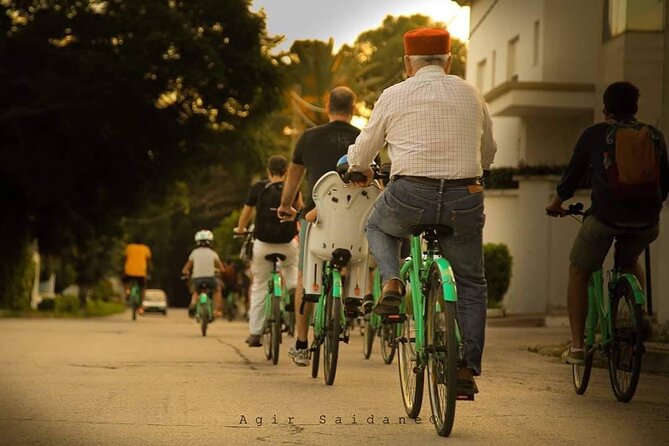
You can ride from the ancient Punic sanctuary to the ports, then continue toward the major Roman remains without treating every transfer as a separate transport problem. The route is described as using mostly calm roads with reduced traffic, though you should still pay attention around intersections and shared streets.
The bike also lets you decide how much ancient Carthage you want in one day. A short outing can focus on the main archaeological area and Baths of Antoninus. A half-day allows time for several smaller stops. A full day gives you room to include the American Cemetery, the aqueduct area, Byrsa Hill, and possibly Sidi Bou Said.
You receive the bicycle, helmet, map, and guidebook. The activity is private for your group, so you are not tied to another party’s speed or interests. That is especially helpful at places such as the Roman villas or Tophet, where a quick look may be enough for some people but not for others.
More Carthage and Sidi Bou Said Tours in Tunis
- Private tour: Medina,Carthage ,Sidi Bou Said, Bardo Museum+lunch
★ 5.0 · 230 reviews - Carthage, Bardo Museum, Sidi Bou Said and Medina Private Day Tour
★ 4.5 · 153 reviews - Guided Bike Tour of Carthage Archeological Site in Tunisia
★ 5.0 · 88 reviews
Starting at Tophet, Carthage’s Punic sanctuary
The first stop is Tophet de Carthage, a Punic sanctuary. The suggested visit is short, about 10 minutes, so think of it as an opening stop rather than a place that fills half your morning.
Tophet is important because it takes you back to the city’s Phoenician and Punic period, before Roman Carthage reshaped the site. Your guidebook is useful here, since the physical remains may not explain themselves clearly without historical background.
Admission is not included. If you are trying to keep the outing to the listed $45 price, remember to budget for the extra entrance charges at the sites you choose to enter.
Seeing the Punic Ports and the Carthage Museum
The next stop covers the Punic and Roman ports, with about five minutes suggested for the visit. That timing tells you something useful: this is a brief orientation stop, not a long museum visit built into the schedule.
The ports help explain why Carthage became a major Mediterranean power. Their location connects the city’s political and commercial story to the sea, while the nearby museum adds objects and interpretation. You can use the map to decide how much attention to give this area before moving on.
Admission is not included. Since the visit is short in the planned route, check the opening arrangements and your own priorities before spending extra time inside.
Allowing three hours for the main archaeological site
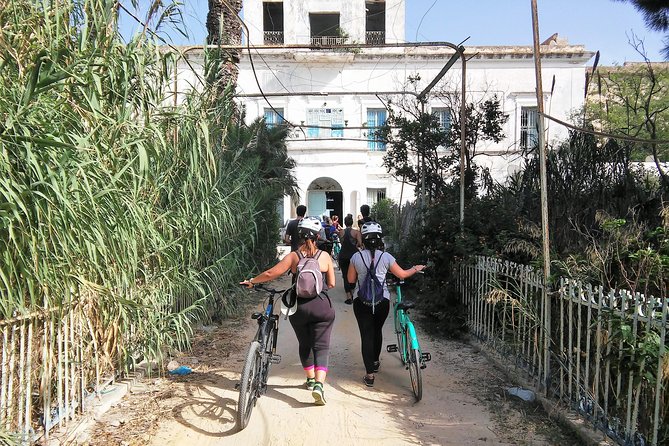
The main Site Archéologique de Carthage is the heart of the outing, with roughly three hours suggested. This is where the self-guided format earns its keep. You can pause at the remains that interest you and move quickly through sections that feel less compelling.
Do not treat the three hours as a fixed requirement. It is a useful planning figure, but your actual time will depend on how many areas are open, how much you read, and whether you want to stop for breaks. The site is part of UNESCO-listed Carthage, so it deserves more than a rushed photo stop.
Your French guidebook should help turn separate stones and foundations into a readable story. If you do not read French, you can still follow the map and see the ruins, but you will lose much of the written explanation included with the bicycle.
Admission is extra here, as it is at most stops. If your main aim is to understand the full site, plan for the entrance costs rather than assuming they are covered by the tour price.
Same coast, a completely different day out:
- Private Tour to Kairouan, El Jem & Monastir from Tunis_hammamet
★ 5.0 · 301 reviews - Private Excursion to Testour, Dougga and Bulla Regia from Tunis.
★ 5.0 · 100 reviews - Guided tour in the UNESCO world heritage Medina of Tunis
★ 5.0 · 68 reviews - Group Guided Bike Tour of Carthage Archeological Site in Tunisia
★ 5.0 · 57 reviews
A quiet pause at the North Africa American Cemetery
The North Africa American Cemetery is listed as a 15-minute stop, and admission is free. It offers a change of mood from ancient temples, baths, and ports.
The cemetery is connected to the American military presence in North Africa and provides a modern historical point within the wider Carthage route. A short visit is enough to pay respects and take in the setting without disrupting the rest of your day.
Because this is the only stop specifically marked as free, it can also help keep additional costs under control. It is easy to include as you ride between the archaeological areas.
The Carthage aqueducts and Malga Cisterns
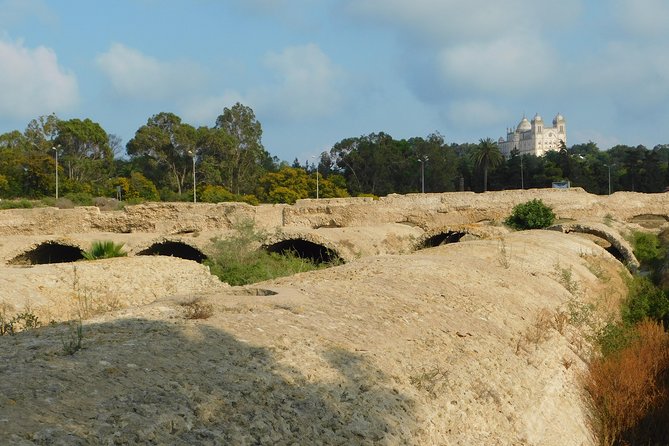
The Carthage aqueduct stop includes the Malga Cisterns and is planned for about five minutes. Like the ports, it is a brief but useful reminder that Carthage was not only a city of temples and monuments. Water supply was central to urban life.
Do not expect a long guided explanation at this point. The self-guided format means you will rely on the guidebook and your own observation. The stop works best as part of the larger route rather than as the main reason to book the activity.
Admission is not included. The short suggested visit makes it sensible to keep moving unless this part of Roman engineering is a special interest of yours.
Roman Villas and Byrsa Hill
The Villas Romaines stop allows about 20 minutes. Roman villas give you a closer look at domestic life and private wealth, a useful contrast to the public scale of the ports, baths, and theater.
The itinerary also includes Byrsa Hill, though no visit duration is specified. That means you should leave room for it when planning your route. Byrsa is one of the key points for understanding Carthage’s geography, so it deserves more than a passing ride if your schedule allows.
The hill can also affect your energy levels. You are cycling, not simply being driven from site to site, and a full day of ruins plus riding may feel more demanding than the one-to-eight-hour duration suggests. Keep your plan flexible.
The Roman Theatre of Carthage
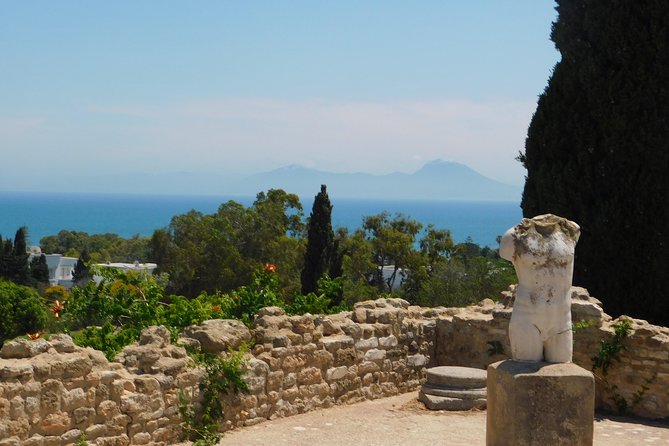
The Roman Theatre is planned for about 15 minutes. This is another compact stop, but it adds variety to the route. The theater shows the Roman city through public entertainment and architecture, rather than military power, trade, or water management.
A quick visit may be enough for a general overview. If you are interested in Roman performance spaces, you may want to give it longer and shorten one of the five-minute stops instead. That is the advantage of having no fixed group timetable.
Admission is not included. Use the guidebook to place the theater within the wider Roman development of Carthage before continuing toward the baths.
Spending an hour at the Baths of Antoninus
The Baths of Antoninus receive the longest suggested visit after the main archaeological site, about one hour. They are one of the strongest reasons to allow at least a half-day for this experience.
Roman baths were large social and architectural complexes, not simply places to wash. The ruins give you a chance to think about how public life, engineering, leisure, and status came together in Roman Carthage.
This is a good place to slow down. You have already seen Punic remains, ports, water infrastructure, villas, and a theater. The baths pull those subjects together into one large Roman setting.
Admission is extra. If you are choosing only a few paid sites, the Baths of Antoninus and the main archaeological area are likely to deserve priority because the suggested visits are longer.
Adding Sidi Bou Said to the same day
One major advantage of this route is the option to visit Sidi Bou Said as well. The activity is not limited to ancient ruins, so you can combine archaeological sightseeing with time in a scenic Tunisian town.
The schedule does not provide a fixed duration for Sidi Bou Said. Treat it as an optional addition rather than something guaranteed to fit into a short ride. If you choose the full-day format, you will have a better chance of making room for it.
This combination works well for couples, families with older children, or friends who want more variety than a full day of archaeology. If your priority is serious study of Carthage, keep Sidi Bou Said for the end or save it for another outing.
What the $45 price really covers
At $45, the value depends on how you use the bicycle. The price includes the bike, helmet, map, and a detailed guidebook covering Carthage and the surrounding area. It does not include admission to most archaeological sites, so the final cost rises if you enter several paid locations.
I consider the price reasonable for visitors who want independent movement and do not want to organize separate rides between scattered ruins. A bicycle can also reduce the temptation to pay for taxis from one site to another.
The value is weaker if you plan to see only one archaeological stop or if you need a detailed guide in English. This is not a fully guided walking tour with commentary at every monument. You are paying for transport within the site area and the freedom to set your own route.
One serious practical point deserves attention. The meeting point is 9 Rue Hannibal, at the Carthage archaeological site, and the operator identifies the office as Le Lemon Tour. It is marked on Google Maps, with a bicycle on the wall as a visual sign. Bring the address with you and confirm the location before setting out, since one party had trouble finding it and ended up paying for site admission and taxis.
The guidebook, language, and help at the start
The included guidebook is detailed, but it is available only in French. That is the most important limitation for many English-speaking visitors. You can still follow the map and see the monuments, but the historical explanations will be less useful if you cannot read French.
The experience is described as self-guided, so do not book it expecting a guide to cycle with you for the entire route. At the same time, Jibram has been praised for explaining Tunisia and its culture clearly. If he is the person assisting your departure, you may receive helpful orientation before setting off, but the supplied details do not promise a continuous guided service.
Children must be accompanied by an adult. Most people can participate, and the activity is near public transportation. Since the route is private to your group, you can choose a shorter outing if a child loses interest or the heat makes a full day impractical.
How long should you plan?
The stated duration is about one to eight hours. That is a wide range, but it fits the flexible format.
For a quick outing, focus on the main archaeological site and one nearby landmark. For a half-day, add Tophet, the ports, Byrsa Hill, and either the Roman theater or Baths of Antoninus. For a full day, you can take more time at the major ruins, include the American Cemetery and Malga Cisterns, and consider Sidi Bou Said.
The stop times suggest a route of short glimpses mixed with two major visits. The main archaeological site is given three hours, and the Baths of Antoninus one hour. The other listed stops range from five to 20 minutes, so you should not assume every location requires a long stay.
Free cancellation is available if you cancel at least 24 hours before the local start time. Changes or cancellations inside that period are not accepted for a refund.
Who should book this Carthage bike tour?
I would recommend it to independent visitors who like choosing their own pace and can read French, especially those who want to see several parts of Carthage without arranging separate transport.
It also suits anyone who wants a private outing rather than a fixed group tour. Families can benefit from the flexible timing, provided children are accompanied by an adult and are comfortable with the cycling involved.
I would be more cautious if you want detailed English commentary, have only a short time, or dislike navigating between separate sites. In those cases, a conventional guided tour may be easier, though it may give you less freedom.
Should you book it?
Book this experience if you see Carthage as a collection of connected places rather than one single ruin. The bicycle, map, helmet, and French guidebook give you a practical way to reach the Punic sanctuary, ports, Roman sites, cemetery, aqueducts, theater, baths, and Byrsa Hill at your own speed.
Before paying, check the meeting point carefully, confirm that French is suitable for your group, and budget for entrance fees. If those conditions work for you, the $45 price offers a useful mix of transport, independence, and archaeological sightseeing, with Sidi Bou Said available to round out the day.
FAQ
Where does the bike tour start?
It starts at 9 Rue Hannibal, Site archéologique de Carthage 2025, Tunisia. The operator identifies the local office as Le Lemon Tour.
Where does the activity end?
The activity ends back at the meeting point.
How long does the self-guided bike tour last?
The experience lasts approximately one to eight hours. You can choose a shorter outing, a half-day, or a full-day visit.
Is the bicycle included?
Yes. Use of the bicycle and a helmet are included.
Is a guidebook included?
Yes. A detailed guidebook about Carthage and the surrounding area is included, but it is available only in French.
Are archaeological-site admission fees included?
No. Admission is not included at Tophet de Carthage, the Punic Ports and Museum, the main Carthage archaeological site, the Malga Cisterns, Villas Romaines, the Roman Theatre, or the Baths of Antoninus.
Is the North Africa American Cemetery free to enter?
Yes. Admission to the North Africa American Cemetery is listed as free.
Can children take part?
Yes, but children must be accompanied by an adult.
Can I cancel for a full refund?
Yes, if you cancel at least 24 hours before the experience start time. Cancellations or changes made less than 24 hours before the start time are not refunded.
More Self-Guided Tours in Tunis
- Kairouan, El Djem, Monastir Self-Guided Excursion from Hammamet
★ 4.5 · 5 reviews - Tunis, Carthage and Sidi Bou Said Self-Guided Excursion from Hammamet
★ 4.5 · 4 reviews - Cap-Bon Self-Guided Excursion from Hammamet
★ 4.5 · 3 reviews
More Cycling Tours in Tunis
- Djerba Island: 1.5-Hour Quad Biking Adventure
★ 4.5 · 17 reviews - Quad Biking (ATV) in Douz Tunisia Sahara Desert
★ 5.0 · 7 reviews
Just added around Tunis
- Dougga Guided Day Tour from Tunis★ 5.0 · 5 reviews
- Private Arrival Transfer: Tunis Airport to Tunis Hotel★ 4.5 · 5 reviews
- Tunisia 7-Day tour★ 5.0 · 6 reviews
- Roman Archeology Guided Tour Thuburbo Majus & Uthina★ 4.5 · 7 reviews
- Bardo Museum- The ruins of Carthage- Village of Sidi Bou Said★ 5.0 · 4 reviews
- The Medina★ 4.0 · 7 reviews
- Tunis Carthage Private Arrival Airport Transfer to Tunis★ 5.0 · 4 reviews
- Tunis Group Tour: Carthage, Sidi Bou Said, Bardo museum & Medina★ 5.0 · 5 reviews
Carthage and Sidi Bou Said Tours, compared.

VIP Tour: Tunis Medina/Bardo, Sidi Bou Said, Carthage |PICKUP ALL
Read our review →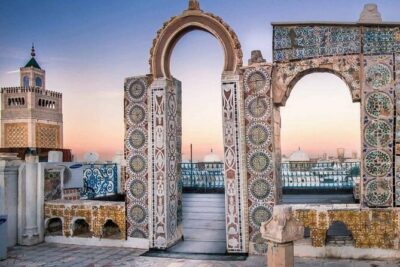
Private tour: Medina,Carthage ,Sidi Bou Said, Bardo Museum+lunch
Read our review →Private tour: Medina,Carthage ,Sidi Bou Said, Bardo Museum+lunch
Read our review →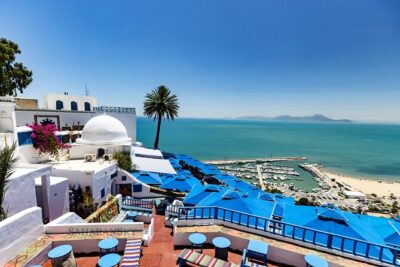
Carthage, Bardo Museum, Sidi Bou Said and Medina Private Day Tour
Read our review →
Guided Bike Tour of Carthage Archeological Site in Tunisia
Read our review →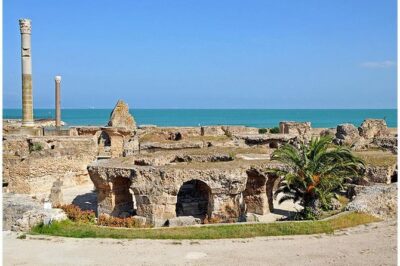
1 day excursion Tunis Sidi Bousaid Carthage departure from Sousse
Read our review →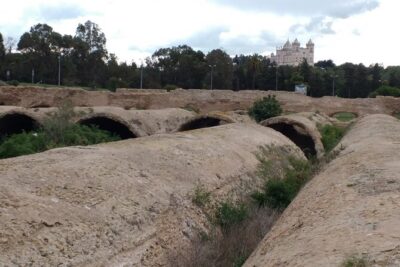
Group Guided Bike Tour of Carthage Archeological Site in Tunisia
Read our review →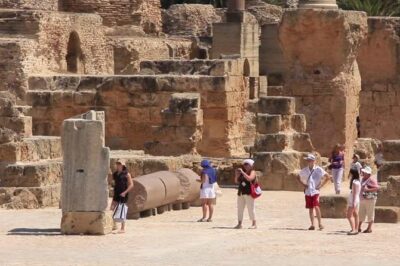
Archaelogical Site Of Carthage + Picturesque Village Of Sidi Bou Said
Read our review →Browse the lists this tour appears in